Quick Answer
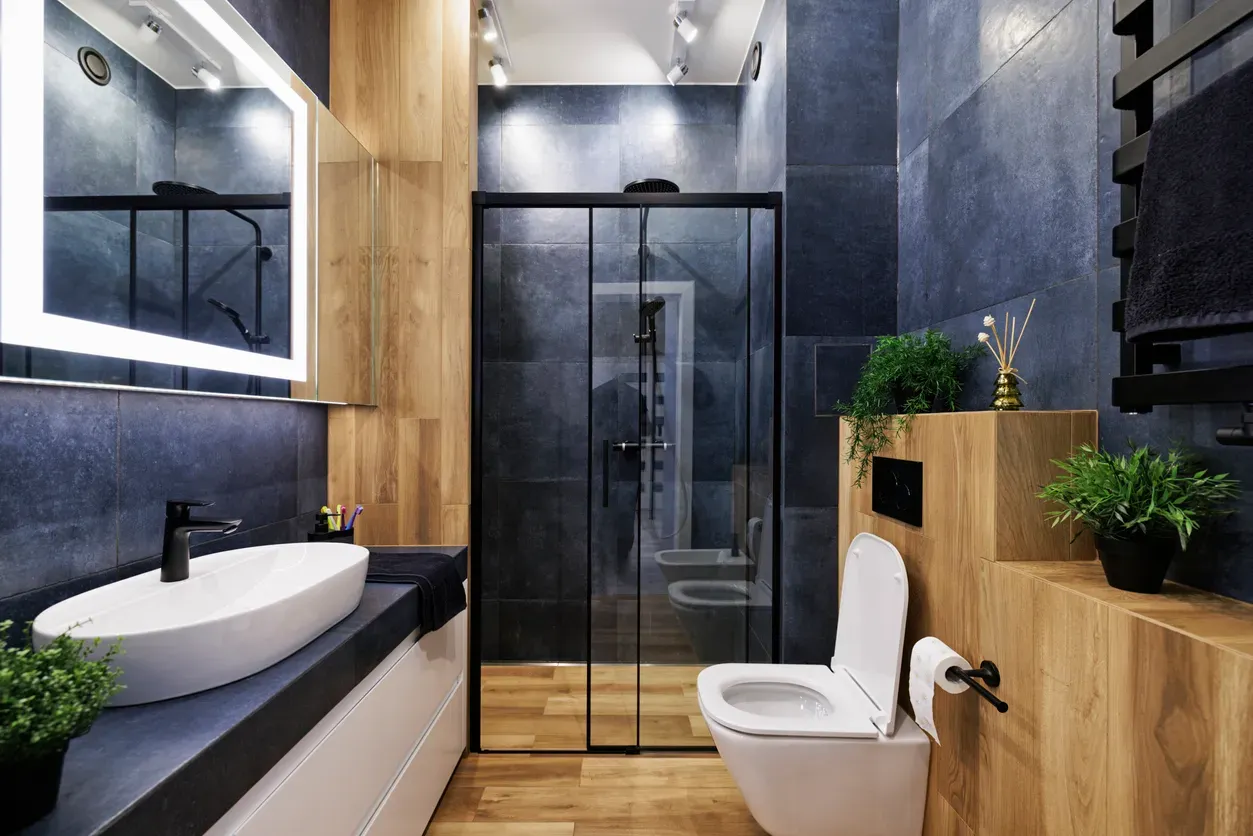
Yes, large-format porcelain tile generally works well in a small bathroom. Fewer grout lines make the floor and walls read as one continuous surface, which makes a compact room feel larger and cleaner. The keys are choosing a manageable tile size (often 12x24 rather than huge slabs), keeping grout joints thin and tonal, and using a flat, properly prepped substrate so the big tiles lie perfectly level.
Why large-format tile makes a small GTA bathroom feel bigger
Large-format tile makes a small bathroom feel bigger because it reduces the number of grout lines, and grout lines are what visually chop up a space. When the floor or wall reads as a few large planes instead of dozens of small squares, the eye perceives a more continuous, open surface. That is why so many of the compact Toronto condo bathrooms and Vaughan ensuites we renovate now use larger tiles. The effect is strongest when the grout is matched closely to the tile colour, so the joints almost disappear. Running the same tile up the wall and across the floor, or extending floor tile into a curbless shower, reinforces the illusion of one uninterrupted room. Porcelain is the right material for this: it is dense, low-absorption, hard-wearing, and available in convincing stone, marble, and concrete looks. For a small space, the practical sweet spot is often a 12x24 plank or a 24x24 square rather than a true slab, which gives you the big-tile look without the handling and layout headaches a tiny room creates.
The right tile size and grout for a compact bathroom
For most small GTA bathrooms, a 12x24 or 24x24 porcelain tile is the practical choice, with 24x48 reserved for feature walls where there is room to lay it cleanly. Going too large in a tiny footprint backfires: you end up with awkward slivers cut around the toilet, vanity, and door, and those cut edges draw the eye more than full tiles would. We plan the layout first so the cleanest full tiles land where they are most visible and cuts are pushed to corners. Grout matters as much as tile size. Choose a colour within a shade or two of the tile and keep joints thin, commonly around 1/16 to 1/8 inch for rectified porcelain, to minimise visual clutter. Epoxy or high-performance grout resists staining in a wet room and stays looking new longer. On floors, a textured or matte finish with adequate slip resistance is safer than high-gloss, especially in a shower. Getting size, grout colour, and finish right is what separates a small bathroom that feels expanded from one that feels busy.
Substrate prep and lippage: the part that actually decides the result
The single biggest factor in whether large-format tile looks good in a small bathroom is substrate flatness, not the tile itself. Big tiles are unforgiving: any dip or hump in the floor or wall shows up as lippage, where one tile edge sits proud of the next. That is uncomfortable underfoot, a stub-your-toe hazard, and a place dirt collects. Industry guidance calls for very flat substrates under large tile, often within about 1/8 inch over 10 feet, which usually means self-levelling the floor and skim-correcting walls before any tile goes down. We back-butter large tiles for full mortar coverage, use the right notched trowel and a large-format mortar, and set with leveling clips to keep edges flush while it cures. In older Toronto and Hamilton homes especially, subfloors are rarely flat enough as-is, so prep is where the labour goes. Skipping it is the most common reason a big-tile bathroom disappoints. Done properly on a flat, fully bonded bed, the tiles lie dead level and the finished surface looks seamless.
What large-format tile costs in a small GTA bathroom
A full small-bathroom renovation in the GTA typically starts around $15,000, with mid-range projects landing roughly $20,000 to $35,000 and luxury builds at $40,000 and up; these are estimates, and we give a real quote after a site visit, with HST extra. Where large-format tile sits in that range depends less on the tile and more on labour. The material itself can be very reasonable, but big tiles take more prep, careful handling, precise cutting, and slower setting, so the installed cost per square foot is usually higher than for standard tile. Substrate levelling, waterproofing the wet area, and any curbless-shower work add to it. The trade-off is fewer grout lines to clean and a high-end finish that holds up for decades. If you are only refreshing surfaces rather than gutting the room, flooring and tile work generally falls in the lower thousands. We are happy to scope your specific bathroom and explain where the budget goes before you commit to a tile size or layout.
Have a project in mind?
Get a free, no-obligation quote from Leo Constra’s licensed team—20+ years of renovation experience across the GTA, backed by a 2-year workmanship warranty.
Get a Free Quote