Bathroom Renovation ROI in the GTA: What Comes Back at Resale
Not every renovated bathroom pays you back the same way. How we frame bathroom ROI for GTA homeowners in 2026 — where the return comes from, and how to avoid outspending your street.
What Bathroom Renovations Return at Resale in the GTA
The honest answer we give clients: plan for a well-executed bathroom renovation to return part of its cost — not dollar-for-dollar — at resale, with the real number swinging widely on what you started with. Replace a genuinely dated or failing bathroom in a house that is otherwise ready to sell, and recovery can approach or exceed full cost, because you have removed the discount buyers were about to apply. Upgrade an already-decent bathroom to luxury spec, and you may see well under half back. Nobody can hand you a precise percentage for your house — a local agent's read on renovated comparables on your street is worth more than any generic ROI table.
Set that against the spend: a full bathroom renovation in Toronto typically costs $15,000-$30,000 in 2026, with ensuites running $28,000-$45,000 and up.
One reframe before the math takes over. If you are staying seven or ten years, the daily-use value dwarfs the resale ledger. ROI thinking matters most when a sale is inside your five-year window — which, in the GTA's move-up market, it often is. For the whole-house picture, our home renovation ROI breakdown covers how bathrooms stack up against kitchens and basements.
Why 'Dated to Current' Beats 'Nice to Luxury' on ROI
Return on a bathroom is not linear — the first dollars do the heavy lifting. Taking a room from liability to current fixes the things buyers actively penalize: 1980s almond fixtures in an Erin Mills two-storey, failing grout and soft floors, a builder-beige ensuite in a 1990s Glen Abbey or Bayview Hill house that has never been touched. Buyers see those rooms and subtract a full renovation, plus a hassle premium, from their offer. Spending $20,000 to erase a $30,000 mental deduction is the best trade in renovation.
Past current, each additional dollar buys taste rather than value. The jump from a $22,000 bathroom to a $40,000 bathroom is real — better stone, custom glass, nicer millwork — but buyers will not reliably pay the difference, because a current bathroom already cleared their bar.
The practical takeaway: put the budget into universally read signals — clean tile work, a frameless or semi-frameless shower, a quality vanity, good lighting — and be cautious with highly personal choices. Bold works beautifully in a powder room; in the main bathroom of a house you might sell, current-and-neutral is the money position.
The Upgrades Buyers Notice: Showers, Vanities, Tile
Twenty years of walkthroughs have taught us what buyers photograph and what they never mention.
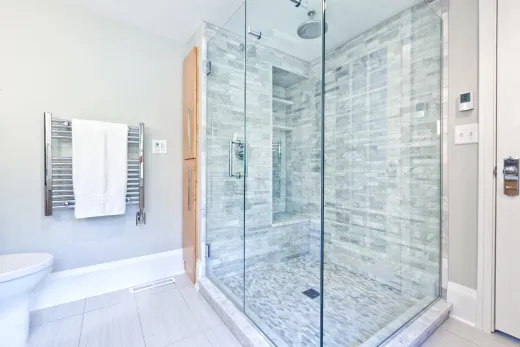
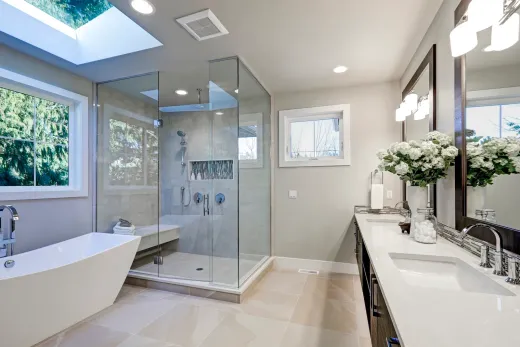
- The shower is the headline. A tiled walk-in with glass reads as "renovated" from the doorway. A frameless enclosure runs $2,000-$4,000 and earns its keep in first impressions
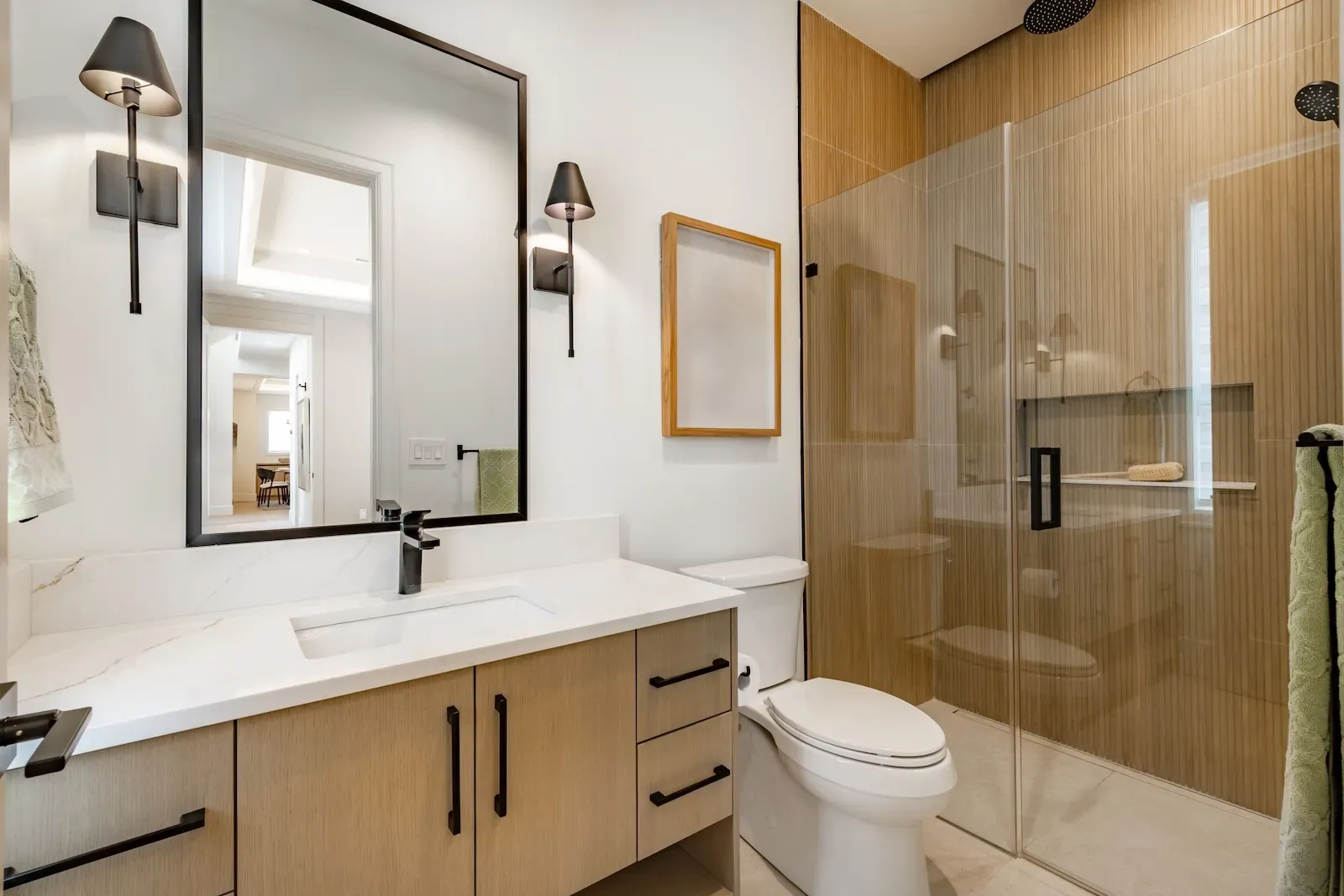
- The vanity is the second glance. A solid vanity with a stone top ($1,500-$3,500 mid-range) and a proper mirror and sconces signal quality fast. Floating vanities photograph especially well in listings
- Tile quality reads instantly, even to people who cannot name why. Straight lines, tight grout, tidy corners. Standard porcelain at $10-$25/sq ft installed, laid well, beats expensive stone laid badly — every time
- Heated floors are the quiet closer. At $1,500-$3,000, warm tile in a February showing is the detail people remember
What buyers rarely reward: premium-brand faucets over mid-tier ones, exotic stone over quality porcelain, and tub upgrades in secondary bathrooms. If the budget forces choices, there are smart ways to trim cost without cutting quality — and the shower is the last place to economize.
Over-Improving for Your Street: How to Avoid It
The most common ROI mistake we see is a bathroom renovated for a different neighbourhood than the one it sits in. A $60,000 spa ensuite in a wartime East York bungalow is a lovely room that the street's price ceiling will never repay. The house sells at bungalow-on-that-block money, regardless of the marble.
The check is simple: look at what fully renovated houses on your street actually sell for, subtract what yours would fetch today, and treat that gap as the total renovation headroom — for every project, not just the bathroom. A sensible bathroom share of that headroom is modest. In most GTA neighbourhoods, a $15,000-$30,000 bathroom fits; in premium pockets — Lorne Park, Old Oakville, central Rosedale-adjacent streets — buyer expectations genuinely support ensuite spends past $40,000, and under-improving is the risk instead.
Match the finish level to the house's tier, not to the showroom. Our guide to renovations that increase home value applies the same street-ceiling logic across every room. The goal is a bathroom that makes your house the best-presented normal house on the block — not an outlier the appraiser cannot support.
Rental and Pre-Sale Renovation Math
Two situations change the calculation entirely.
Rental units run on durability math, not resale math. For a basement apartment or an income property in Hamilton or Oshawa, the right bathroom is mid-range and bulletproof: porcelain everywhere, a one-piece toilet, pressure-balanced valves, an exhaust fan that actually vents outside so humidity never becomes a mould claim. Spend on waterproofing and ventilation, skip the designer touches — tenants pay for clean and functional, and repairs between tenancies are the real ROI killer.
Pre-sale renovation is triage, and full renovations are usually the wrong tool. Sixty to ninety days before listing, the high-yield moves are refresh-tier: regrout or recaulk, replace a dated vanity and light fixture, new mirror and hardware, fresh paint — a few thousand dollars that removes the "tired" label. A full $25,000 renovation before selling only makes sense when the bathroom is bad enough to scare buyers, the rest of the house shows well, and comparable renovated homes are clearing meaningfully higher. Your agent's read on the street matters more than any national ROI table here — ask before you demo.
Spending Where It Counts: A Practical Allocation
For a typical $20,000-$25,000 GTA bathroom renovation aimed at strong resale, here is how we would steer the budget. Labour takes roughly a third — that is the market for licensed trades, and it is not the place to bargain-hunt. Put the next priority on what is behind the walls: proper waterproofing, solid plumbing, ventilation. Invisible on day one, decisive in year eight, and the first things a home inspector probes.
Of the visible budget, weight the shower first, then the vanity zone, then floor tile, then lighting, and let accessories trail. Mid-range tile allowances ($3,000-$6,000 all-in) and a $1,500-$3,500 vanity hit the quality level GTA buyers read as renovated. Add heated floors if there is room; skip exotic stone if there is not.
And get the intangibles right: permits closed where plumbing moved, receipts kept, workmanship warranted. Documentation is quiet ROI at sale time. We have renovated bathrooms across Toronto and the GTA since 2004 — see our bathroom renovation service or request a free quote, and we will tell you honestly which version of the renovation your street will pay for.
Ready to start your renovation?
Our team is here to help you bring your vision to life. Get a free, no-obligation quote today.
Get Free QuoteFrequently Asked Questions
Clear answers to the questions Ontario homeowners ask most.