Both keep your cabinet boxes and skip the gut renovation. One repaints the doors you own; the other replaces them. How GTA homeowners should choose between them in 2026.
Three Ways to Refresh Cabinets Without Replacing the Boxes
The short version, GTA pricing as of 2026: professional cabinet painting runs $3,000–$7,000 for a typical kitchen. Refacing — new doors and drawer fronts on your existing boxes — lands roughly $4,000–$10,000 for most projects, which is the 40–50% savings refacing typically delivers against a mid-range cabinet replacement of $8,000–$18,000 installed. Full replacement is the third rung: cabinet packages run from a few thousand dollars in stock lines up to $18,000–$40,000+ for high-end custom, before counters and installation extras.
Both painting and refacing rest on one non-negotiable condition: the boxes must be square, dry, and solid. A refresh on failing carcasses is wasted money at any price. We covered the refacing versus replacing decision on its own; this post settles the more common question — when your boxes are fine, do you paint the doors you have or buy new ones?
Painting: Cost, Process, and Best-Case Results
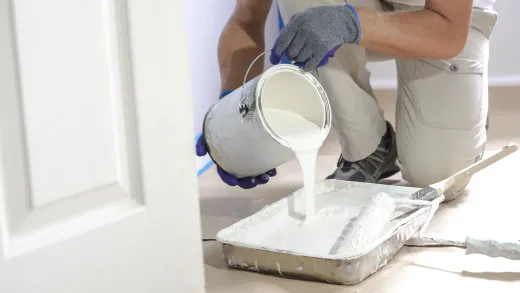
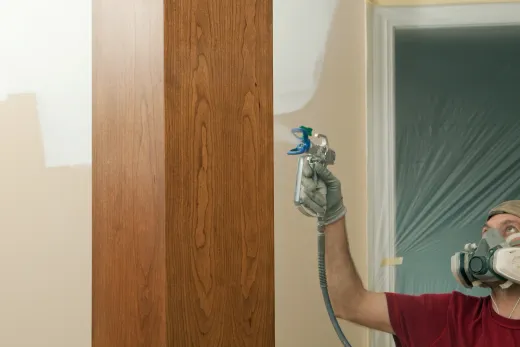
Painting keeps every physical component you own and changes only the finish. Done properly it is a full process, not a weekend with a brush: doors and drawer fronts come off and get sprayed flat in a controlled space, boxes are masked and sprayed in place, and the coating is a hard cabinet-grade product over a bonding primer — with degreasing and sanding before any of it.
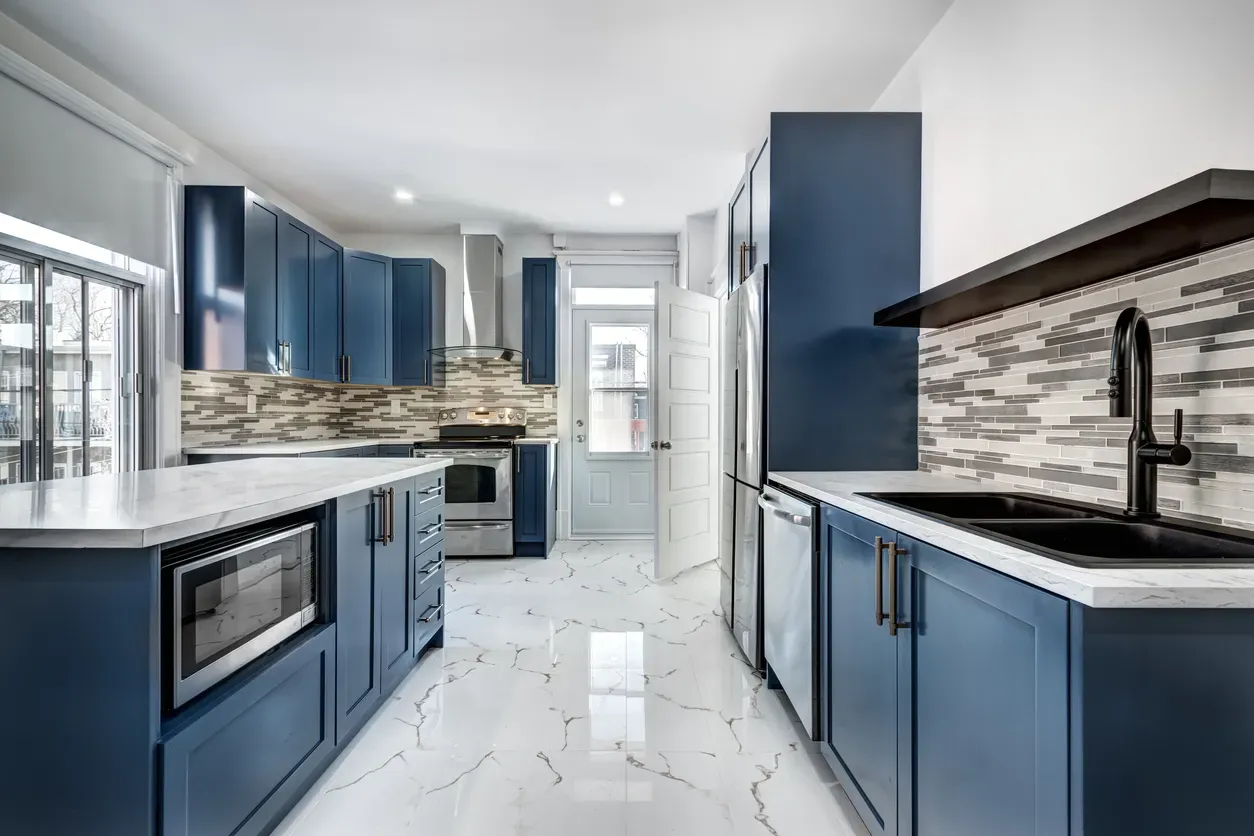
Best case, the results are excellent. Solid wood or MDF doors in a simple shaker or flat profile, in good physical shape, come back looking close to factory-finished at a fraction of any alternative. This is the sweet spot for thousands of GTA kitchens — the maple shakers that went into Vaughan, Milton, and Oakville subdivisions through the 2000s were well built and are aging only in colour.
The limits are equally clear. Paint cannot change a door's shape, cannot rescue peeling surfaces, and rewards oak's heavy grain with a painted-oak look unless the grain is filled first. Painting is a finish decision. If your problem is the door itself, keep reading.
Refacing: What $4,000–$10,000 Buys
Refacing replaces everything you touch and see, while keeping the cabinet boxes on the wall. A typical package includes:
- Brand-new doors and drawer fronts in the style, material, and colour you choose
- Matching veneer or laminate skins over the exposed box faces and end panels
- New hinges — usually soft-close — and often new drawer runners
- New handles and pulls, plus matching crown or trim where wanted
Because the boxes stay, your counters, backsplash, sink, and layout all stay too. The kitchen remains usable through most of the work, and a typical refacing job is measured in days, not the 4–6 weeks a standard renovation takes.
The real advantage over painting is design freedom. You are not committed to the door profile some builder chose in 1997 — a dated raised-panel kitchen becomes a flat-panel modern one, because the doors are genuinely new. That is what the extra money buys: painting changes the colour of what you have; refacing changes what you have.
Durability Head-to-Head
Refacing wins on durability, and it is worth being honest about why. New doors arrive with factory-applied finishes — baked, cured coatings applied in conditions no site painter can reproduce. They also arrive as new material: fresh edges, no worn spots, no fifteen years of moisture cycling around the sink.
A professionally sprayed paint job is the best field-applied finish available, and with full prep it performs well for years. But it remains a coating over an old door. Edges and high-touch zones wear first, filled grain can telegraph back over time, and any moisture damage hiding in the substrate keeps moving underneath new paint. Expect touch-ups as normal maintenance rather than a failure.
Environment matters too. GTA kitchens swing from dry forced-air winters to humid summers, and doors expand and contract through that cycle — one reason factory finishes, engineered for movement, age more gracefully than site-applied ones. If you keep a kitchen ten more years, refaced doors will generally look newer at the end of it. If your horizon is five years or a pre-sale refresh, painting's economics are hard to argue with.
Door Styles and When Paint Can't Fix Them
Some doors take paint beautifully. Others fight it, and a few disqualify themselves.
Flat-panel and shaker doors in maple or MDF are ideal candidates — smooth faces, simple profiles, crisp results. Oak is conditional: its open grain shows through paint as texture, which some clients like and most do not; filling the grain fixes it but adds enough labour to narrow the gap to refacing. Ornate routed profiles from the 1980s and 90s are a style problem paint cannot touch — a cathedral-arch door in a fresh colour is still a cathedral-arch door.
Thermofoil is the disqualifier. That vinyl-wrapped MDF, common in GTA builder kitchens of the 1990s and 2000s, cannot be painted reliably once the wrap starts lifting near heat sources — and it usually is lifting by now. Peeling thermofoil means refacing at minimum.
If you find yourself specifying new profiles, new materials, and a new layout in the same breath, you have left refresh territory — that conversation belongs with custom kitchen cabinets and a proper design.
The Decision Grid: Budget, Boxes, and Timeline
Here is how we walk clients through it.
Paint when the boxes are solid, the door style works for you, and the budget is $3,000–$7,000. It is the highest-leverage refresh in renovation — most of the visual change for the least money — and the right call for good doors in a bad colour.
Reface when the boxes are solid but the doors are the problem: dated profiles, peeling thermofoil, worn edges paint would only highlight. At roughly $4,000–$10,000 you get genuinely new doors and hardware without touching counters, plumbing, or layout, and typically save 40–50% against replacement.
Replace when the boxes are failing, the layout fights you daily, or you are renovating anyway. A full kitchen renovation starts around $25,000 in the GTA and typically runs $25,000–$80,000 — see what kitchen renovations cost in Toronto for the full breakdown. Spending refresh money twice is the only genuinely wrong answer, so decide on the layout first.
Still unsure which side of the line your kitchen sits on? Send us photos and a few measurements — quotes are free, and we will tell you plainly if paint is all you need.
Ready to start your renovation?
Our team is here to help you bring your vision to life. Get a free, no-obligation quote today.
Get Free QuoteFrequently Asked Questions
Clear answers to the questions Ontario homeowners ask most.