We hire painters on almost every renovation, and we still tell some homeowners to pick up a roller themselves. Here is where professionals earn their fee in a GTA home — and where they honestly don't.
The Honest Answer: It Depends on the Room
A single professionally painted room in the GTA prices around $5 per square foot of wall area as of 2026, because setup, masking, and cleanup cost the same whether the room is big or small. Bundle three or more rooms and the per-room rate drops 15–25%; a whole-home repaint runs roughly $1.80–$4.50 per square foot of wall, plus HST. Against that, DIY costs you two cans of decent paint, some sundries, and your weekends.
So the honest answer is not "always hire" or "always DIY." It is a room-by-room calculation. A flat-walled bedroom with eight-foot ceilings and one window is a genuinely reasonable DIY project. A stairwell in a two-storey foyer, a kitchen full of cutting-in, or a century home in Riverdale with wavy plaster walls is a different animal — those rooms punish amateurs in ways that show every day for the next ten years.
We renovate homes across Toronto and the GTA, we work alongside professional painters constantly, and we have repainted plenty of DIY jobs that went sideways. What follows is the breakdown we give clients when they ask whether the painting line on a quote is worth it.
What Pros Actually Do Differently
The gap between professional and amateur painting is mostly invisible until the paint dries. It comes down to three things.
Prep. Pros spend a startling share of the job not painting: washing walls, filling nail holes, sanding patches flush, caulking trim gaps, spot-priming stains, and skim-coating rough areas. In older GTA housing — the plaster-and-lath walls common in anything built before about 1960 — prep can be half the job. Paint hides nothing; it magnifies whatever is underneath.
Edges. A crisp, straight cut line where wall meets ceiling, done freehand with a quality brush, is the skill DIYers underestimate most. Tape helps but bleeds on textured surfaces, and every wobbly line at eye level reads as "amateur" forever.
Speed with consistency. A two-person crew can properly paint in a day what takes a homeowner three weekends — and the film thickness stays even through the whole job, so sheen doesn't flash patchy under evening light. Dark-to-light colour changes that need a third coat get it; a tired DIYer at 9 p.m. on Sunday often decides two is fine.
None of this is magic. It is repetition, better tools, and the discipline to finish prep before opening the colour.
The Rooms Where DIY Makes Real Sense
If your walls are smooth drywall, your ceilings are standard height, and you can accept slightly imperfect cut lines, DIY painting is one of the few renovation tasks we genuinely encourage.
- Bedrooms — small wall area, forgiving lighting, furniture hides the low corners, and nobody scrutinizes a bedroom wall from two feet away.
- Home offices and dens — same logic, and a colour experiment gone wrong here is cheap to redo.
- Basement rec rooms — lower stakes, and finished basements in 1990s–2000s GTA subdivisions usually have clean drywall that takes paint easily.
- A repaint in the same colour — the easiest job in painting. One careful coat, no cutting anxiety, minimal risk.
The common thread: flat walls, low ceilings, forgiving light, and no expensive surfaces below. If you drop a loaded roller in a carpeted bedroom you own the cleanup; if you drop it over a hardwood staircase or a new quartz counter, the mistake costs real money.
One honest caveat about timing. If the painting is part of a larger project, DIY can slow the schedule — trades sequence around finished paint, and saving money without cutting quality usually means taking on the low-risk scopes, not the ones on the critical path.
The Jobs That Punish DIY: Stairs, Ceilings, Kitchens, Trim
Some painting jobs are priced higher precisely because they go wrong so often in amateur hands.
Stairwells and two-storey spaces. Painting above a staircase requires plank staging or scaffolding, not a ladder balanced on treads. The fall risk is genuine, and the tall wall itself — rolled with an extension pole, cut at 17 feet — shows every lap mark in daylight.
Ceilings. Overhead rolling is exhausting, drippy, and unforgiving; missed spots flash at night under fixtures. Textured ceilings add another wrinkle: in homes built before about 1990, popcorn texture may contain asbestos, so scraping or heavily disturbing it without testing first is a mistake — test before you touch.
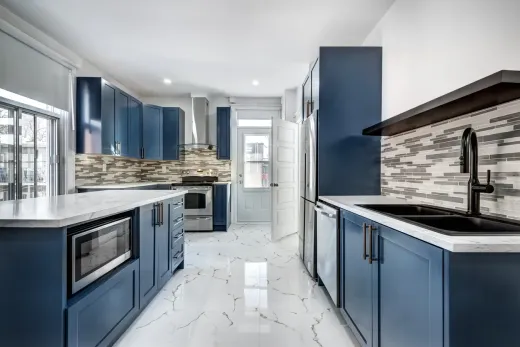
Kitchens. Endless cutting-in around cabinets, backsplashes, and appliances is why pros price kitchen walls at $700–$1,400 as a standalone room. Grease-contaminated walls also need proper degreasing and priming or the new paint peels.
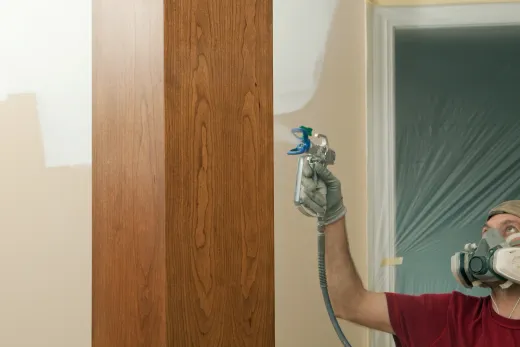
Cabinets and trim. Sprayed cabinet finishing runs $3,000–$7,000 for a typical GTA kitchen because the process — degrease, sand, bonding primer, multiple sprayed coats — is genuinely difficult. Brush-painted DIY cabinets rarely survive scrutiny or daily use. Trim and doors sit at eye level and hand level; brush marks and drips there are the first thing a future buyer's home inspector-accompanied walkthrough notices.
The Real Cost Comparison, Including Your Weekends
Run the numbers honestly. A typical bedroom repaint might carry 350 square feet of wall. Professionally, that is a few hundred dollars as part of a bundled job. DIY, it is roughly $100–$150 in paint and supplies — plus most of a weekend once you count moving furniture, taping, two coats with drying time, and cleanup. If your weekends are scarce and your household is busy, the pro premium buys back 10–15 hours of your life per room.
Scale changes the answer. A whole-home repaint of a detached GTA house involves thousands of square feet of wall, weeks of evenings and weekends, and stamina most people do not have after week two — which is when cut lines get lazy. Crews finish the same house in days at the low end of the per-square-foot range, and the quality is uniform from the first room to the last.
Two more factors people forget. Humid GTA summers stretch drying times between coats, so a July DIY project drags; pros schedule around it. And paint quality matters more than most homeowners think — a professional applying mid-grade paint properly outperforms premium paint applied thin. When budgeting a bigger renovation, we treat painting as one of the cheapest lines to do right and one of the most visible to do wrong.
How to Hire a Painter Who's Worth It
If you decide to hire, the difference between a great painter and a disappointing one shows up before any paint does. A quote worth signing specifies the prep scope (washing, patching, sanding, caulking, priming), the number of coats, the exact products and sheens, and whether ceilings, trim, doors, and closets are included — vagueness on any of these is where disputes start. Legitimate painters, like legitimate renovators, quote for free and put it in writing.
Ask how they handle surprises: what happens if walls need skim-coating once the old wallpaper comes off, or if a dark accent wall needs a third coat. Fixed answers beat shrugs. Check that they carry liability insurance and WSIB coverage — anyone working on a plank over your staircase should. And look at the red flags that apply to any trade: cash-only pricing, big deposits, no references.
Our decision guidance in one paragraph: DIY the simple, low bedrooms if you enjoy the work. Hire out stairwells, ceilings, kitchens, cabinets, trim, and anything on plaster. And if the painting is part of a larger project, fold it into the renovation scope so one party owns the finish quality — the painter's work is the surface you will look at every single day, which makes it the strangest place to economize.
Ready to start your renovation?
Our team is here to help you bring your vision to life. Get a free, no-obligation quote today.
Get Free QuoteFrequently Asked Questions
Clear answers to the questions Ontario homeowners ask most.