Walls, trim, and ceiling in a single colour: colour drenching is the fastest way to make a room feel designed. Here is where it works in GTA homes — and what it costs over a normal repaint.
What Colour Drenching Is and Why It Works
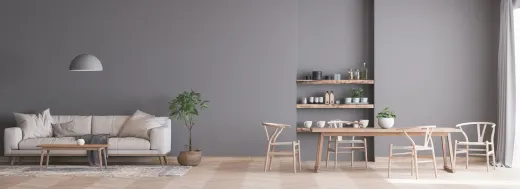
Colour drenching means painting everything in the room one colour: walls, trim, ceiling, often the doors and even a radiator. No white trim outlining every edge, no pale ceiling capping the space. With the boundaries dissolved, the eye stops measuring the room — corners recede, ceilings feel higher, and even a plain builder box reads as deliberate and expensive.
It is the design move of the moment because it needs no construction. No new trim, no millwork, no demolition — just more surfaces in the scope and a braver colour decision than most people have made before.
The cost answer up front: a drenched room costs more than a standard repaint of the same room, because trim, doors, and ceiling — normally separate line items on a painting quote — are all in scope, and deep colours often want an extra coat. Walls-only room painting runs around $5 per square foot of wall area as of 2026; drenching builds on that base. Details in the cost section below.
Rooms Where Drenching Shines: Dens, Powder Rooms, Bedrooms
Drenching works best in rooms with a single purpose and controlled light. Dens and home offices top the list — a deep green or ink-blue office is a cocoon for concentration and the best video-call backdrop in the house. Primary bedrooms drench beautifully in muted, dusty tones that make the room read calm rather than dark.
The powder room is the lowest-risk entry point: tiny wall area, no daylight to fight, and guests see it for two minutes — exactly long enough to be impressed. Basement media rooms are the sleeper win; instead of fighting a basement's limited light with white paint that turns grey anyway, a drenched charcoal or aubergine leans into the darkness and makes it feel intentional — something we build into many of our basement renovation designs. Where we counsel restraint: big open-concept main floors, where a drench has no natural place to stop, and kitchens dominated by cabinetry, where there is little left to drench.
Choosing a Drench Colour That Won't Exhaust You
The colours that survive years of drenching are mid-depth and muted — tones with grey or brown in their base. Olive and forest greens, ink and slate blues, clay, oxblood, warm taupe. Saturated brights that look energizing on a chip become relentless when they cover six surfaces, and near-blacks are stunning but unforgiving in rooms that see daytime use.
GTA light is the factor most people skip. A colour chosen on a bright July afternoon has to live through November to March, when daylight is short and grey; north-facing rooms mute and cool every colour, while south-facing ones warm them up. Paint large sample boards — not chips — and move them around the room for a few days, checking at morning, dusk, and under the actual evening lighting. The colour at 9 p.m. under your lamps is the one you will live with most, because that is when drenched rooms do their best work.
Sheen Strategy When Everything Is One Colour
One colour does not mean one finish — sheen is what keeps a drenched room from going flat. The combination we use most: matte on walls and ceiling, with the identical colour in satin or semi-gloss on trim and doors. Light catches the sheen change, so the mouldings still articulate — you read the room's architecture in texture instead of contrast.
The caution is that sheen magnifies surface flaws, and a drenched room invites raking light along big uninterrupted planes. Walls that would pass in flat white may need skim-coating before they can carry colour in a higher sheen — figure roughly $1.00–$1.50 per square foot over a standard paint-ready finish, and older plaster in prewar Toronto homes usually needs repairs first. The all-matte alternative is the most forgiving on imperfect walls and the moodiest to look at, but it scuffs in high-traffic rooms, so save it for bedrooms and dens rather than hallways.
What a Drenched Room Costs vs a Standard Repaint
Start from the baseline: single-room painting runs around $5 per square foot of wall area as of 2026, because setup and masking are fixed costs regardless of room size. A standard repaint often stops at the walls; a drench never does. Ceiling, trim, and doors — priced as separate items on most painting quotes — all join the scope, cutting-in gets more careful even though colour-on-colour hides small wobbles, and deep bases frequently want a tinted primer or a third coat to cover evenly.
The practical result: expect a meaningfully higher quote per room than a walls-only refresh, though still modest money next to any renovation with demolition in it. Two ways to keep it efficient — bundle the work, since painting three or more rooms in one visit drops per-room rates 15–25%, and be honest about the exit: repainting a drenched room back to a light neutral later takes extra coats. Quotes typically exclude 13% HST.
Pairing Drenched Rooms With a Neutral Whole Home
The formula we like for most GTA homes: a calm neutral envelope through the main and connected spaces, with one or two fully drenched rooms behind doors — the den, the powder room, a bedroom. The neutral base keeps the home bright and resale-flexible; the drenched rooms supply the character. Whole-home repaints run $1.80–$4.50 per square foot of wall area as of 2026, so the envelope-plus-drench approach fits neatly into a single painting mobilization.
Decision guidance: if you are new to strong colour, start with the powder room — small cost, huge effect, easy to reverse. Commit fully when you do drench; walls-only in a bold colour with white trim is just an accent room, and it reads as hesitation. And if the repaint is part of a larger project, schedule the drench last, after dusty trades are gone — the sequencing we use on home renovation projects across the GTA. Our Toronto renovation cost guide shows where painting sits in a full-project budget.
Ready to start your renovation?
Our team is here to help you bring your vision to life. Get a free, no-obligation quote today.
Get Free QuoteFrequently Asked Questions
Clear answers to the questions Ontario homeowners ask most.