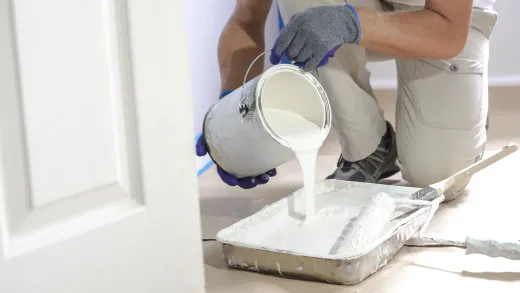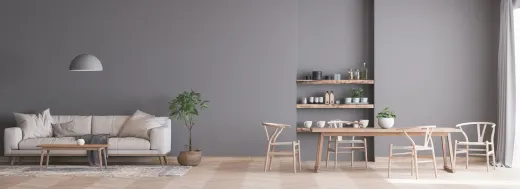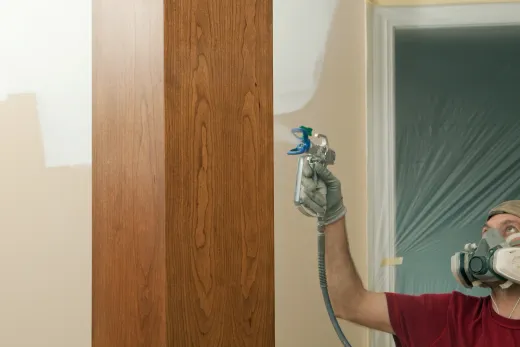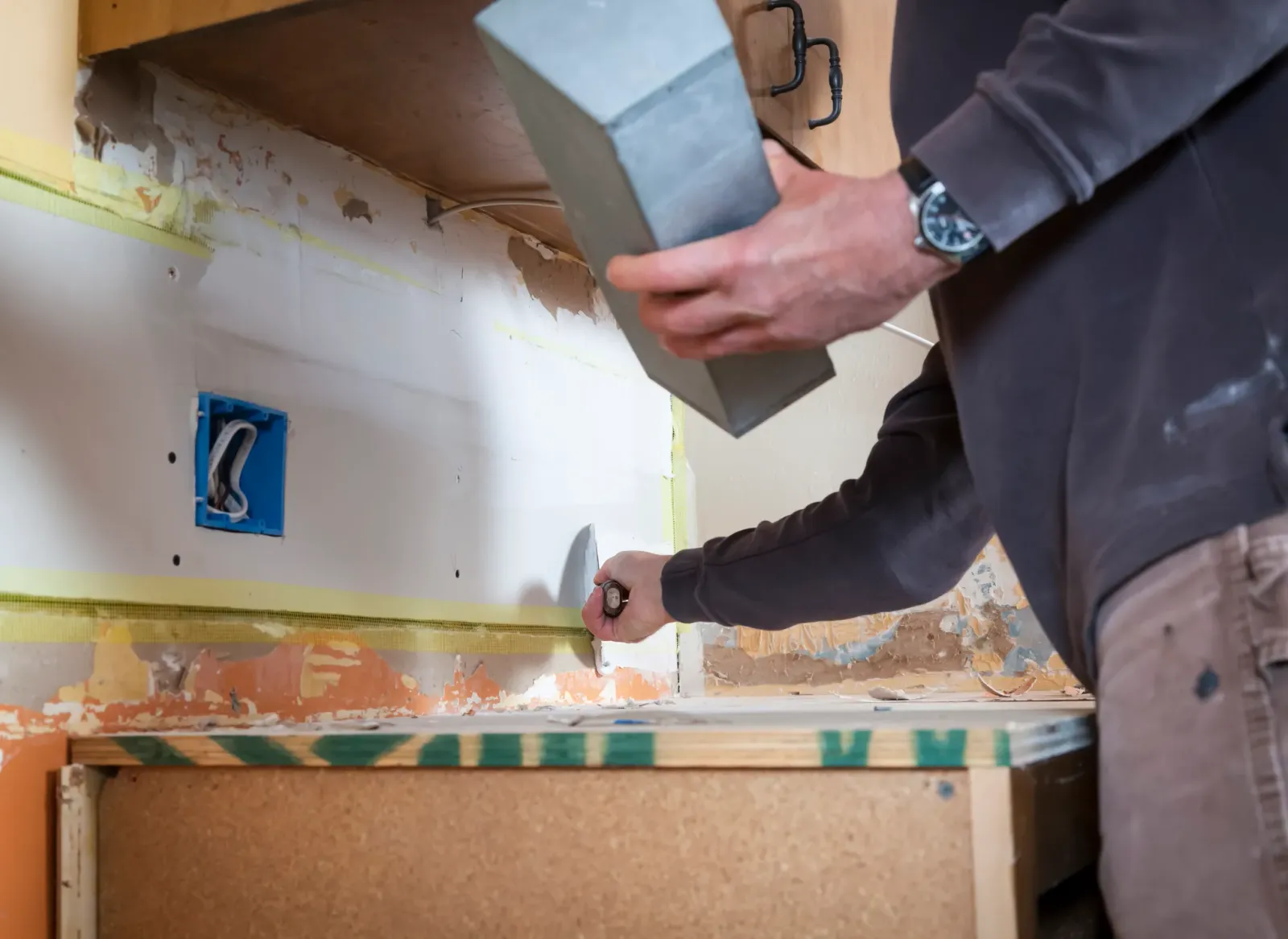
Burlington homeowners pay $1.80-$4.50 per square foot of wall area for interior painting in 2026. Where your home lands depends mostly on its build era and how much prep the walls need.
Burlington Interior Painting Prices at a Glance
For 2026, budget $1.80-$3.00 per square foot of wall area for a straightforward whole-home repaint in Burlington, and $2.50-$4.50 per square foot when the job includes serious prep — plaster repair in an older Roseland home, skim coating, or heavy trim work. Those rates are before 13% HST, which most painting quotes exclude.
Smaller scopes price differently. A single room quoted on its own runs about $5 per square foot of wall area because setup and cleanup are fixed whether the room is large or small; bundling three or more rooms drops the per-room rate 15-25%. Kitchen walls cost $700-$1,400 per room thanks to the cutting-in around cabinetry. Cabinet spraying, if you add it, is $3,000-$7,000 for a typical kitchen.
Painting needs no building permit in Burlington — worth mentioning only because the city's permit minimums are among the steepest in Halton, and it is nice that at least one home project skips that line entirely.
How Painters Price: Wall Area, Bundling, and Scope
Two details determine whether a Burlington painting quote reads high or low. The first is the measurement basis. Painters price wall area, not floor area, and wall area is roughly two and a half times bigger — a 12 by 12 bedroom with 8-foot ceilings has about 380 square feet of paintable wall. Always confirm which figure a quote is built on before comparing it to another.
The second is what is in and what is out. Ceilings, baseboards, casings, doors, and closet interiors are usually separate line items. A $6,000 quote and an $8,500 quote for the same house often describe different jobs — one is walls only, the other is walls plus ceilings and trim. This is the single most common reason quotes vary between contractors, in painting more than any other trade.
Bundling is your main lever. The crew that is already masked, sheeted, and set up in your home paints the fourth room far cheaper than a crew starting cold. If a room is on the someday list, put it on the now list.
Aldershot and Roseland Character Homes vs Alton Village New Builds
Burlington's stock climbs north by decade, and painting prep follows the same map.
Aldershot, the downtown core, and Roseland hold the older homes — pre-war through the 1950s and 60s, including lakefront character properties. The earliest of these have plaster walls that need crack repair and sometimes full skim coats, plus generous original trim that is slow to paint properly. Anything painted before 1980 deserves caution: Canada restricted lead in interior paint in 1976, and pre-1960 layers are the likeliest to contain it, so old trim gets tested or encapsulated, not aggressively sanded.
The central and east Burlington bungalow and split-level belts from the 1950s-70s bring the textured-ceiling question. Popcorn and stipple from that era may contain asbestos — the working rule is test anything pre-1990 before disturbing it. Lab tests run $300-$800; clear removals cost $2-$6 per square foot, up to $10 with full skim, prime, and paint.
Headon Forest, Millcroft, and Brant Hills (1980s-90s), The Orchard (late 90s-2000s), and Alton Village (2000s-2010s) are drywall throughout. Prep there is nail pops, settling cracks, and covering builder-grade flat paint — these homes sit at the low end of the range.
Cabinets and Trim: Where a Painting Budget Stretches Furthest
The two add-ons Burlington homeowners ask about most are cabinet spraying and trim conversion, and both are worth honest numbers.
Cabinet spraying runs $3,000-$7,000 for a typical kitchen, with a realistic full-process job — degrease, sand, bonding primer, two to three sprayed coats, re-hang — landing between $3,800 and $6,000. Door count drives the price. In Millcroft and The Orchard, where thousands of kitchens got the same builder oak or maple in the 90s and 2000s, spraying plus new hardware transforms the room for a tenth of replacement cost. The catch is condition: spraying tired boxes or a bad layout wastes money. If you are on the fence, compare against cabinet refacing versus full replacement before deciding.
Trim conversion — stained oak baseboards, casings, and railings to painted white — is the other big-impact job. It is priced separately from walls and is labour-heavy: clean, scuff-sand, prime with a stain-blocking primer, then two finish coats. Done well, it modernizes a 1990s Burlington home more than any single wall colour. Done cheaply, tannin bleed shows through in six months.
The Six Factors That Set Your Quote
Painting is a labour trade — materials rarely exceed a modest share of the bill — so anything that adds hours adds cost:
- Ceiling height: two-storey foyers and open stairwells in Alton Village and Millcroft homes need staging or scaffolding
- Wall repairs: cracks, water stains, previous DIY patches, and skim coating
- Colour changes: dark-to-light transitions and saturated colours need extra coats
- Number of colours: every colour switch means new cutting-in and brush changes
- Occupied homes: furniture moving and daily cleanup across a full repaint adds real time
- Paint quality: premium washable lines cost more per gallon but survive kids and cleaning
Get each quote itemized with coats, prep steps, paint line, and HST treatment spelled out. If you are staging a larger renovation, sequence painting near the end — paint before flooring and trim work means paying for touch-ups twice. Our guide to what drives renovation costs up covers the sequencing traps in more detail.
Deciding: DIY, Painter, or Part of a Bigger Project
Here is how we would frame the decision for a Burlington home.
DIY makes sense for a single room in a post-1990 house: sound drywall, normal ceiling heights, forgiving scope. The savings are genuine because labour dominates painting costs.
Hire a painter when it is the whole home, when ceilings pass nine feet, or when the house predates 1980 and prep involves plaster, possible lead layers, or textured ceilings. A crew finishes in days what takes a homeowner weeks, and professional prep is why the paint still looks right in year eight.
Fold painting into a renovation when walls are the symptom, not the problem. If you are repainting because the layout feels dated, the trim is worn, and the flooring is next on the list anyway, one coordinated project costs less than three sequential ones — and paint goes on last, once the dusty trades are done. That is how we run home renovations in Burlington, with painting as the finishing trade rather than an afterthought. If a refreshed kitchen is part of the plan, a kitchen renovation in Burlington can fold cabinet finishing into the same schedule. Quotes are free and itemized, so you can see exactly where each dollar goes.
Ready to start your renovation?
Our team is here to help you bring your vision to life. Get a free, no-obligation quote today.
Get Free QuoteFrequently Asked Questions
Clear answers to the questions Ontario homeowners ask most.