Painting a small room light doesn't automatically make it feel bigger — and dark walls don't shrink it. What decides the call is light direction, ceiling height, and how the room is used.
The Myth: Light Makes Small Rooms Bigger
The honest answer: light paint enlarges a small room only when the room has real light to work with. In a bright room, pale walls bounce daylight around and the walls visually recede. In a dim room — and the GTA has no shortage of those — light paint has nothing to bounce, so it just sits there looking flat and grey, and the room reads small anyway. Dark paint, used deliberately, often makes the same room feel intentional, finished, and calm.
We repaint a lot of rooms where a previous owner followed the standard advice. The north-facing office in a Victorian row house painted bright white that reads as dingy grey by 2 p.m. The windowless den in a condo painted pale cream that looks like primer. The advice was not wrong — it was incomplete. "Light colours enlarge" assumes daylight that many small GTA rooms simply do not receive.
So the real question is not dark versus light. It is: what does this specific room's light, ceiling height, and use case call for? That takes about ten minutes to assess honestly, and the next two sections show how.
When Dark Walls Make a Small Room Feel Intentional
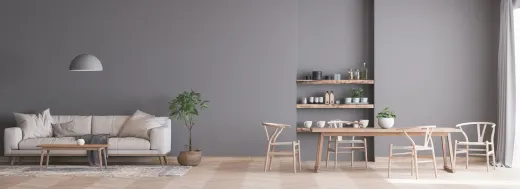
A dim room painted light is fighting its nature and losing. The same room painted deep green, navy, or charcoal stops apologizing. Instead of pretending to be bright, it becomes cozy — and cozy is a design outcome, where dingy is a design failure.
Dark paint works in small rooms when three conditions line up. First, the room has a defined purpose where enclosure is a feature: a den, office, powder room, media room, or moody dining room. Second, the lighting is layered — lamps, sconces, or dimmable fixtures that glow against dark walls at night, which is when these rooms are mostly used anyway. Third, there is contrast somewhere: pale ceiling, warm wood, brass hardware, art. Dark walls are a backdrop; they need something to back.
Where we talk clients out of it: kids' bedrooms that double as play space, kitchens with minimal daylight, and any room you are about to photograph for a listing — dark walls consistently shrink rooms on camera even when they feel great in person. And finished basements are a split call: a basement media room takes charcoal beautifully, while a basement that needs to feel like living space usually wants light, warm walls. We handle that trade-off constantly in our basement renovation projects.
Reading Your Room: Light Direction and Ceiling Height
Two physical facts about the room decide more than any colour swatch.
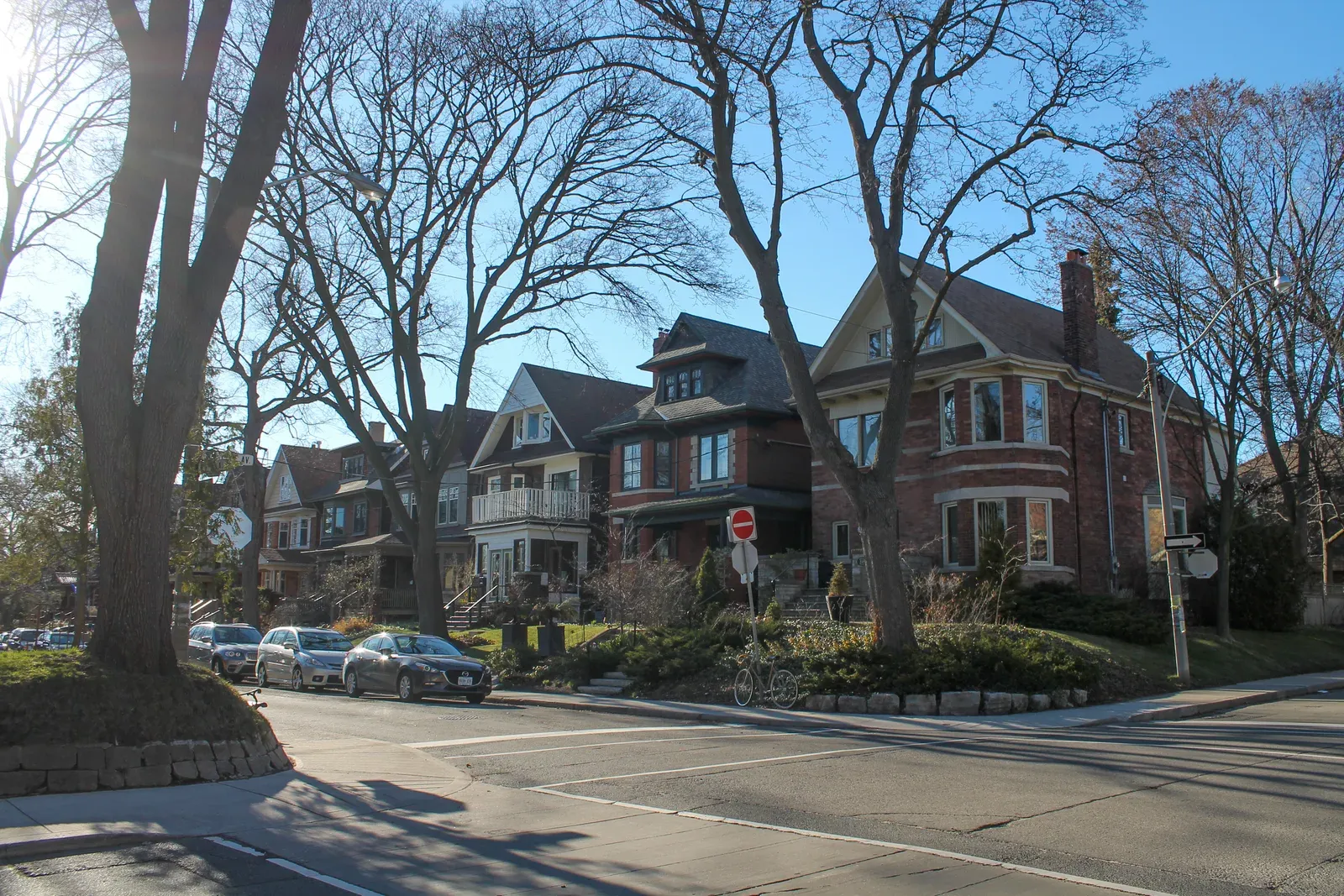
Light direction first. North-facing rooms receive cool, flat, indirect light all day — common in Toronto's east-west Victorian rows, where the middle rooms of a narrow semi may get almost no direct sun at all. Cool light drains pale colours, so a north room painted stark white turns grey. South-facing rooms get generous warm light and can carry almost anything. East rooms are bright mornings and dim evenings; west rooms the reverse, with strong orange light at day's end that shifts colours warm.
Ceiling height second. Small rooms with standard 8-foot ceilings — most GTA housing before the 1990s — feel lower when a dark colour stops at the ceiling line, because the contrast draws a hard lid on the room. The fixes are either keeping walls lighter, or taking colour up onto the ceiling itself, which is the next section. In 1990s-and-newer builds with 9-foot ceilings, small rooms handle dark walls much more gracefully — the height buys forgiveness.
Quick diagnostic: sit in the room at the time of day you actually use it, lights set how you would actually have them. That lighting condition — not the paint-store aisle — is what your colour has to perform in.
Colour-Drenching: Walls, Trim, and Ceiling as One
The strongest current technique for small rooms is colour-drenching: one colour on the walls, trim, doors, and ceiling. It sounds extreme and looks remarkably calm. Painting everything one shade erases the contrast lines that define a room's edges, so the eye stops measuring the box — the ceiling line disappears, the trim stops chopping the walls into panels, and the room reads as one continuous volume. In small spaces, that reads as bigger.
Drenching works in both directions. A small den drenched in deep green feels like a jewel box. A low-ceilinged bedroom drenched in warm off-white feels airy precisely because the 8-foot ceiling line vanishes. It is especially effective in older Toronto and Hamilton homes where small rooms carry heavy trim — drenching keeps the trim's texture but retires its visual noise.
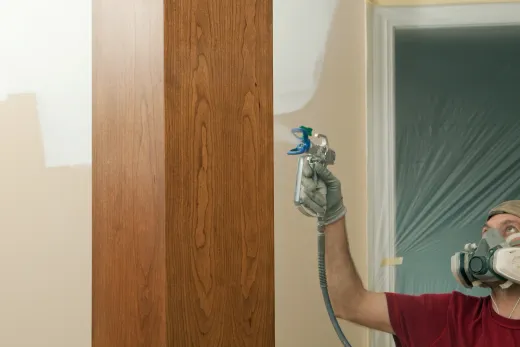
Execution notes: vary the sheen even when the colour is uniform — flat on the ceiling, eggshell or matte on walls, satin or semi-gloss enamel on trim — so surfaces wear appropriately while reading as one colour. Expect the quote to include trim and ceiling as their own lines; a single room painted alone runs about $5 per square foot of wall area in the GTA, and drenching adds the ceiling and trim scope on top. And commit fully — a drenched room with a white ceiling is just a dark room again.
Small-Room Palettes for North-Facing GTA Rooms
North rooms are the hardest case, so they get their own rules. The cool, flat light strips warmth out of whatever you put on the walls, which means the palette has to bring its own.
Going light: choose whites and neutrals with a clearly warm undertone — cream-leaning whites, warm greiges, soft oat tones. Test them against a true white sheet of paper; if the swatch does not look slightly warm by comparison, the north light will turn it morgue-grey. Avoid cool greys and blue-whites entirely; they were the default palette of the 2010s and they are at their worst in north light.
Going dark: lean into saturated, warm-based colours — olive and forest greens, ink navy, aubergine, deep clay. In flat northern light these hold their character all day, where paler versions of the same hues go muddy. This is the standard playbook for the north-facing middle rooms in Toronto's Victorian and Edwardian semis, and for back-split lower-level dens across Scarborough and older Etobicoke, where grade-level windows deliver limited, indirect light.
Either direction, warmth is the constant. The choice between pale-warm and dark-warm is about how the room is used: workspaces and kids' rooms lean light, evening rooms lean dark.
Testing Before Committing: The Right Way to Sample
Most paint regret traces to one mistake: choosing from a two-inch swatch under store lighting. The fix costs a few dollars and a weekend.
Buy sample pots of your two or three finalists. Paint each onto a large board — two feet square, or a primed foam board — rather than directly onto the wall, so you can move the sample around the room. Look at each board against every wall, because the wall facing the window and the wall beside it receive completely different light. Check at morning, mid-afternoon, and night under your actual bulbs. Colours that tie in daylight often separate completely at 9 p.m.
Two practical notes from repaint jobs. Dark-to-light reversals are the expensive direction — covering navy with warm white takes extra coats, and painters price it accordingly — so sampling properly before going dark protects the exit cost too. And if the room needs drywall repairs, do them before judging samples; patches read as colour variation and skew the test.
When the small room is part of a larger project — an office carved out of a bedroom, a reworked main floor in an older Toronto house — colour decisions get easier once layout and lighting are settled, which is the order we follow on full home renovations. If you are choosing colours with resale in mind instead, the calculus changes entirely; see our list of renovations that actually increase home value before painting anything dramatic.
Ready to start your renovation?
Our team is here to help you bring your vision to life. Get a free, no-obligation quote today.
Get Free QuoteFrequently Asked Questions
Clear answers to the questions Ontario homeowners ask most.