Toronto's Victorian rows hide a century of history under their floors — original pine, board subfloors, joists settled their own way. Here is how we approach flooring in these houses.
What's Under Your Floors in Cabbagetown, Riverdale and Parkdale
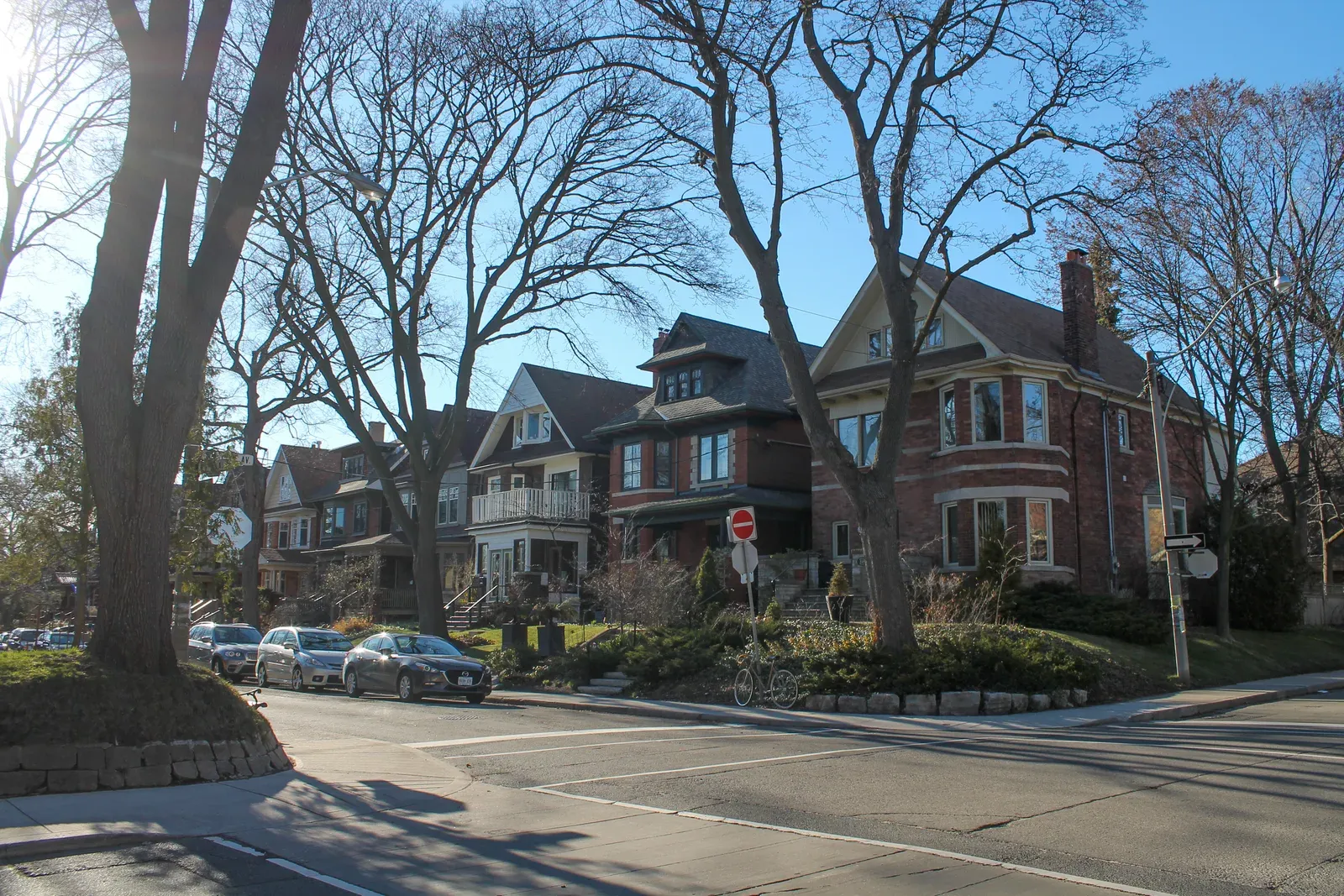
Toronto's Victorian and Edwardian rows — Cabbagetown, Riverdale, Leslieville, Parkdale, Trinity-Bellwoods, the Annex — went up roughly between 1880 and 1915, and their floors were built accordingly. Instead of plywood, you will find board subfloors: individual planks nailed across true-dimension joists, often laid on the diagonal, with a century of gaps, cupping and old repairs. Above that sits the finish floor, commonly softwood pine on upper storeys and oak in the front rooms where owners spent their money. Below, plaster-and-lath ceilings hang from the same joists — which is why heavy-handed floor demolition in these houses cracks ceilings in the room underneath.
And almost nothing is level. These homes have settled for over a century on rubble or brick foundations, so floors slope toward chimneys and centre walls; a difference of an inch or more across a room is ordinary, not alarming. The practical consequence: flooring quotes for a Victorian involve judgment calls a 1990s subdivision house never raises. What follows is how we make those calls, with 2026 costs — and why every one of these projects should carry contingency.
Original Pine and Oak: Refinish, Restore or Let Go
If original wood survives, refinishing is usually the best value in the house. Hardwood refinishing runs $4–$9 per sq ft in Toronto as of 2026: a standard sand, stain and multi-coat urethane job lands at $4–$6, while premium work — board repairs, custom stains, oil-based or hardwax-oil finishes that suit old wood — runs $6–$8. For a century floor, budget the premium end, because there are always repairs: patching where radiators were moved, weaving in boards at old wall openings, resetting proud nails.
The honest limit is thickness. A floor sanded several times over a hundred years may not have enough wood left above the tongue for another full sanding — we check by pulling a floor vent and measuring. Pine adds its own character debate: it dents easily and carries every mark of its history, which some owners love and others do not. Two safety notes before anyone touches an old floor: painted floors in pre-1960 homes may carry lead paint, and sheet vinyl or tile layered over the original wood in pre-1990 renovations can contain asbestos — test before disturbing either. When the original floor is too thin or too patched, we let it go and put the budget into a sympathetic replacement.
Levelling Century Subfloors Before Anything New Goes Down
New flooring is only as good as what it sits on, and in a Victorian the subfloor work is often the biggest line on the quote. The standard sequence: screw down every board of the old plank subfloor to kill squeaks, replace rotted or split sections, then flatten. Depending on severity, flattening means sanding high spots, shimming with tapered sleepers, sheeting over with plywood, or pouring self-levelling compound — which runs $3–$8 per sq ft where it is needed. Note the goal is flat, not level: chasing true level in a settled house means feathering huge thicknesses and creating step problems at stairs and doorways, so we correct the humps and dips and leave the century-old lean alone.
One more reason not to rush this stage: what lives beneath. Knob-and-tube wiring is common in these homes' floor and ceiling cavities, and driving screws or nails blind into a cavity with active K&T is a genuine hazard — we scout before fastening. If you are wondering whether existing layers must come up first, our answer on removing old flooring before installing new covers it; in Victorians the answer is almost always yes, because stacked layers hide the problems you are paying to fix.
Matching New Wood to 1900s Character: Widths, Species, Stains
When replacement is the right call, the goal is a floor that looks like it could always have been there. Scale matters most: the ultra-wide 8-inch planks popular in new builds can feel off in an 1890s semi with 10-foot ceilings and narrow rooms. We usually land at 3 1/4 to 5 inches — enough presence to feel current, narrow enough to respect the architecture. Site-finished oak is the workhorse: red oak nods to the neighbourhood's originals, while white oak takes the softer stains most owners now prefer. In Edwardian houses with quarter-sawn oak details in the trim and staircase, quarter-sawn flooring in principal rooms is a detail that buyers of these homes genuinely notice.
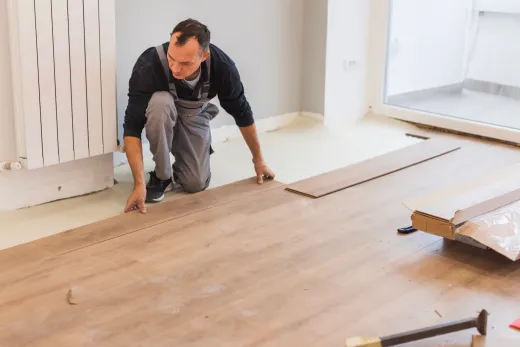
Finish sheen does a lot of quiet work — satin or matte reads period-appropriate where high gloss reads condo. Stain choice should defer to the house's fixed elements: the staircase, the trim, the brick. And engineered wood is not cheating here; over a corrected century subfloor, a quality engineered oak with a thick wear layer often behaves better than solid through Toronto's radiator-heated winters. Our hardwood flooring installation team does both, and will tell you plainly which your subfloor supports.
Where Tile and LVP Fit in a Victorian: Kitchens, Baths, Basements
Not every room in a century house wants wood. Kitchens in these homes typically sit in the rear section — often a later addition with its own settlement history — and take the hardest use in the house; porcelain tile or a rigid-core LVP both make sense there, with tile labour at $8–$15 per sq ft for standard formats plus levelling where the old addition has moved. Bathrooms are tile territory, full stop, with proper waterproofing beneath.
Basements are their own world. Victorian basements run low — commonly 6'0" to 6'6" — with rubble foundations and real moisture, so anything wood-based is a risk and every millimetre of height counts. A vapour-tolerant LVP or tile over a corrected slab is the defensible choice; we go deeper in our answer on the best flooring for finished basements. If the long-term plan is a usable lower level, many owners in these neighbourhoods eventually underpin — a separate, larger project — and flooring decisions should wait until after that structural work, not before. Meanwhile, transitions between tile zones and original wood deserve care: flush, simple thresholds keep the old-house flow intact.
Budgeting: Why Victorian Flooring Quotes Carry Contingency
Pull the numbers together for 2026. Refinishing original floors: $4–$9 per sq ft, planning for the upper half in a century home. New hardwood: $8–$15 per sq ft installed for solid, roughly $7–$13 for engineered, on top of subfloor correction that can add several dollars more per foot. Downtown Toronto pricing runs 10–20% above the GTA average, quotes are typically before 13% HST, and our flooring projects start from $5,000.
Then add contingency — we recommend 10–20%, and in pre-1990 housing it is not padding. The most common budget-busters we open up in these homes: hidden layers of old flooring, subfloor rot at exterior walls, knob-and-tube in the cavities, and asbestos-suspect sheet goods that need testing before removal. None are reasons to avoid the project; they are reasons to price it honestly at the start. The decision framework is simple: refinish if the original wood has thickness left — nothing new matches its character per dollar; replace with site-finished oak when it does not; use tile and LVP where water and basements demand it. For a proper assessment, our Toronto flooring team works in these neighbourhoods constantly, and the Toronto flooring cost guide has the full pricing picture before you book a free quote.
Ready to start your renovation?
Our team is here to help you bring your vision to life. Get a free, no-obligation quote today.
Get Free QuoteFrequently Asked Questions
Clear answers to the questions Ontario homeowners ask most.