Freestanding Tub vs Built-In: Which Belongs in Your Bathroom?
One is the centrepiece of every ensuite photo; the other is where the kids actually get bathed. An honest look at what each tub costs, needs, and does for a GTA home.
The Real Difference Beyond Looks
A built-in alcove tub is a plumbing fixture. A freestanding tub is a piece of furniture that happens to hold water. That distinction drives everything — cost, space, cleaning, and resale.
The alcove tub sits in a three-wall pocket, its plumbing hidden in the wet wall, its edges sealed to tile. Replacing one like-for-like runs $2,000 to $5,000 installed in the GTA as of 2026, and because the rough-in stays put, it is one of the most contained jobs in bathroom work. The freestanding tub sits in open floor, which means its drain comes up through the floor wherever the tub lands, and its filler either mounts on the floor beside it or reaches from a wall. Placing one where no tub drain existed before means relocating plumbing — typically $2,000 to $6,000 on top of the tub itself — and that is before the room around it is finished to a standard that deserves the showpiece.
Neither is the better tub in the abstract. They are answers to different questions: one asks how a family bathroom works hard for twenty years, the other asks what a primary ensuite should feel like. Sorting out which question your renovation is answering is most of the decision.
Space Requirements: When a Freestanding Tub Fits
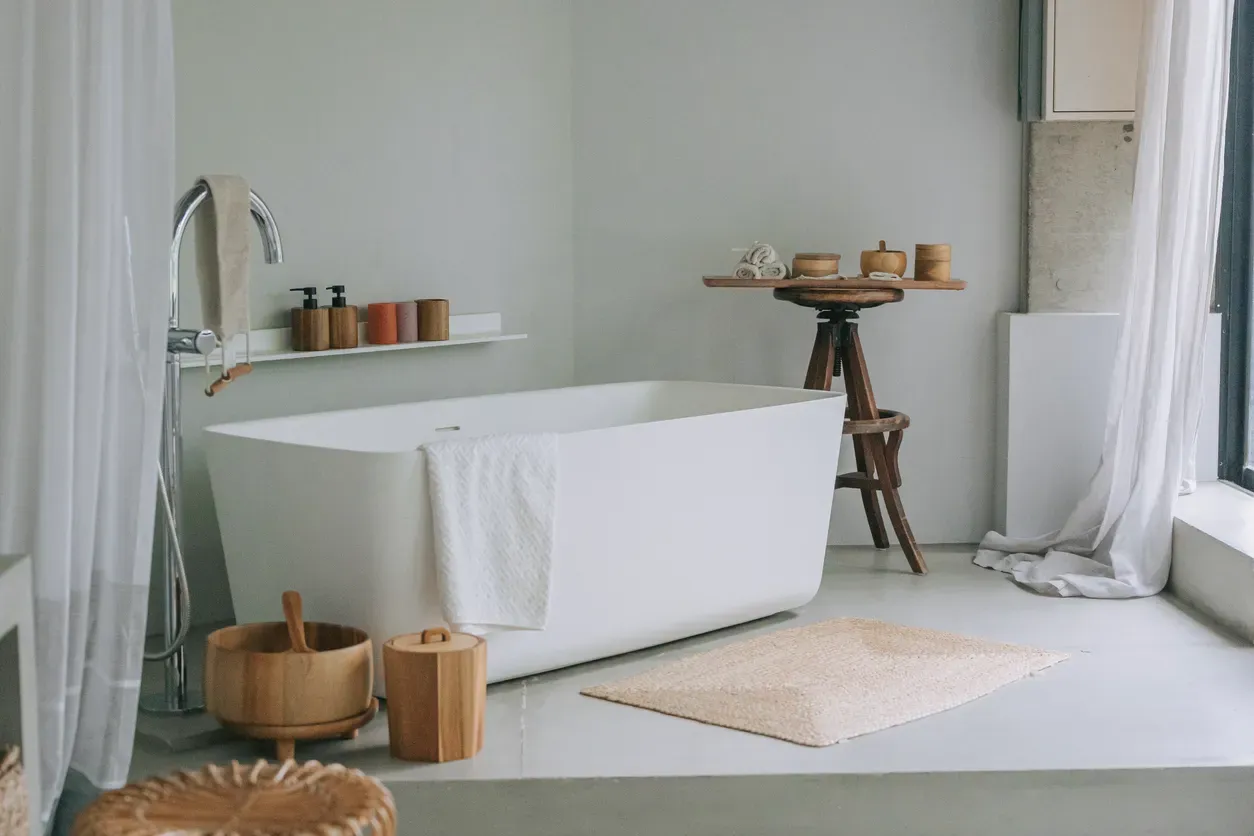
A freestanding tub needs air around it — that is the whole point. Push one into a corner with its rim tight to two walls and you get the worst of both formats: alcove practicality lost, freestanding drama lost, and a cleaning gap you cannot reach into.
As a working rule from our installs, the look only pays off when there is comfortable clearance on all sides for cleaning and for the eye — enough that the tub reads as an object in the room rather than a fixture jammed against tile. In the GTA housing stock we renovate, that generally means the tub belongs in a proper primary ensuite. The typical 5-by-8 family bathroom in a Scarborough back-split or a Mississauga two-storey simply does not have the floor; the alcove format was invented for exactly that room.
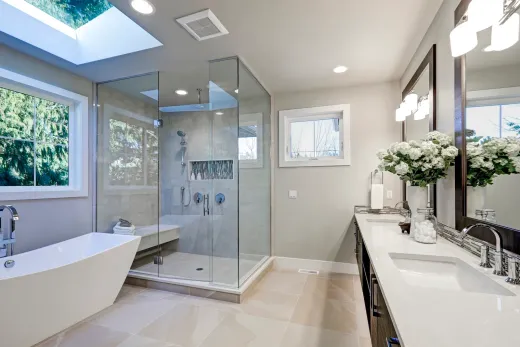
Where the space genuinely exists — ensuites in newer Vaughan and Oakville builds, converted bedrooms in older Toronto homes, additions designed around the bathroom — a freestanding tub anchors the room like nothing else. Those are the projects where full ensuite renovations typically land in the $28,000 to $45,000 range, with the tub as the visual centre and a walk-in shower doing the daily work beside it.
Cost Comparison Installed, Including Floor-Mounted Fillers
The sticker price of the tub is the smaller half of this comparison; the installation around it is where the formats diverge.
- Alcove, like-for-like: $2,000 to $5,000 installed. Existing rough-in, existing wet wall, tile the surround and done.
- Freestanding in a new location: the tub, plus $2,000 to $6,000 of plumbing relocation to bring the drain and supply through the floor, plus finished flooring under and around the tub — because a freestanding tub sits on display, the floor beneath it must be done properly, not patched.
- The filler: a floor-mounted tub filler is its own rough-in through the floor with its own shut-offs, and it costs meaningfully more in both hardware and labour than a deck- or wall-mount valve. Wall-mounted fillers reaching over the rim are the budget-saving compromise when the tub sits near a wet wall.
A fair rule of thumb: expect the freestanding format, all-in, to run two to three times the cost of an equivalent-quality alcove replacement once plumbing and flooring are counted. Whether that premium makes sense depends on the room's role, which our bathroom renovation cost guide puts in the context of the full project budget.
Cleaning Around It: The Part Nobody Mentions
Showroom lighting never shows you the floor behind the tub eight months in. It deserves a paragraph, because it is the most common regret we hear from freestanding owners.
The gap between tub and wall collects dust, hair, and overspray, and cleaning it means reaching around a heavy fixed object with a mop that barely fits. Water that splashes over the rim has nowhere discreet to go — there is no tiled surround catching it, just your floor and its seams. Hard water in much of the GTA spots the exterior of a dark or glossy tub quickly, and the tub's outside surface is now part of your cleaning routine in a way an alcove apron never was.
An alcove tub has exactly one maintenance-critical detail: the caulk line where tub meets tile. Renew it when it ages and the assembly stays sealed; ignore it and water finds the wall — the same discipline any properly waterproofed wet area depends on.
None of this is a reason to skip the freestanding tub you want. It is a reason to place it with real clearance, choose flooring finishes that tolerate water, and go in with open eyes about what you are signing up to maintain.
Families, Resale, and the Case for One Alcove Tub
Selling a house in the GTA, tubs get judged twice. Buyers with young children look for at least one real tub — bathing a toddler in a walk-in shower does not work, and a freestanding tub's high rim and open sides make it an awkward, wet-floored substitute for bath night. Buyers shopping the primary ensuite, meanwhile, respond to the freestanding soaker as a luxury signal; it is the photo that sells the listing.
The resale-smart configuration in most family homes is therefore both: a hard-working alcove tub in the main or kids' bathroom, and the freestanding showpiece — if anywhere — in the ensuite where a walk-in shower handles daily duty beside it. What we caution against is removing the home's only tub to install a freestanding one purely for looks, or worse, removing every tub. A tub-free house narrows your buyer pool in family neighbourhoods from Ajax to Milton, which is the same reasoning we walk through in choosing between a walk-in shower and a tub.
If your house has two or more bathrooms, you have room to give each format the job it is best at. One-bathroom homes should almost always keep an alcove tub.
Choosing Based on How You Actually Bathe
Strip away the showroom romance and the decision usually makes itself.
Choose the freestanding tub if you genuinely take baths — weekly, not annually — and you have an ensuite with the clearance to place it properly and a separate shower for daily use. You are buying a daily view and a weekly ritual, and for real bathers in a real ensuite it earns its premium every time the door closes.
Choose the alcove if the tub's job is function: kids, dogs, the occasional soak, showering behind a glass panel in a bathroom that cannot spare floor space. Put the savings into what you touch daily — tile, valve quality, the vanity — and nobody will ever call the room a compromise.
And if you are being honest that nobody in the house has taken a bath since 2019, consider skipping the tub debate in that bathroom entirely; a tub-to-shower conversion puts the space to better use, provided another tub stays elsewhere in the house.
We design and build bathrooms around both formats across Toronto and the GTA, and we will tell you plainly which one your room supports. Quotes are free, and we price the options side by side so the premium is a number, not a guess.
Ready to start your renovation?
Our team is here to help you bring your vision to life. Get a free, no-obligation quote today.
Get Free QuoteFrequently Asked Questions
Clear answers to the questions Ontario homeowners ask most.