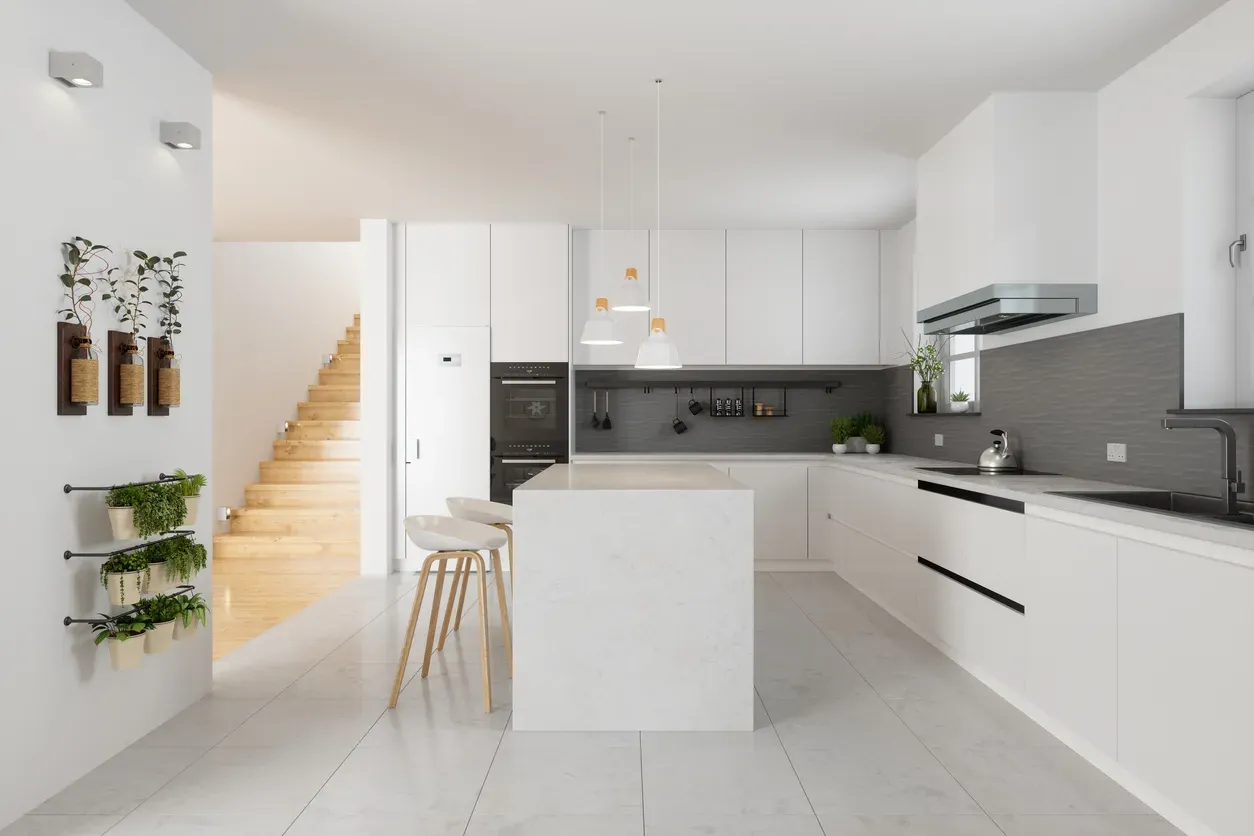
Cabinets eat 30 to 40 percent of a kitchen budget, and storage upgrades are where quotes quietly grow. After two decades of GTA kitchens, here is what earns its price and what does not.
Pull-Out Pantries and a Wall of Tall Storage
The single most requested upgrade in our GTA kitchens is more pantry space, and the best answer is usually vertical. A tall pull-out pantry — a full-height cabinet where the whole interior glides out on rails — puts every can and box at eye level with nothing lost at the back. In the narrow kitchens of Toronto semis, where there is no room for a walk-in pantry and every inch of wall counts, one 18-to-24-inch pull-out often replaces an entire run of half-useful uppers.
If you have more width to work with, a wall of talls does the same job at lower cost per litre of storage: standard full-height cabinets with adjustable shelving and a few internal roll-outs, sometimes wrapping the fridge so the whole run reads as one built-in piece. This is the move we make most often in custom cabinetry projects, because it converts the least useful zone in the kitchen — scattered upper cabinets — into the most useful one.
Both options earn their price. Pantry storage gets used every single day, and it is the upgrade owners mention years later.
Corner Cabinets That Earn Their Price
Every L-shape and U-shape kitchen has at least one corner, and the corner is where storage money goes to die. The builder-grade answer across 1980s subdivisions — Erin Mills, Meadowvale, Glen Abbey — was a lazy susan, and an honest one still works: it is cheap, simple, and fine for pots and small appliances.
The step up is a blind-corner pull-out, an articulated set of shelves that swings the contents of the dead corner out into the doorway. In a small kitchen where that corner might hold a fifth of your total base storage, it earns its price. In a large kitchen with an island, it often does not — you are paying a premium to rescue space you do not actually need.
Corner drawers, which cut diagonally across the corner, look great and function well but generally only come from custom shops, which puts them at the top of the price ladder. Our honest ranking for most GTA kitchens: good lazy susan first, blind-corner pull-out where base storage is tight, corner drawers only when the budget is already comfortably in custom territory.
Drawers vs Doors in Base Cabinets
If you take one thing from this post: put drawers, not doors, in your base cabinets. A base cabinet with doors makes you kneel and excavate. A stack of deep, full-extension drawers brings pots, pans, mixing bowls and small appliances to you, with sightlines to everything at once. Add a pegboard or divider system in the deep drawers and even lids stop being chaos.
Drawer bases cost more than door bases — more hardware, more boxes, more labour — and this is the main reason a drawer-heavy kitchen prices out of stock cabinetry, which runs roughly $150 to $400 per linear foot installed in the GTA as of 2026, and into semi-custom territory at $300 to $900 per linear foot. That jump sounds painful, but it is the single most functional dollar in the whole cabinet order. We have never had a client regret drawer bases. We have had plenty regret door bases within the first month.
Soft-close hardware is standard from any decent shop now; treat it as a given rather than an upgrade worth paying separately for.
Island and Toe-Kick Storage
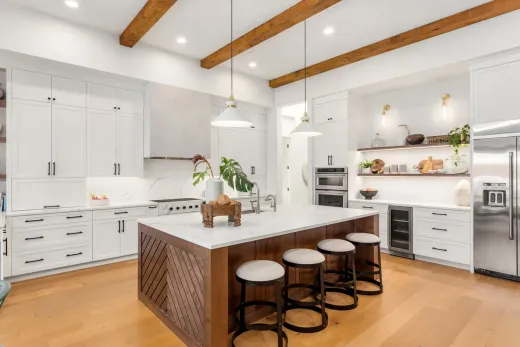
An island is the easiest place to add serious storage, because its back and ends are usually wasted on panels. Deep drawers on the working side, a recycling and garbage pull-out near the sink end, and shallow shelves or cabinets on the seating side for cookbooks, board games or bar stock — that combination can add the equivalent of a full base run without changing the kitchen's footprint. Check the clearances before committing to an island; storage is only a win if you can still open the drawers with a stool pulled out.
Toe-kick drawers — flat drawers hidden in the 4-inch space under the cabinets — are the upgrade people see online and ask us about most. Real-world verdict: they hold baking sheets, serving trays and pet bowls, and almost nothing else. They cost real money per unit because they are fiddly to build and install. In a compact condo kitchen where every cubic inch matters, one or two can be justified. In a detached house with a pantry wall, skip them and put the money into another drawer stack.
What These Upgrades Do to a GTA Cabinet Quote
Cabinets are typically the largest line in a kitchen renovation — 30 to 40 percent of the budget. As of 2026, complete cabinet packages in the GTA land roughly in these bands:
- Budget/stock: $3,000–$6,000 — doors on bases, basic lazy susan, no interior hardware.
- Mid-range/semi-custom: $8,000–$18,000 — drawer bases, a pantry pull-out or wall of talls, one corner solution, soft-close throughout.
- High-end/custom: $18,000–$40,000+ — corner drawers, integrated panels, interior fittings everywhere.
Each accessory is priced per unit by the cabinet shop, so the honest way to control the number is to rank upgrades before quoting, not delete them in a panic afterward. Remember the whole-project context too: a full kitchen renovation in the GTA starts around $25,000 and typically runs $25,000 to $80,000 — our Toronto kitchen cost guide breaks down every line.
One more path worth knowing: if your existing boxes are sound, refacing instead of replacing typically saves 40 to 50 percent, and roll-outs can be retrofitted into existing cabinets at the same time.
What to Skip, and Where to Put the Savings
The upgrades we most often talk clients out of: motorized lift-up doors (an expensive solution to a problem hinges already solved), toe-kick drawers in kitchens with ample storage, appliance garages sized for appliances you do not own, and duplicate corner gadgets in kitchens that already have a pantry wall. None of these are bad products. They are just the last dollars you should spend, not the first.
Spend the savings in this order: drawer bases everywhere, one full-height pantry pull-out or wall of talls, a garbage and recycling pull-out at the sink, then one good corner solution. That set covers 90 percent of how a household actually uses a kitchen, and it fits inside a semi-custom budget. There are more ideas like this in our guide to saving money on a renovation without cutting quality.
When you are ready to price a specific layout, bring us your must-have list and your maybe list separately. We quote them line by line, so you can see exactly what each upgrade adds before anything goes to order.
Ready to start your renovation?
Our team is here to help you bring your vision to life. Get a free, no-obligation quote today.
Get Free QuoteFrequently Asked Questions
Clear answers to the questions Ontario homeowners ask most.