Quick Answer
As a rule of thumb, you need at least 42 to 48 inches of clear floor space on every side of a kitchen island, so your room generally has to be about 13 feet wide or larger to fit even a modest island. Below roughly 10 to 11 feet wide, a peninsula or a slimmer island usually works better. The exact answer depends on your appliance locations, traffic flow, and how many cooks use the space, which is why a quick site visit gives the most reliable verdict.
How much clearance you actually need around a kitchen island
Plan for a minimum of 42 inches of clear walkway on every open side of the island, and 48 inches where two people pass or where an appliance door (oven, dishwasher, or fridge) swings into that aisle. These are the clearances most kitchen designers and the building-code guidance behind kitchen ergonomics use, and they measure from the edge of the island countertop to the face of the opposite cabinet or wall, not stud-to-stud. Tighter than 42 inches and the space feels pinched: a bent-over dishwasher door blocks the aisle, two people can't squeeze past, and seating becomes uncomfortable. If the island has stools, add depth for them too; a seated diner needs roughly 24 inches of clearance behind the stool to slide in and out without hitting the wall or cabinets behind. In a single-cook galley-style kitchen you can sometimes live with 40 inches on a low-traffic side, but we rarely recommend going below that in a busy GTA family home where the kitchen doubles as a hallway to the backyard or garage.
The quick math: will your kitchen actually fit one?
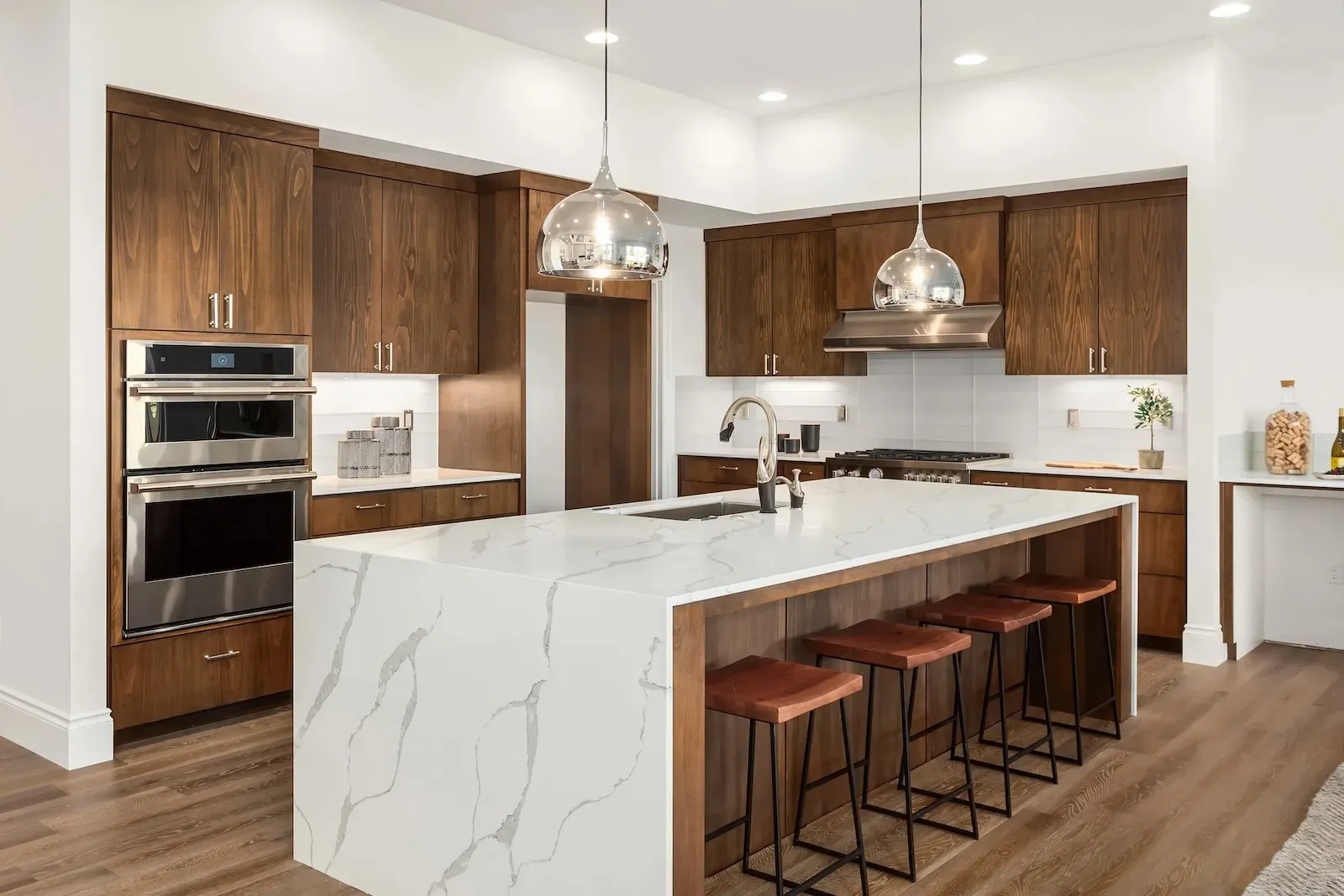
Start with your room's clear width, then subtract the walkways and the island. A workable island is usually about 36 to 42 inches deep, made up of a 24-inch base cabinet plus a roughly 12-inch seating overhang, and at least 40 to 48 inches long. Take a 40-inch-wide island and the recommended 42-inch aisles on both sides: 42 plus 40 plus 42 equals 124 inches, or about 10 feet 4 inches, just for the island corridor, before you account for the perimeter counter depth on each wall. Add a standard 25-inch counter plus toe space on the run that holds your sink or range, and you realistically want about 13 feet of clear room width and at least 10 to 11 feet of length to land a true island. If you have less, a peninsula attached to one wall, a slim 18 to 24-inch prep island, or a rolling cart often delivers most of the benefit. Bring us your measurements and we'll model it before you commit.
Plumbing, electrical, and structure that affect island feasibility in GTA homes
Whether an island fits is not only about floor space; it's about what runs under and above it. If you want a sink or dishwasher in the island, we have to route drain, water, and vent lines through the floor, which is straightforward over a basement or crawlspace but more involved on a concrete slab or in a condo with limited access. An island cooktop adds a hood or downdraft and dedicated venting. Electrical code in Ontario requires receptacles for most islands, and these have to be placed and protected correctly. In many older Toronto, Hamilton, and Etobicoke homes, opening up a wall to make island room means checking whether that wall is load-bearing; if it is, a beam and proper support are needed, which changes scope and budget. These are the details that separate a clean install from a callback. A site visit lets us confirm joist direction, panel capacity, and venting routes before any island design is locked in.
What a kitchen island and the surrounding work typically costs in the GTA
Most full GTA kitchen renovations land in the range of about $25,000 to $75,000, and a custom island is one line within that, not a standalone price. As an estimate, a cabinetry-and-countertop island with no services runs at the lower end, while adding a sink, dishwasher, second wiring circuit, or cooktop and venting pushes it higher because of the plumbing, electrical, and finishing labour involved. Stone tops, waterfall ends, and custom cabinet boxes also move the number. We never quote an island from a photo; the realistic figure depends on size, services, materials, and what's behind your walls and under your floor. After a site visit we give you a fixed written quote with the island broken out as its own line, HST extra, so you can compare keeping it simple against adding seating or a prep sink. As a licensed, insured, WSIB-cleared contractor with a 2-year written workmanship warranty, we'd rather scope it accurately once than surprise you later.
Have a project in mind?
Get a free, no-obligation quote from Leo Constra’s licensed team—20+ years of renovation experience across the GTA, backed by a 2-year workmanship warranty.
Get a Free Quote