Trim is the slowest, fussiest painting in the house — and the line that surprises people on quotes. What baseboards, casings, and doors cost to paint in the GTA, and when oak-to-white pays off.
Trim Painting Rates in the GTA
There is no standard sticker price for trim in the GTA, and any flat per-foot number you see online deserves skepticism. As of 2026, most painters quote trim and baseboards as their own line — separate from the wall price — after walking the house and counting rooms, doors, and windows. Doors are usually priced per side, windows per opening, and prep-heavy work — stained oak conversions especially — lands at the top of any trim quote. Quotes generally exclude 13% HST.
Walk your main floor with a tape measure and the scope adds up faster than people expect. A typical detached GTA home carries hundreds of linear feet of baseboard once you count every room, closet, and hallway, plus door casings, window casings, and the doors themselves. That is why trim can rival the wall-painting line on a whole-home quote even though it covers a fraction of the surface area.
Context helps: whole-home wall repaints in the GTA run $1.80–$4.50 per square foot of wall area, and trim work is a meaningful share of any full-scope job. When two quotes for the "same" repaint differ by thousands, the trim scope — included, excluded, or spray versus brush — is one of the first places we tell homeowners to look. Our breakdown of why renovation quotes vary between contractors applies word for word to painting.
Why Trim Is Slower (and Pricier) Than Walls
A roller covers a wall in minutes. Trim is brush work, and brush work is time.
Every metre of baseboard needs cleaning, sanding, filling of dents and nail holes, caulking of the gap where it meets the wall, careful masking of the floor, and then two coats cut in by hand against wall and floor. Casings add mitred corners; windows add sash detail; panel doors add edges and profiles that all get brushed individually. Semi-gloss and satin enamels — the right finishes for trim — are also less forgiving to apply than wall paint, showing every lap mark if rushed.
Older homes add their own tax. Trim in pre-war Toronto and Hamilton houses often carries many layers of old paint with decades of drips and chips that need real sanding to level out. A caution worth knowing: Canada restricted lead in interior paint in 1976, so painted trim in pre-1980 homes may carry lead layers underneath — sanding it dry is not something to do casually, and it is part of why professionals price older-home trim higher.
Good trim painting is measured in prep hours, not paint volume. That is the honest reason it costs what it does.
Oak to White: The 1990s Home Transformation
If your house was built in the late 1980s or 1990s — Woodbridge and Thornhill in Vaughan, Milliken in Markham, Bayview Hill in Richmond Hill, Glen Abbey in Oakville — there is a good chance every baseboard, casing, door, and railing is stained honey oak. It was the premium finish of its era. Thirty years later it is the single thing that most dates these houses.
Converting stained oak to painted white is the highest-impact trim project we do, and also the most labour-intensive. Stain and varnish reject ordinary paint, so the sequence matters: degrease, scuff-sand every surface, apply a dedicated bonding primer, then two finish coats of enamel. Oak's open grain also telegraphs through paint unless it is filled, so decide up front whether you want a smooth painted look (grain filling, more labour) or accept subtle grain texture showing through (most homeowners do, and it looks fine).
Because of that prep chain, oak-to-white conversions land at the top of trim pricing — meaningfully above repainting already-painted trim. The same logic and a similar process apply to oak kitchen cabinets, where sprayed refinishing at $3,000–$7,000 per kitchen is the alternative to refacing or replacing cabinets outright.
Doors, Windows, Railings: Completing the Picture
Half-finished trim conversions look worse than untouched ones. White baseboards against still-oak doors reads as a job someone abandoned, so scope the full package before starting.
- Interior doors: priced per side; panel doors take longer than flat slabs. A typical main floor has more door faces than people guess once closets are counted.
- Window casings and sills: sills take sun and moisture, so they need a durable enamel and honest prep — peeling sills in older Etobicoke and Scarborough homes usually need scraping back to sound material.
- Stair railings and spindles: the fussiest trim in the house, all brush detail. Oak railings are usually the last oak standing after a conversion and deserve their own line on the quote.
- Closet interiors and shelving: cheap to include while the crew is set up, jarring to skip.
Sequencing matters too. Trim enamel goes on after drywall repairs and ceiling work, and final caulk lines happen where trim meets freshly painted walls. If flooring is being replaced, install floors first and paint baseboards after — or pull the baseboards entirely and reinstall over the new floor, which is standard practice on our home renovation projects.
Spray vs Brush for Trim: Finish Differences
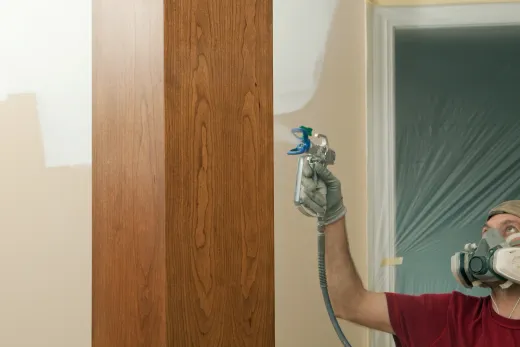
Sprayed enamel lays down glass-smooth, with no brush marks — it is how factory-finished trim gets its look. Brushed enamel, done well with a quality brush and self-levelling paint, comes close but always shows some texture up close.
Spraying is not automatically better on site, though. It demands serious masking: every adjacent surface — walls, floors, windows — must be papered and taped, which is why spraying makes most sense when a space is already empty or under renovation. In an occupied, furnished home, brushing trim room by room is usually more practical and less disruptive, and modern enamels level out well enough that the difference reads only on close inspection.
Our general rule: spray when the house is empty (pre-move-in, mid-renovation, or pre-sale with staging coming after), brush when the family is living in it. Doors are the exception — good painters often pull doors off their hinges and spray them flat in a garage or shop setup, then rehang. You get the factory finish where it is most visible and touched, without masking the whole house.
Either way, finish quality tracks prep quality. A sprayed coat over unsanded, unprimed oak fails exactly as fast as a brushed one.
Bundling Trim With a Whole-Home Repaint
The cheapest way to paint trim is with everything else. A crew already on site with drop sheets down, ladders up, and colours mixed can add trim scope at a much better rate than a standalone trim job priced from scratch — the same logic that makes bundling three-plus rooms 15–25% cheaper per room than painting one.
When a standalone trim job makes sense: your walls are genuinely fine and the trim is the only dated element, or you are converting oak in phases to spread the cost. When bundling wins: pre-sale repaints, post-renovation finishing, or any house where walls and trim are both due — which, in our experience, is most houses, since trim and walls age together.
If the trim work is part of a bigger project, put it in the overall budget early; painting is a line item people consistently underestimate, and our Toronto home renovation cost guide shows where finishing costs typically land in a full-project budget. For a firm number on your own house, count your rooms and doors, note whether the trim is painted or stained, and send us the details — trim quotes are quick to price accurately once we know those two things.
Ready to start your renovation?
Our team is here to help you bring your vision to life. Get a free, no-obligation quote today.
Get Free QuoteFrequently Asked Questions
Clear answers to the questions Ontario homeowners ask most.