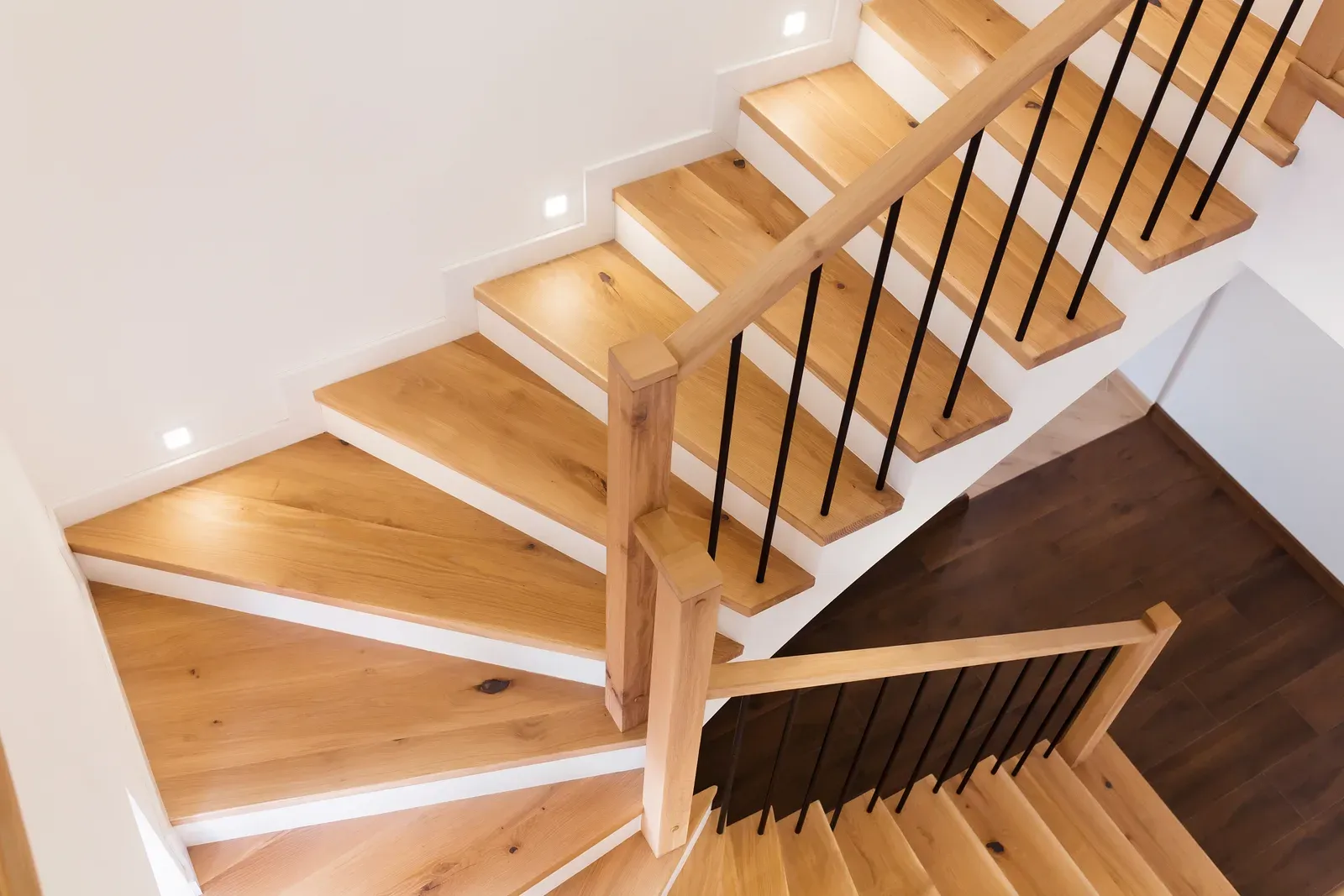
The honey-oak railing is usually the last 1990s feature standing in an updated GTA home. Three ways to refinish it, what each costs, and the finishes that survive daily hands on the handrail.
The 1990s Oak Railing Problem
Stair and railing refinishing in the GTA typically prices at $50–$125 per step, and complete projects that include railings and posts generally start around $3,500 as of 2026. Where your project lands inside that depends on which of three routes you take: paint, gel stain, or a full strip-and-restain — more on each below.
The staircase is usually the first thing visible from the front door, and in houses built through the late 1980s and 1990s — Woodbridge, Maple, and Sonoma Heights in Vaughan, Bayview Hill in Richmond Hill, Glen Abbey in Oakville — it is almost always honey oak: oak handrail, oak posts, and either oak or white-painted spindles. Homeowners renovate the kitchen, replace the flooring, repaint the walls, and then stand in the foyer looking at the one element still broadcasting 1994.
The good news is that railings respond to refinishing better than almost any other feature, because the wood itself is usually excellent. Thirty-year-old oak handrails are solid, tight-grained material that new builds rarely match. The finish is dated; the railing is not. That is exactly the situation where refinishing beats replacement.
Paint vs Gel Stain vs Full Strip-and-Restain
Three routes, in ascending order of labour.
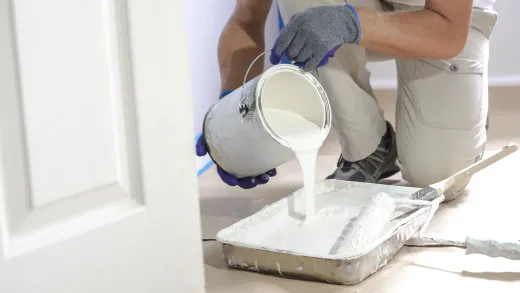
Paint is the fastest transformation. Black or off-black painted railings against white spindles is the look driving most of these projects right now, and paint needs the least prep of the three: clean, scuff-sand, bonding primer, two coats of hard enamel. The old varnish stays put underneath as long as adhesion prep is done properly.
Gel stain is the middle path for keeping a wood look while going darker. Gel stain sits on the surface rather than soaking in, so it can go over scuff-sanded existing finish without stripping to bare wood. It darkens oak convincingly — honey to espresso is very achievable — but it cannot lighten anything, and it needs a durable topcoat to survive on a handrail.
Full strip-and-restain takes the railing back to bare wood: chemical stripper, scraping every spindle profile, thorough sanding, then stain and multiple topcoats. It is the only route to a lighter or natural finish, and the only one that erases decades of dings rather than covering them. It is also, by a wide margin, the most labour — every hour of stripping is paid hand work on curved profiles.
Matching route to goal: modern two-tone look, paint. Darker wood, gel stain. Lighter or fully renewed wood, strip-and-restain.
What Railing Refinishing Costs in the GTA
GTA refinishing pricing is usually built per step, since the step count drives the spindle and railing quantity above it. As of 2026, refinishing existing treads and railings typically runs $50–$90 per step, with some firms pricing from $125 per step; a standard 12–13-step staircase works out to roughly $600–$1,625 for refinishing alone, and full projects that include railings, posts, and spindles generally carry minimums from about $3,500.
If your treads are also worn or carpeted, recapping — new solid oak treads and risers installed over the existing structure, no demolition — prices from about $185 per straight step and $225 for pie-shaped steps, with typical projects from $4,900. Pairing a recap with a complete railing upgrade (new pickets, posts, and handrail) starts around $5,500 for a typical 13-step staircase. Full structural rebuilds — new stringers, relocations, custom curves — are a different category entirely and run well into five figures; treat those as quote-required.
What moves the price inside those ranges: step count, curved or winder sections, the number of spindles per step, metal versus wood picket choices, and how dark or damaged the existing finish is. Labour-heavy prep is the multiplier, which is why a strip-and-restain quote can be double a paint quote on the identical staircase — one of many cases where scope, not markup, is what actually drives renovation costs up.
Spindles: Paint, Replace, or Mix
Spindles are where the labour hides. A 13-step staircase can carry dozens of them, each with turned profiles that must be sanded and coated by hand — often more total hours than the handrail and posts combined.
That math opens up a genuinely practical option: replace instead of refinish. Swapping oak spindles for slim metal pickets — black round or square profiles — modernizes the staircase harder than any finish change, eliminates the fussiest refinishing labour, and pairs with a refinished oak or painted handrail for the two-tone look most clients bring us photos of. Wood spindles painted white against a dark handrail is the classic alternative and keeps costs down when the existing spindles are in good shape.
The usual decision: if spindles are dated in shape (heavy colonial turnings) or loose and rattling, replace them while the railing is being refinished. If they are simple profiles in sound condition, paint them. Mixing — new metal pickets between refinished original oak posts — is common and looks intentional when the finishes are coordinated. One caution: spindle spacing is a safety item under the building code, so replacements must maintain compliant gaps. Any competent installer handles this as a matter of course; it is worth confirming on a DIY plan.
Durability: Finishes That Survive Hands and Kids
A handrail is the most-touched wood surface in the house. Hands deposit oil and grit onto it every day, backpacks and laundry baskets knock the posts, and winter brings salty gloves up from the front door. Finish choice decides whether the railing still looks refinished in five years.
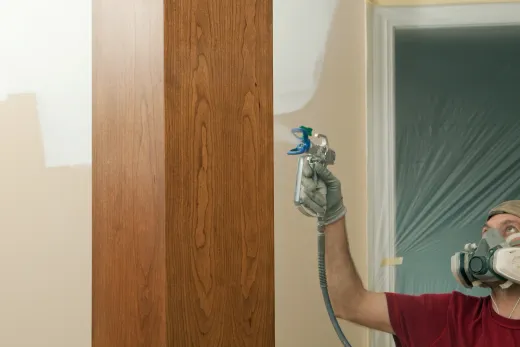
For painted railings, this means a hard enamel — the same family of coatings used on cabinet doors — over a proper bonding primer, never ordinary wall paint. Wall paint on a handrail stays slightly soft, and body oils will wear it through at the grip zone within a couple of years. For stained railings, the stain itself provides colour only; durability comes entirely from the topcoat, so budget for multiple coats of a hard-wearing clear finish and expect the sheen conversation to matter — satin hides fingerprints and micro-scratches far better than gloss.
Cure time is the discipline nobody warns you about. Enamels and clear coats reach full hardness weeks after they feel dry to the touch, and a family of five cannot realistically stop using the staircase. Crews work around this by coating handrails last in the day and sequencing sides of the stair, but gentle use in the first days is part of the deal. Rushing this stage is the most common reason refinished railings disappoint.
Pairing Railing Work With Stair or Floor Refinishing
Railing colour never exists alone — it sits directly against treads, and usually within sight of the main-floor flooring. The combinations that work: refinished or recapped oak treads with a painted black railing; matching stain on treads and handrail with white or metal spindles; new flooring tone echoed in the handrail stain. The combination that fails: freshly refinished railing over tired, orange-varnished treads, which just relocates the dated look downward.
Sequencing and bundling both favour doing stairs and floors together. Hardwood refinishing in the GTA runs $4–$9 per square foot as of 2026, and crews that handle floors and stairs can match stain across both in one mobilization — separate contractors matching each other's custom stain months apart is a genuine headache. If you are weighing floor options first, our Toronto flooring cost guide covers refinishing versus replacement, and our hardwood flooring installation team regularly folds staircases into flooring projects.
The decision in short: paint the railing when you want maximum change for minimum cost; gel stain when the wood should stay but go darker; strip-and-restain when you want lighter tones or a true renewal; and bundle with stair or floor refinishing whenever both are within a year or two of being due. For a per-step price on your staircase, count the steps, note straight versus curved, and request a quote — it is one of the quickest projects for us to price from photos.
Ready to start your renovation?
Our team is here to help you bring your vision to life. Get a free, no-obligation quote today.
Get Free QuoteFrequently Asked Questions
Clear answers to the questions Ontario homeowners ask most.