Most GTA homeowners pay $6,000-$8,500 for a walk-in shower conversion in 2026, with custom tiled builds reaching $15,000+. The spread comes down to tile, glass, and waterproofing.
What a Walk-In Shower Costs Installed in the GTA
Installed walk-in shower pricing in the GTA breaks into three clear tiers as of 2026:
- Basic tub-to-shower conversion: $3,500-$5,500. Tub out, acrylic or fibreglass base in, standard wall surround, basic fixtures, minor plumbing adjustment.
- Mid-range: $6,000-$8,500. Custom tile, upgraded fixtures, a glass door or panel, possibly a relocated valve. This is the band most homeowners land in.
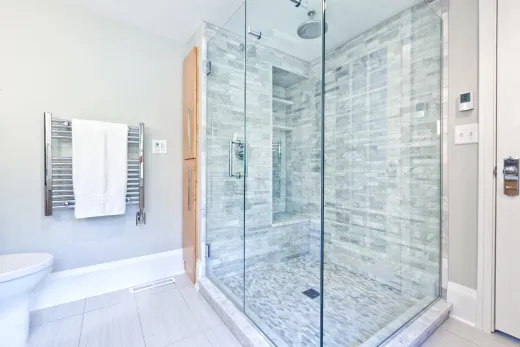
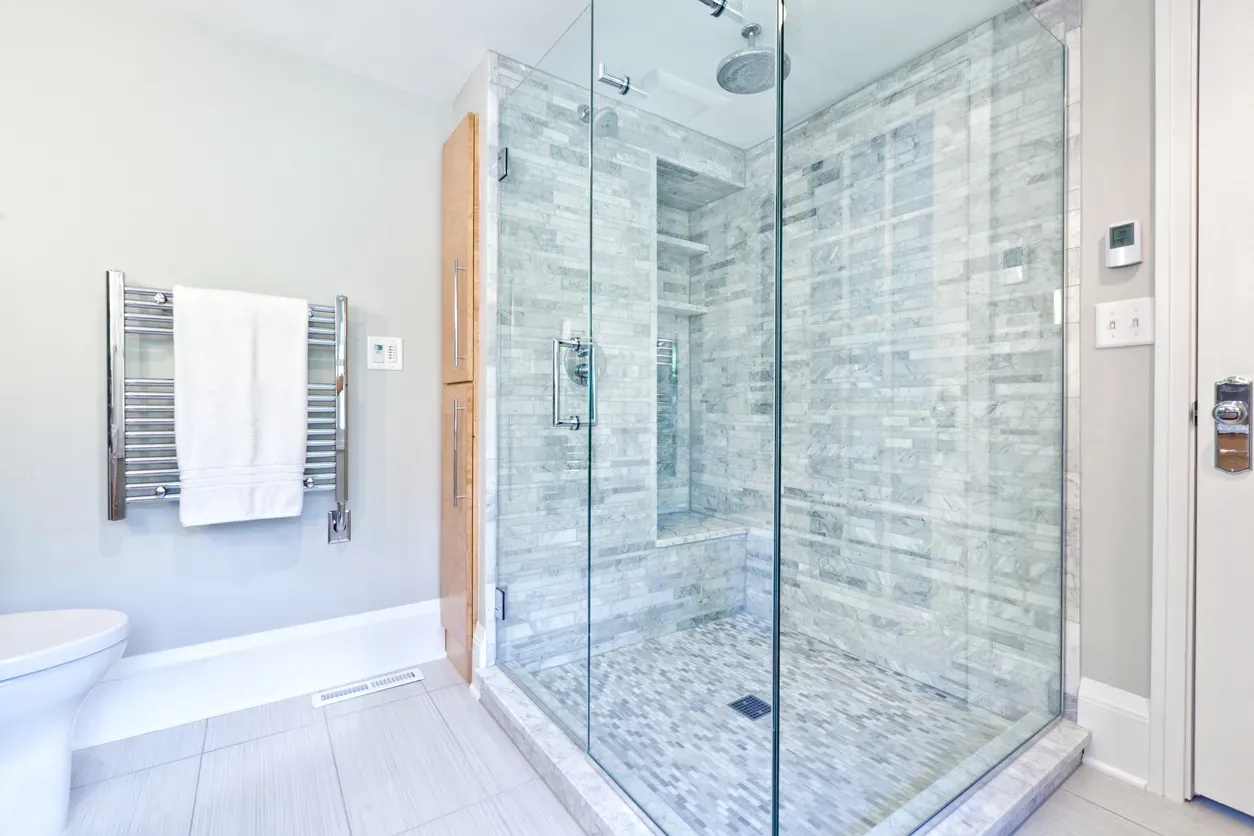
- High-end custom: $9,000-$15,000+. Full tile to the ceiling, frameless glass, bench and niche, premium thermostatic valve, complete membrane waterproofing. Some GTA design-build firms quote $12,000-$15,000 for this full scope, and large or curbless builds go higher.
Those figures cover the shower as part of a bathroom project or as a standalone bathtub-to-shower conversion. They assume the drain stays roughly where it is — moving plumbing adds $2,000-$6,000 — and, like most GTA renovation quotes, they are typically before 13% HST.
The rest of this guide prices the individual decisions: tile or acrylic, glass, niches and benches, curbless entry, and the waterproofing layer that quietly determines whether the shower lasts.
Tile vs Acrylic Systems: Price and Longevity
This one choice moves the budget more than any other.
Acrylic and fibreglass systems are the value play: a moulded base and wall panels installed in a day or two, no grout, easy cleaning. They anchor the $3,500-$5,500 tier and are a legitimate choice for a rental unit, a basement bathroom, or a budget focused elsewhere. Their limits are aesthetic and dimensional — fixed sizes, panel seams, and a look that never quite reads custom.
Custom tile is why the mid and high tiers exist. Tile labour runs $8-$15 per square foot for standard formats in the GTA, more for large-format and pattern work, and a tiled shower needs full waterproofing behind it — which is exactly why it costs more and lasts longer. Porcelain at $10-$25 per square foot installed handles the wet zone for decades; natural stone and large-format slabs push budgets up but cut grout lines dramatically.
Our honest guidance: match the system to the house. A $12,000 tiled shower in a $500,000 condo bathroom is overbuilt; an acrylic surround in a renovated ensuite undercuts everything around it. Mid-range tile with quality waterproofing is the sweet spot for most GTA homes.
Glass Panels, Niches, and Benches: Option Pricing
The options list is where a $7,000 shower becomes an $11,000 one, so price each piece deliberately.
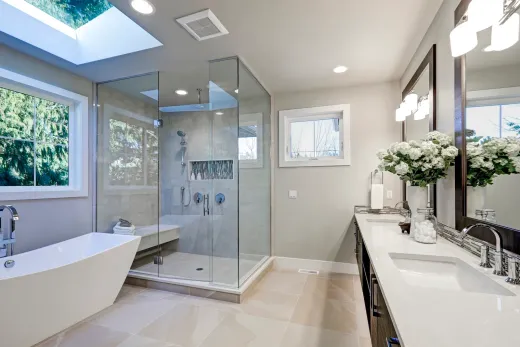
Glass is the biggest line. A frameless glass enclosure runs $2,000-$4,000 on its own in the GTA — custom-measured after tiling, fabricated in one to two weeks, and installed in a morning. Semi-frameless and framed systems cost meaningfully less, and a single fixed panel on an open shower is cheaper still while making a small room feel dramatically larger than any curtain or slider.
Niches are modest money during construction and impossible money afterward. A recessed shampoo niche framed and waterproofed into the wall costs little while the studs are open; tiling it with a contrasting accent is the classic move. Plan one per person who showers there — the corner shelf clutter solves itself.
Benches matter for two groups: anyone planning to age in place, and anyone who has ever shaved their legs standing up. A built-in bench adds framing, waterproofing, and tile time; a floating teak seat achieves most of the function for far less. If accessibility is the driver, blocking for grab bars belongs in the walls now — it costs almost nothing before tile and a full re-do after.
Curbless Entries: What the Extra Engineering Costs
A curbless shower — floor flowing straight in, no step — is the most requested detail in high-end GTA bathrooms, and the premium is structural, not cosmetic.
A standard shower base sits on top of the floor with a curb containing the water. Going curbless means the shower floor must sit lower than the bathroom floor, which on most GTA second storeys requires recessing the subfloor between joists, sloping everything to a drain — often a linear drain, itself a few hundred dollars more than a centre drain — and waterproofing well beyond the shower's footprint, because there is no curb stopping water. That extra framing, membrane area, and drainage precision typically adds four figures over a comparable curbed build, with concrete slabs (basements, some condos) sometimes needing grinding or build-up instead.
What you get back: step-free access that works for every age and mobility level, a visually seamless floor that makes small bathrooms feel double their size, and easier cleaning. Choosing between a curbless walk-in shower and keeping a tub usually comes down to whether another tub exists in the house and how long you plan to stay. For anyone renovating their long-term home past age fifty, we recommend curbless whenever the structure allows — it is the one upgrade that gets more valuable every year you own it.
Waterproofing: The Part You Can't See but Pay For
Every failed shower we have opened up in twenty years failed the same way: not the tile, the waterproofing behind it. Tile and grout are not waterproof — they are the armour over the actual waterproof layer, and that layer is where a meaningful slice of your budget goes.
Modern practice uses complete membrane systems — sheet-applied or liquid — covering the walls, floor, curb or recess, niche, and bench before a single tile is set. Membrane materials and labour run $5-$12 per square foot, and a proper install includes sloped pre-pans, sealed corners and penetrations, and a flood test before tiling. How a shower gets waterproofed is worth understanding before you compare quotes, because this is exactly where cheap bids save their money: a bare cement board install with no membrane looks identical on day one and leaks by year five.
When quotes arrive, make waterproofing a named question. Which system — a Schluter-type membrane or equivalent? Is a flood test included? Is the niche membraned, not just the walls? A contractor who answers precisely is telling you something; one who says "we always waterproof" without naming a system is telling you something too. Our installs are warrantied for 2 years on workmanship because the part you cannot see is done as carefully as the part you can.
When a Walk-In Shower Makes Sense vs a Full Renovation
A standalone walk-in shower project makes sense when the rest of the bathroom genuinely holds up: vanity, floor, and toilet in good shape, no moisture problems, and a tub or stall that is simply dated or unused. In that case, $6,000-$8,500 buys the transformation without touching what works, and the job wraps in about a week plus glass lead time.
The calculus flips in bathrooms where everything is the same age — and in most 1970s-90s GTA bathrooms, it is. If the vanity, tile, and fan are as tired as the tub, replacing only the shower means paying demolition, plumbing, and tile mobilization twice when the rest inevitably follows in a few years. A full bathroom renovation starting from $15,000 typically prices barely above a premium shower plus a later refresh, and everything ages on the same clock afterward.
Our decision rule: shower only if the bathroom is under ten years old or recently updated; full renovation if it is original to the house or showing moisture damage anywhere. Either way, our walk-in shower installation service covers Toronto and the whole GTA from our Vaughan shop, licensed and insured, with free quotes — send us a photo of the current bathroom and we will tell you honestly which project you actually need.
Ready to start your renovation?
Our team is here to help you bring your vision to life. Get a free, no-obligation quote today.
Get Free QuoteFrequently Asked Questions
Clear answers to the questions Ontario homeowners ask most.