Quick Answer
To make a small or galley kitchen feel bigger, maximize vertical storage to the ceiling, choose light reflective finishes, add layered lighting, and use a single continuous countertop run to draw the eye. Removing or opening a non-structural wall to the dining or living area creates the biggest sense of space. In GTA homes, a refreshed small kitchen typically starts around $25k, with most projects landing between $25k and $75k depending on finishes and structural changes.
Open the layout: the single biggest way to gain perceived space
The most effective way to make a galley kitchen feel bigger is to open it up, either by removing a non-load-bearing wall or widening a doorway into the adjacent dining or living room. Borrowing sightlines from neighbouring rooms makes the whole footprint read as one larger, brighter space rather than a narrow corridor. In many GTA homes, especially Toronto semis and older Scarborough or Etobicoke bungalows, the wall between the kitchen and dining area is non-structural and can be removed cleanly. If the wall is load-bearing, a flush or dropped beam can still open the space, though that adds engineering and cost. Even a partial opening or a pass-through can transform how a galley feels. Opening a wall often requires a building permit, and structural changes need a qualified review, so confirm requirements with your municipality before demolition. Where a full open-concept conversion is not practical, swapping a swing door for a wider cased opening or a pocket door recovers usable space and improves flow. As a licensed, insured and WSIB-cleared contractor, Leo Constra handles the structural assessment, permits and finishing as one coordinated scope.
Use light, reflective finishes and continuous lines
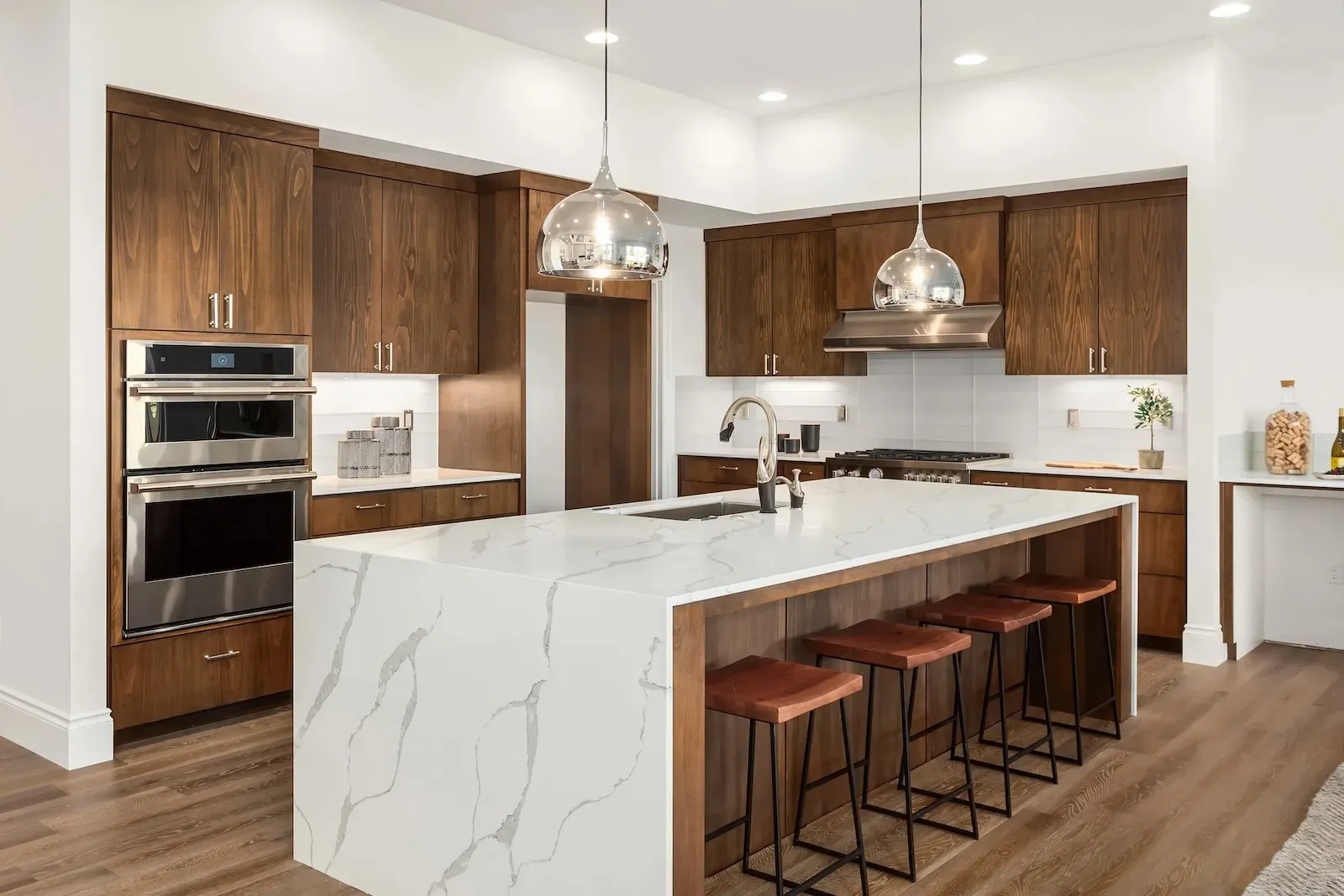
Choosing light, reflective finishes and keeping lines continuous makes a narrow kitchen feel noticeably larger. Pale cabinetry, light quartz or porcelain countertops, and a glossy or satin backsplash bounce daylight around the room and soften the boxed-in feeling of a galley. Running flooring in the same direction as the longest wall, ideally a large-format tile or wide plank with minimal grout lines, elongates the space and reduces visual clutter. A single uninterrupted countertop run, rather than several broken segments, draws the eye from end to end and reads as more generous. Handleless or slab-front cabinets, or slim integrated pulls, keep the visual plane clean and free of hardware shadows. Carrying the backsplash to the underside of the upper cabinets and choosing a tone close to the counter avoids busy contrast that shrinks a small room. Reflective elements like a mirrored or glass backsplash detail, glossy upper doors, or a polished countertop edge multiply available light. These finish choices cost little more than darker, busier alternatives, yet they meaningfully change how spacious a compact kitchen feels day to day.
Maximize vertical and hidden storage
Taking storage all the way to the ceiling and hiding clutter behind closed fronts lets a small kitchen function like a much larger one. Standard upper cabinets often stop short of the ceiling, leaving a dust-collecting gap and wasting prime storage. Extending cabinetry to the ceiling, or adding a stacked row of glass-front or flat-panel uppers, increases capacity without widening the room. Inside the boxes, pull-out pantry units, deep drawers instead of base shelves, corner carousels, and toe-kick drawers reclaim every inch a galley offers. Built-in or integrated appliances, such as a panel-front fridge and a slim dishwasher, keep the wall plane flush and uninterrupted. A shallow run of cabinetry, around 12 to 15 inches deep on one side of a true galley, can preserve walkway width while still adding pantry and small-appliance storage. Custom cabinetry is especially valuable here because stock sizes rarely fit narrow GTA kitchens efficiently. Leo Constra designs storage around how you actually cook, so countertops stay clear and the room feels open. Less visible clutter on the counters is one of the simplest ways to make any compact kitchen feel bigger.
Layer the lighting and rethink the window
Good layered lighting removes the shadows that make a galley feel cramped, and improving natural light has an even bigger effect. Combine recessed ceiling lights for general coverage, under-cabinet LED strips to wash the countertop and backsplash, and a single statement pendant or two if there is room, so no corner sits in shadow. Even, bright illumination makes ceilings feel higher and walls feel farther apart. Where possible, enlarging a window, adding a window over the sink, or installing a glazed exterior door floods the space with daylight and visually connects it to the yard. Window changes that alter the exterior opening usually need a permit, so confirm with your municipality. Lighter or sheer window coverings preserve that daylight rather than blocking it. A consistent colour temperature across all fixtures, typically a warm-neutral white, keeps finishes reading true and the room cohesive. In GTA condos, where exterior changes are restricted, focus on layered electric lighting and reflective finishes instead, and review your corporation's rules before starting. Thoughtful lighting is a relatively low-cost upgrade that delivers an outsized impact on how spacious a small kitchen feels.
Have a project in mind?
Get a free, no-obligation quote from Leo Constra’s licensed team—20+ years of renovation experience across the GTA, backed by a 2-year workmanship warranty.
Get a Free Quote