Concrete, moisture and the occasional wet spring rule the basement flooring decision. Here is what each moisture-safe option costs across the GTA in 2026 — and which we actually install.
GTA Basement Flooring Prices in 2026 by Material
As of 2026, basement flooring in the GTA costs roughly:
- Luxury vinyl plank (LVP/SPC): $4–$9 per sq ft installed — the basement default
- Porcelain or ceramic tile: $8–$15/sq ft in labour alone, plus $2–$15/sq ft in material depending on grade
- Engineered hardwood: roughly $7–$13/sq ft installed, only over proper moisture protection
- Floor levelling, often needed on older slabs: $3–$8/sq ft extra
A 700 sq ft basement in LVP therefore lands around $3,000–$6,500 for the flooring itself; our flooring projects start at $5,000 once removal, prep and trim are included. Toronto pricing sits 10–20% above the GTA average, Mississauga and Brampton typically 5–10% below Toronto rates, and quotes usually exclude 13% HST. Flooring is one line inside a bigger picture — full basement finishing runs $35–$55/sq ft basic and $55–$80/sq ft with a bathroom, per our basement renovation cost guide.
Why Moisture Rules Out Some Floors Below Grade
Every GTA basement slab breathes moisture, even in a dry house. Concrete wicks ground water as vapour year-round, humid summers push indoor humidity up, and freeze-thaw cycles work at foundation cracks every winter. That reality eliminates two popular floors before price even enters the conversation: solid hardwood, which cups and buckles below grade, and glued broadloom over bare concrete, which traps vapour and grows musty.
The age of the house matters too. A 1950s Etobicoke or Scarborough bungalow usually has a full-height, reasonably dry basement; a Victorian semi in Riverdale may have a low rubble-walled basement where moisture control is the whole project. We moisture-test slabs before quoting, and if there is any history of seepage we deal with it first — flooring over a wet slab is money thrown away, as we explain in why waterproofing comes before finishing. The wood question gets a full answer in can you put hardwood floors in a basement.
Vinyl Plank: The Basement Default at $4–$9 Installed
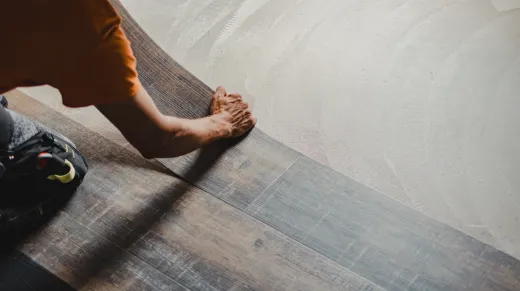
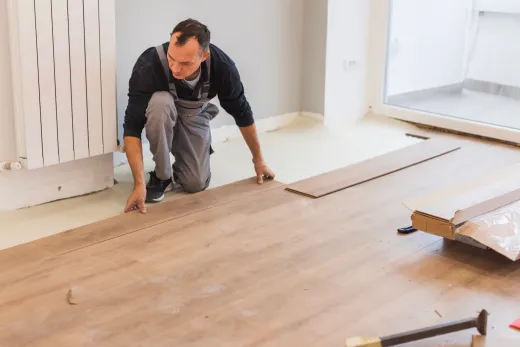
There is a reason nearly every basement we finish gets luxury vinyl plank. It is fully waterproof, so a leaky water heater or a wet spring does not mean a new floor. It goes down directly over a flat slab or a subfloor system. It is warmer and quieter underfoot than tile. And at $4–$9 per square foot installed — materials $1.50–$5, labour $1–$2 — it leaves budget for the parts of a basement that cost real money, like bathrooms and egress windows.
Spend at the upper half of the range for a rec room that will see hockey bags, weight benches and pets: thicker rigid-core (SPC) planks with a stronger wear layer bridge minor slab imperfections better and shrug off traffic. The look has also caught up — wide-plank wood visuals are convincing enough that buyers rarely clock the difference in a basement.
One prep note: rigid-core plank still needs a reasonably flat slab. Older basements in post-war GTA bungalows often have slabs poured to a drain slope or worn out of flat, and levelling compound at $3–$8 per square foot is the honest fix — a wavy floor telegraphs through even the stiffest plank.
Subfloor Systems and Insulation: Worth the Extra Cost?
A subfloor system — dimpled membrane panels or foam-backed tiles that lift the finished floor off the concrete — adds a real line to the budget, and in most GTA basements it earns its keep. The air gap keeps the floor noticeably warmer in January, gives incidental moisture somewhere to dry, and takes the edge off a slab that holds the cold all year.
When we recommend it: basements with any moisture history, homes where the basement will be a bedroom or office rather than storage, and older slabs that are cold enough to feel through socks in winter. When we skip it: bone-dry newer slabs — common in 2000s-built subdivisions in Milton, Vaughan and Markham — where a quality vapour underlay under rigid-core LVP does the job for less, and low basements where every centimetre of headroom counts. Ceiling height is code-relevant in older homes, so before adding floor build-up, check where you stand.
Tile, Carpet and Engineered Wood, Priced Honestly
Tile is the premium basement floor: unaffected by water, ideal for basement bathrooms, laundry areas and walkouts. Labour runs $8–$15/sq ft for standard formats and $12–$22 for large-format, plus material — budget ceramic at $2–$5/sq ft, mid-range porcelain $5–$15. It is also cold underfoot on a slab, which is why tile basements pair so well with electric floor heat.
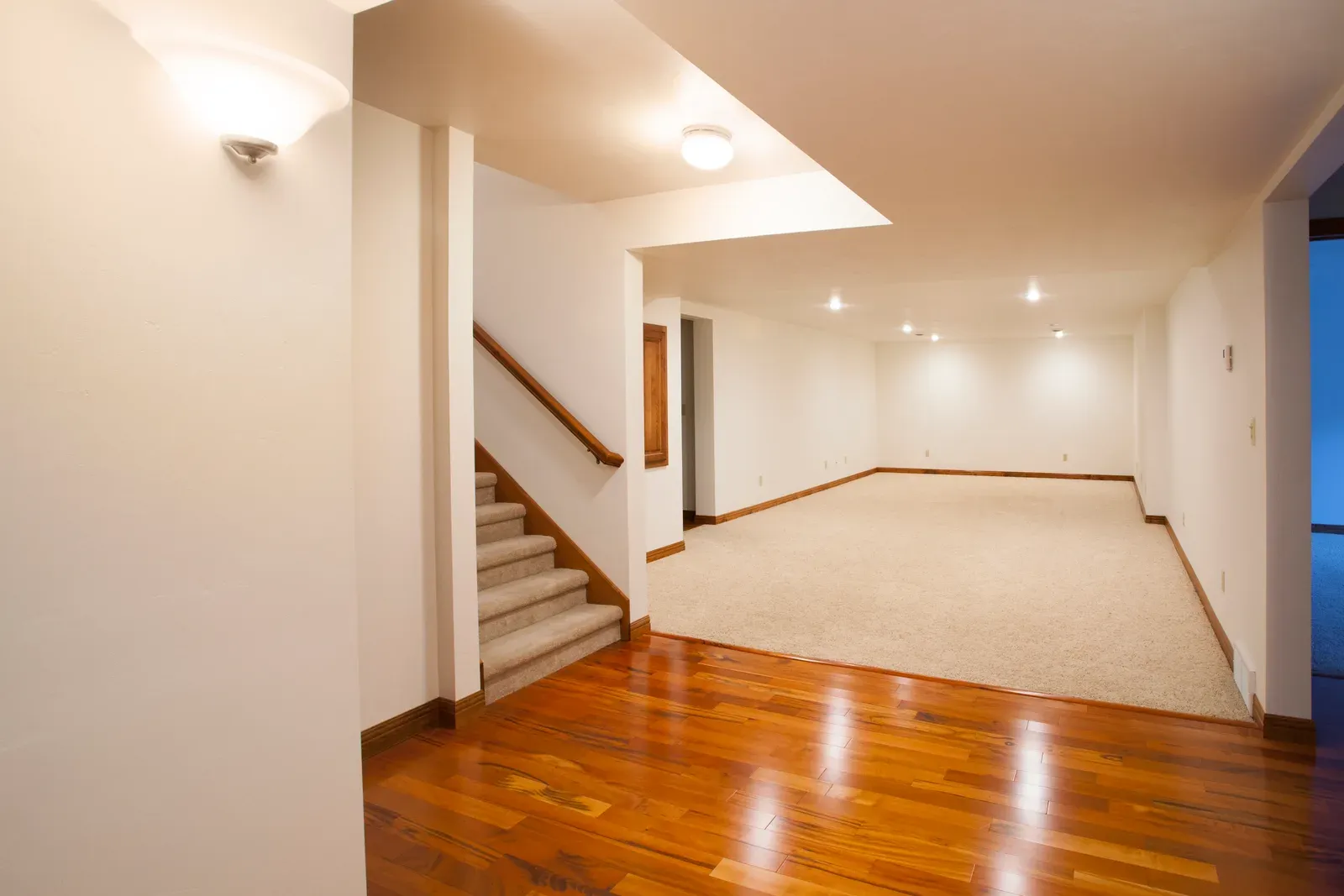
Carpet still has a place in theatre rooms and kids' zones for warmth and acoustics. We steer clients to carpet tiles or a quality underpad over a subfloor system rather than glued broadloom — if a section gets wet, you replace tiles, not the room. Pricing varies widely by grade, so we quote it per project.
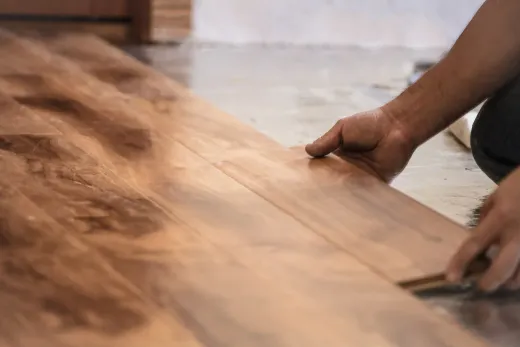
Engineered hardwood can work below grade over a proper vapour barrier or subfloor, at roughly $7–$13/sq ft installed, but we only recommend it in provably dry basements. The full comparison lives in the best flooring for a finished basement in the GTA.
Flooring for Legal Basement Suites: Durability vs Budget
If the basement is becoming a rental unit, the flooring math changes. Legal secondary-suite build-outs run $90–$150/sq ft all-in across the GTA, and the floor takes tenant-grade abuse: furniture drags, spills nobody reports, turnover every few years. Rigid-core LVP at the durable end of the $4–$9 range is the clear answer for the living areas — waterproof, replaceable plank by plank, and acceptable to every tenant — with tile in the bathroom. Skip anything that needs refinishing or babying.
Deciding what to install comes down to three questions: is the slab dry, what will the space be used for, and does headroom allow a subfloor? Get those right and the material choice mostly makes itself. We finish basements across Toronto, Peel, York and Halton — from single-room reflooring to complete basement renovations and legal basement apartments. Call (416) 995-7855 for a free quote, and we will bring a moisture meter to the first visit.
Ready to start your renovation?
Our team is here to help you bring your vision to life. Get a free, no-obligation quote today.
Get Free QuoteFrequently Asked Questions
Clear answers to the questions Ontario homeowners ask most.