A bar or kitchenette is the difference between a basement people visit and one they live in. Here's what each tier costs in the GTA in 2026 — and the suite question to settle before the drywall goes up.
Wet Bar, Kitchenette, or Second Kitchen: Three Different Projects
A basement wet bar in the GTA typically runs $8,000–$20,000 when built as part of a larger finishing project. A kitchenette — more cabinetry, a full-height fridge, sometimes a small cooktop — usually lands $15,000–$25,000. A true second kitchen with a range, real ventilation, and a dishwasher is a kitchen renovation in a harder location, and it starts around $25,000, the same floor as an upstairs kitchen.
The distinction matters because each step up drags in more plumbing, more electrical, and — past a certain point — questions from your municipality about whether you're creating a second dwelling unit. We build all three across Vaughan, Markham, and Toronto, and the first conversation is always the same: how will the space actually get used? A rec room that hosts movie nights and playoff games needs a sink, a fridge, and counter space for the pizza boxes. It very rarely needs a stove.
What Each Tier Costs in the GTA (2026)
These are 2026 GTA figures, before HST, and they assume the work happens inside a broader basement finishing project — mobilizing a crew for a standalone bar always costs proportionally more.
- Wet bar, $8,000–$20,000: sink, bar fridge, 6–10 linear feet of cabinets, a counter, tile or panel backsplash, and the plumbing and electrical behind them.
- Kitchenette, $15,000–$25,000: a longer cabinet run, full-height fridge, microwave, sometimes a two-burner cooktop. Still a partial scope — not a full kitchen renovation.
- Full second kitchen, from $25,000: range, exterior-ducted exhaust, dishwasher, complete cabinetry. The same starting point as a main-floor kitchen, often harder because everything sits below grade.
Inside those totals, cabinets are the swing item: stock cabinetry runs $150–$400 per installed linear foot, and quartz counters land around $75–$140 per square foot. A new basement sink's plumbing rough-in typically costs $3,000–$5,000. Our basement renovation cost guide shows how a bar fits inside a full-basement budget.
Plumbing and Venting Decide Most of the Price
Where your drains sit matters more than any finish choice. A bar sink within a few metres of the existing plumbing stack is straightforward. On the far side of the basement, we're breaking concrete to run a new drain line — and if that drain sits below the level of the municipal sewer, a pump or sewage ejector adds cost and a little noise to the project.
Every new drain also needs proper venting to work, which occasionally means opening a wall upstairs to reach an existing vent. A real cooktop or range changes the mechanical picture again: exhaust has to duct to the exterior, which in a basement means a ceiling run and a penetration through the rim joist.
None of this is exotic, but all of it is permit territory. Adding or moving drains requires a building permit in every GTA municipality — Toronto prices plumbing at $23.20 per fixture on top of the permit fee at 2026 rates. New circuits for the fridge, dishwasher, or cooktop go through an ESA electrical notification filed by your electrician, typically $90–$300 and usually built into their quote.
The Second-Kitchen Question: Does It Make a Suite?
A second kitchen by itself doesn't create a second unit — but a second kitchen plus a bedroom plus its own entrance starts to look like one, both to your municipality and to a future buyer's lawyer. That matters because a legal basement apartment carries real requirements: fire separation between units, compliant egress windows, interconnected alarms, and in a growing list of GTA municipalities, mandatory registration. Milton has required registration of every additional residential unit since April 2025; Brampton registers second units as a condition of legality.
If rental income is the real goal, build for it deliberately. The construction standard for a legal suite runs $90–$150 per square foot, versus $35–$55 for a basic family finish — and the difference is mostly fire and sound separation you can't easily retrofit. Start with our checklist on whether your basement is legal-suite ready, then see how to register a second unit in Ontario for the paperwork side.
If the space is genuinely for family use, keep the kitchenette open to the rec room. An open plan reads as one home, works better for entertaining, and sidesteps the suite question entirely.
Design Ideas That Serve Movie Nights and Guests
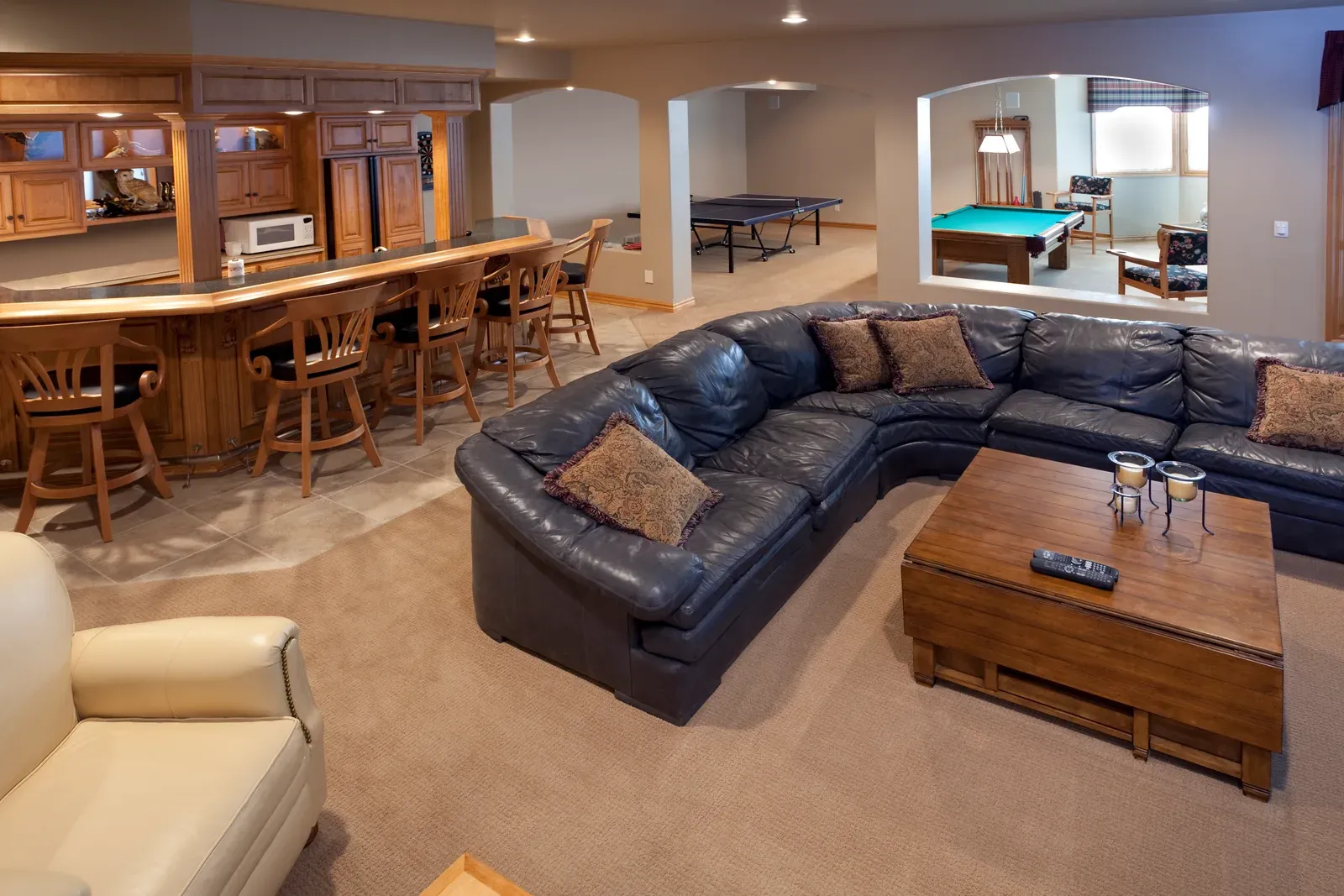
The best basement bars we've built are galley runs along one wall: 8 to 12 feet of lower cabinets, a durable counter, open shelving or a short run of uppers, and stool seating on the room side. The layout keeps the floor open for the sectional and the screen wall, and it puts drinks and snacks behind the viewers instead of in front of them.
A few choices that consistently earn their keep: a microwave drawer or drawer dishwasher instead of full-size appliances, which delivers the function in half the cabinet run; quartz counters, because basements host more spilled drinks per square foot than any kitchen upstairs; luxury vinyl plank underfoot, warm-toned and indifferent to moisture; and bar lighting on its own dimmer zone, so it can glow while the movie plays.
Scarborough's back-splits — Bendale, Wexford, Agincourt — deserve a special mention. Many have a lower level sitting at or near grade, which means real windows and sometimes a walk-out. A kitchenette in that setting feels like a main floor, and it's one reason those houses convert so well.
Rough In Now, Finish Later: The Smart Hedge
If the budget doesn't stretch to the bar this year, run the services anyway. While the basement is open for finishing, adding a capped drain, water lines, and a dedicated circuit to the future bar wall costs a small fraction of the same work done after drywall — the trenching, venting, and inspection all happen while the floor is already open. The rough-in gets inspected and closed out under the same permit as the rest of the job, and the wall waits patiently for cabinets whenever you're ready.
Our rule of thumb after twenty years of basements: build the wet bar when the basement's job is family life and hosting. Step up to a full second kitchen only when there's a defined second household — aging parents, an adult kid, a tenant — and in that case build it as a proper suite from day one rather than upgrading in stages. Either way, make the call before drywall. If you're planning a basement renovation anywhere in the GTA, we'll price the tiers side by side — quotes are free through our contact form or at (416) 995-7855.
Ready to start your renovation?
Our team is here to help you bring your vision to life. Get a free, no-obligation quote today.
Get Free QuoteFrequently Asked Questions
Clear answers to the questions Ontario homeowners ask most.