Carpet vs Hardwood Stairs: What Ontario Homeowners Pick
Recarpet the stairs again, or convert to hardwood once? Most Ontario homeowners face this exact choice when the stair carpet wears out — and the right answer depends on more than the up-front price.
Cost Comparison: Recarpeting vs Converting to Wood
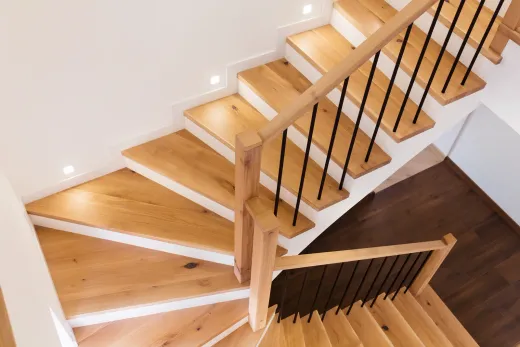
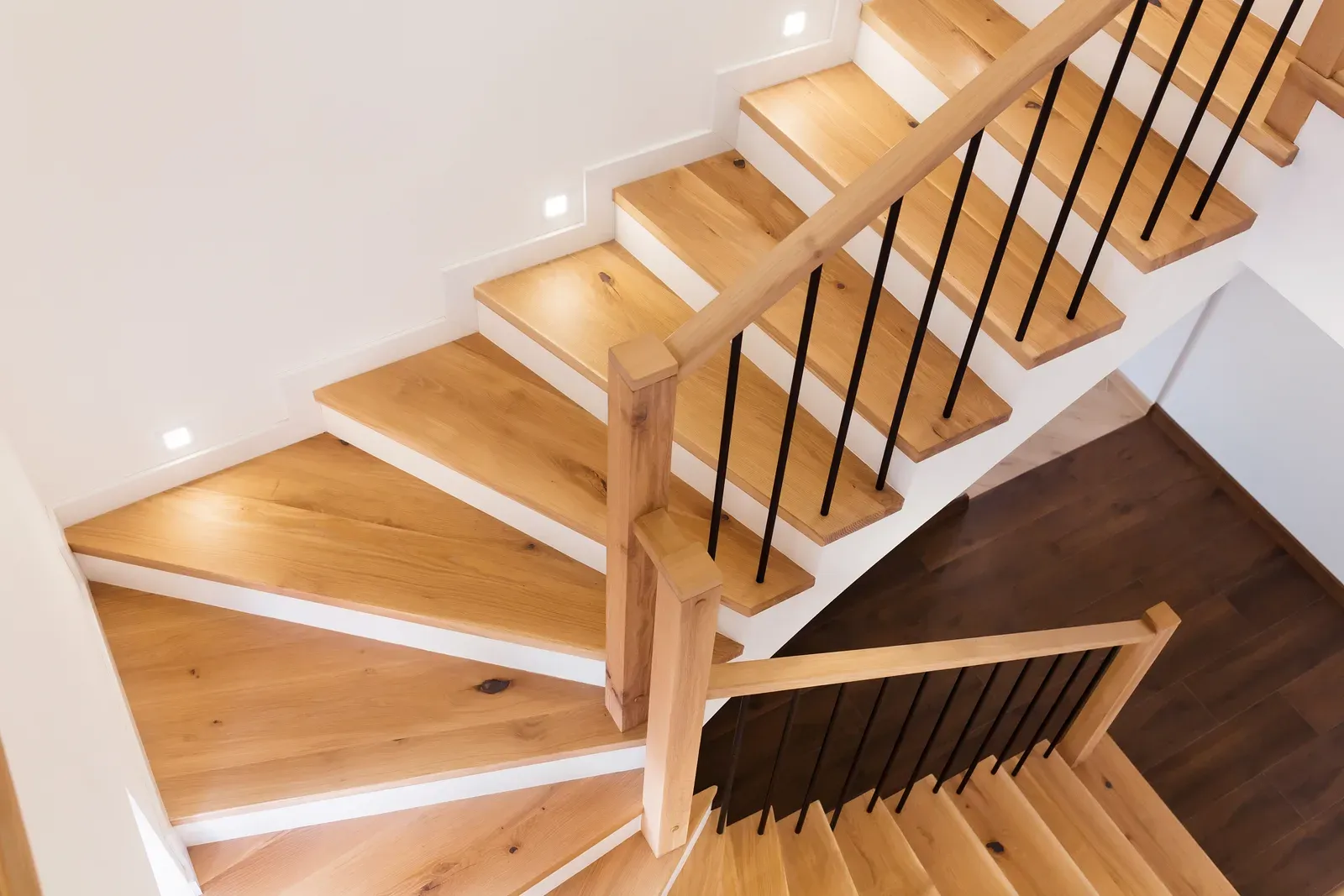
Up front, carpet wins. Recarpeting a flight of stairs costs a fraction of a hardwood conversion — it is a materials-light, one-day job. Converting to wood costs more once: recapping the stairs in solid oak treads and risers runs about $185 per straight step and $225 per pie step in the GTA as of 2026, with typical whole-staircase projects from $4,900. If solid wood treads already hide under your carpet — common in pre-war Ontario homes — refinishing at $50-$125 per step may get you there for $600-$1,625 on a typical 13-step flight.
The lifetime math is where the comparison flips. Stair carpet is the hardest-working textile in the house and needs replacing far sooner than bedroom carpet — often more than once over the years you own the home — while a recapped oak staircase is effectively a permanent finish that can be rescreened decades later. Pay for carpet repeatedly, or pay for oak once: that is the real cost question, and it is why so many Ontario homeowners standing at the second replacement decide to convert instead. Most quotes exclude 13% HST — confirm when comparing.
Safety and Slip Resistance: Kids, Pets and Aging Knees
Safety is carpet's strongest argument, and it deserves a fair hearing. Carpet grips socks and small feet, cushions the occasional tumble, and gives older knees and hips confident footing. Finished hardwood is harder and more slippery, especially in socks, and a fall on oak is less forgiving than a fall on broadloom.
That said, hardwood stairs can be made much safer than their reputation. Finish choice matters — a matte or satin finish offers noticeably more grip than gloss. A proper bullnose profile gives the foot a full landing surface. Good stairwell lighting does more for safety than any surface choice. And for households that want real traction — young kids, seniors aging in place, a dog that bolts downstairs at the doorbell — a centre runner over hardwood delivers carpet-level grip exactly where feet land, which we cover below.
Our honest guidance: for a household with mobility concerns, do not choose bare gloss-finished wood stairs. Choose carpet, or choose wood with a runner. For everyone else, a satin-finished oak staircase used with ordinary attention is a normal, safe Ontario staple.
Wear and Tear: Why Stair Carpet Dies First
Walk any carpeted staircase older than a few years and you will find the same failure pattern: crushed pile down the centre of every tread, fraying and wear-through at the nosings where feet pivot, and a flattened path that no amount of cleaning revives. Stairs concentrate every trip between floors onto roughly forty square feet of carpet, and the nosing fold stresses the backing in a way flat flooring never experiences. Sun from a stairwell window fades the edges while traffic darkens the middle. Stair carpet dies first in almost every Ontario home — usually while the bedroom carpet upstairs still looks fine.
Hardwood wears differently. Oak treads develop a patina rather than a path, finish wear shows up slowly over many years, and the remedy is a rescreen-and-recoat rather than replacement. Dents and scratches happen — moving furniture between floors is the classic cause — but they read as character on wood in a way that crushed carpet never does. Carpet also holds dust, pet hair, and allergens in a spot that is genuinely awkward to vacuum well; wood asks for nothing but a quick wipe. On durability and cleaning, wood wins comfortably — see our comparison of durable low-maintenance flooring options for the same logic applied to floors.
Noise: What Hardwood Stairs Change in a Two-Storey Home
Nobody warns you about this one, so we will: hardwood stairs are louder. Carpet absorbs footfall; oak announces it. In a typical two-storey Ontario house with the staircase rising through an open foyer, converting to wood means you will hear the teenager coming downstairs and the dog doing laps, and light sleepers near the stairwell will notice the difference on night trips to the kitchen.
How much this matters depends on the house. Open-to-above foyers act as sound wells and amplify stair noise into bedrooms; enclosed staircases between walls contain it. Solidly built stairs are also quieter than loose ones — much of what people blame on wood is actually old treads creaking, and a proper recap fixes that by fastening everything tight before new oak goes on. If noise still concerns you, the runner is again the answer: a wool or wool-blend runner over hardwood absorbs footfall nearly as well as full carpet while keeping the wood look. For households with shift workers or light-sleeping babies near the stairwell, we would call the runner close to mandatory.
The Runner Compromise: Wood Edges, Soft Centre
If the last three sections left you torn, you do not actually have to pick a side. Convert the staircase fully to oak, then add a stair runner — a strip of carpet covering the middle two-thirds or so of each tread, with stained wood framing it on either edge. Every argument for carpet from earlier in this article — grip for socks and small feet, softer landings, muffled footfall — applies to the strip your family walks on. Every argument for hardwood — permanence, resale, easy cleaning — applies to the staircase itself. When the carpet portion eventually wears, only the runner comes off; the oak under it is untouched and ready for the next one.
A few practical notes from installs we have done across the GTA. Give the finish its full cure time before the runner goes on, and never skip the pad — bare rods and binding pressed against fresh stain will leave marks. Choose a flatweave or low-pile runner rated for stairs — plush pile on a nosing is a slip hazard, which defeats the point. And treat the runner as a design feature, not an apology: a patterned runner on dark-stained oak is a genuinely handsome centrepiece in the entry of a house. Cost-wise, the runner is an add-on to the conversion priced by material — synthetics are economical, wool costs several times more — so it scales to your budget.
Resale: What GTA Buyers Expect on Stairs in 2026
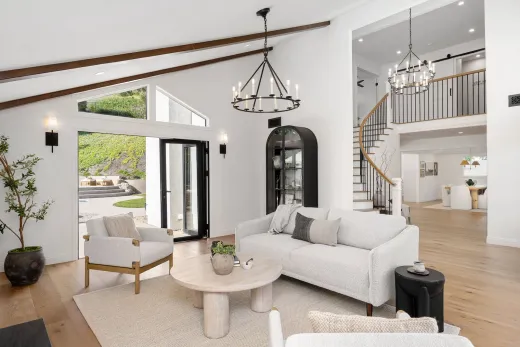
The market has made its choice. In 2026, buyers walking into GTA and broader Ontario listings expect hardwood on the main floor and hardwood on the stairs, ideally in coordinating tones — and carpeted stairs in an otherwise renovated home read as an unfinished job. The staircase is usually visible from the front door, which means it shapes the first impression more than rooms twice its size. Agents stage around tired stair carpet for a reason.
That does not make carpet a mistake in every situation. If you are years from selling and the household genuinely benefits from carpet — mobility concerns, very young kids, a preference for quiet — recarpet without guilt and revisit later; it is an inexpensive decision to reverse. But if the stair carpet is worn now and a move is even on the horizon, converting once to oak is the choice that serves both your daily life and your eventual listing. Stairs sit squarely among the renovations that increase home value because the cost is modest and every showing walks past them.
We have been converting staircases and installing hardwood flooring across Ontario's GTA since 2004 — licensed, insured, with a 2-year workmanship warranty. For the full budget picture, start with our Toronto flooring cost guide, then request a free quote and we will price your exact staircase.
Ready to start your renovation?
Our team is here to help you bring your vision to life. Get a free, no-obligation quote today.
Get Free QuoteFrequently Asked Questions
Clear answers to the questions Ontario homeowners ask most.