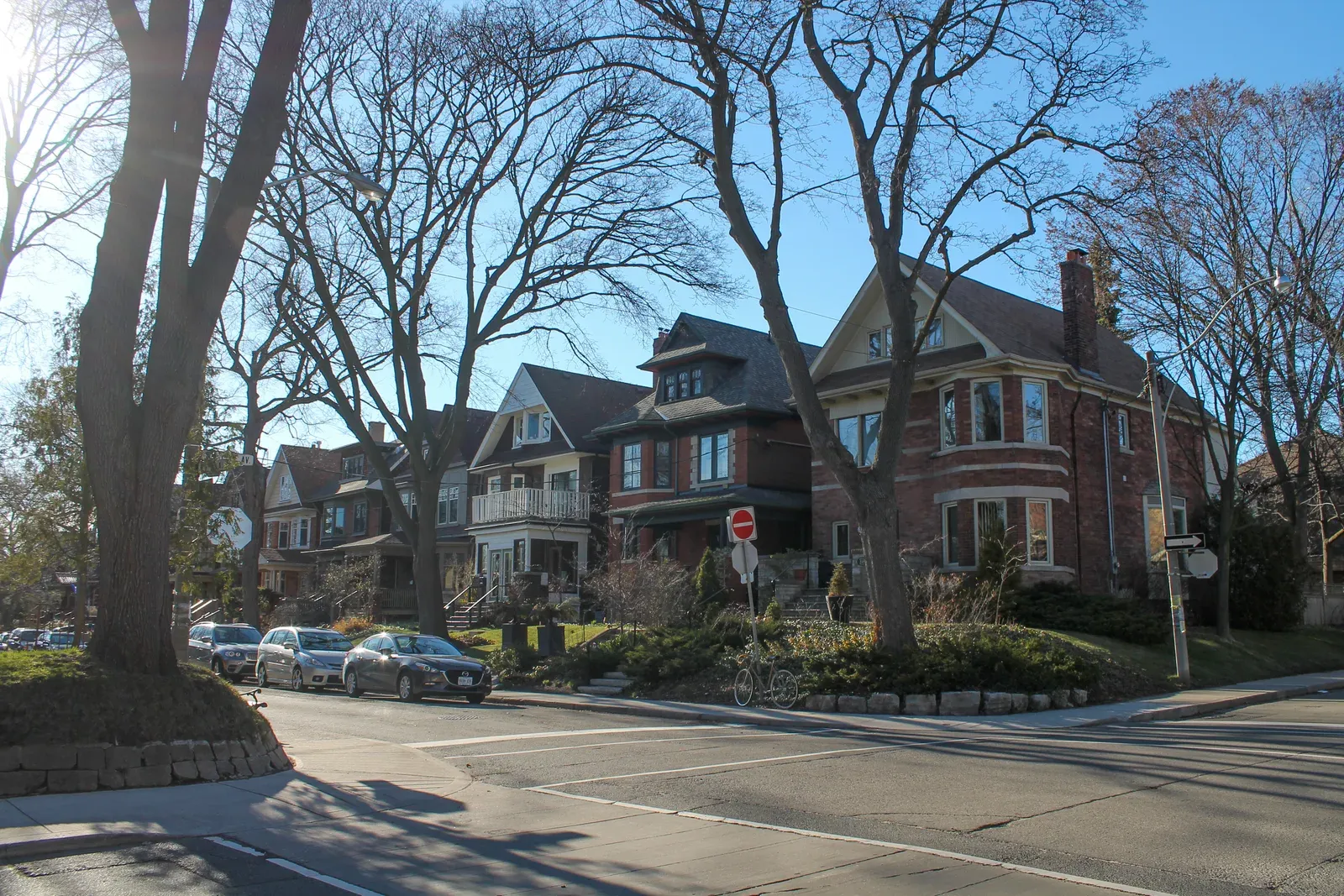
Durand and Kirkendall brick rewards careful renovation and punishes shortcuts. Realistic 2026 budgets for Hamilton's century homes, from wiring and plumbing to lime mortar and permits.
Hamilton's Century Stock: Durand, Kirkendall and the Lower City
Hamilton's lower city holds some of the best century housing in Ontario. Durand is the marquee heritage neighbourhood — Victorian and Edwardian mansions and stately brick, much of it pre-1930 — and Kirkendall carries block after block of century brick detached homes and semis. Buyers come for the proportions, the trim, the ceiling heights. Then they open a wall.
The full old-home issue stack applies here: knob-and-tube wiring, galvanized and sometimes lead water plumbing, low stone or brick foundations, plaster-and-lath walls, and lead paint on anything finished before 1960. The brick itself is soft, industrial-era material laid in lime mortar, and Hamilton's escarpment weather — wind, driving rain, hard freeze-thaw cycles — is tough on masonry and on the flat and low-slope roofs common in the lower city.
None of this is a reason to avoid a Durand or Kirkendall house. It is the reason a realistic budget matters more here than almost anywhere else we work. The sections below put 2026 numbers on each piece, starting with the overall tiers.
2026 Cost Tiers for Pre-1930 Homes: Refresh to Full Gut
Whole-home renovation pricing in 2026 breaks into three tiers, and century homes tend to land in the upper half of each. A cosmetic refresh — paint, refinished floors, fixtures, no layout or systems work — runs $60–$150 per square foot. A standard full renovation runs $150–$400 per square foot. A full gut with structural work, complete rewiring and replumbing runs $400 per square foot and up, with high-end gut renovations reaching $450–$550+ once design fees, permits and HST are counted.
On a 2,000 square foot Kirkendall home, a full renovation commonly totals $300,000–$800,000 before surprises. Our whole-home projects start at $50,000, which buys a partial multi-room scope — worth knowing if you plan to phase, which most century-home owners sensibly do.
Two budgeting rules we hold firm on for pre-1930 Hamilton stock. Carry a 15–20% contingency, because hazmat and hidden-condition discoveries mid-renovation are the single most common budget-buster in pre-1990 homes. And treat every quote as pre-HST until proven otherwise — the 13% matters at these numbers. What drives renovation costs up covers the other variables.
Knob-and-Tube, Galvanized and Lead Plumbing: What Removal Costs
The mechanical systems are where century-home budgets are won or lost, so here are the 2026 GTA-market ranges we quote against:
- Knob-and-tube rewiring: selective remediation $5,000–$15,000; a substantial or full house rewire $15,000–$35,000, including the ESA permit, plus drywall and plaster patching on top. Insurers routinely refuse or cancel coverage on active knob-and-tube, and some require certified removal within 30–90 days of purchase — check before you waive conditions.
- Galvanized supply pipe: repipes run $2,000–$15,000 in the GTA depending on house size and access. Galvanized was standard before about 1960, so unrenovated lower-city homes almost always have some.
- Lead water service: correlates with pre-1955 construction. Replacing the private-side line typically runs $1,500–$3,500.
- Asbestos: plaster, duct wrap and flooring in pre-1990 homes may contain it; testing is a few hundred dollars and certified abatement typically $3,000–$12,000.
A smart sequence bundles these: rewire and repipe while the same walls are open, patch once, paint once. Doing them one at a time over several years means paying for the same wall repairs twice.
Soft Brick and Lime Mortar: Masonry Mistakes That Cost Thousands
Lower-city Hamilton brick is soft by modern standards, fired in an era when the mortar — lime-based, flexible, breathable — was designed to be the sacrificial element. The most expensive mistake we see on century homes is repointing that brick with hard modern Portland cement mortar. The hard mortar traps moisture, the freeze-thaw cycle pushes it against the soft brick face, and the brick spalls — permanently. On an escarpment-weathered Durand facade, wrong-mortar repointing can turn a maintenance job into a wall rebuild.
The fix is simple to specify and harder to find: lime-based mortar, matched to the original in hardness and colour, applied by a mason who does heritage work regularly. It costs more per foot than a general mason's Portland job. It is worth it every time.
Two related notes for Durand owners. Parts of the neighbourhood fall under heritage conservation rules that can constrain exterior work — confirm your property's status before planning window or facade changes. And take the lower city's flat and low-slope roofs seriously in your budget; escarpment weather shortens their lifespan, and a compromised roof will quietly undo interior renovation money faster than any other failure.
Hamilton Permits: $283 Minimum, Cheap Basement Fees, Heritage Rules
Hamilton's permit fees are among the friendlier in the region on the most recently verified schedule: a minimum permit fee of $283, basement finishing at just $3.94/m² — the cheapest rate among neighbouring municipalities — and deliberately incentivized flat fees for additional dwelling units: $500 for a unit within the house and $1,000 for a detached garden suite. The City has proposed further increases since that schedule, so treat these as floor values and confirm current numbers before budgeting. Electrical work always needs a separate ESA notification, typically $90–$300 on a renovation.
A permit is required for the work century homes usually need: structural repairs, wall removals, plumbing alterations, basement apartments, and additions. Cosmetic work is exempt. Skipping permits is a poor trade here — Ontario fines run up to $50,000 for a first individual offence, unpermitted work surfaces in title searches, and Hamilton reportedly doubles fees for after-the-fact applications, so confirm the current policy rather than testing it.
One genuine opportunity: Hamilton's Additional Dwelling Unit incentive program has offered grants of 70% of eligible costs up to $40,000 per unit for ADUs. Intake and funding status change, so verify with the City before counting on it — but for a century home with a sound basement or coach-house potential, it can meaningfully offset a legal-suite build.
Phasing a Century Home Renovation Without Wasting Money
Most Durand and Kirkendall renovations should be phased — few owners want to fund $500,000 in one season — but phasing badly wastes money. The order that works: systems and envelope first (wiring, plumbing, roof, masonry repointing), then kitchens and bathrooms, then the cosmetic layer of plaster repair, trim restoration and paint. Every phase should leave the house insurable, weathertight and livable, and no phase should require reopening a wall a previous phase closed.
When does the full renovation make sense over phasing? When you are already gutting for rewiring and replumbing anyway — the incremental cost of doing kitchens and bathrooms while walls are open is far lower than returning in three years. And living in the house during a whole-home renovation is workable for phased projects but miserable during a gut; factor temporary housing into gut budgets honestly.
Whichever path you take, hire for century-home experience specifically — how to choose a renovation contractor lists the questions worth asking. We have renovated older Ontario homes since 2004, licensed, insured and WSIB covered, with a 2-year workmanship warranty. Our Hamilton home renovation team knows this housing stock — book a free quote and we will walk the house together.
Ready to start your renovation?
Our team is here to help you bring your vision to life. Get a free, no-obligation quote today.
Get Free QuoteFrequently Asked Questions
Clear answers to the questions Ontario homeowners ask most.