Stairs are the most-used woodwork in your house, and stair quotes are easy to game. Here is how to compare the trades who bid on them — and read a per-step quote like a contractor does.
Stair Specialists vs Flooring Crews vs General Contractors
Three kinds of trades bid on GTA staircase work, and they are not interchangeable.
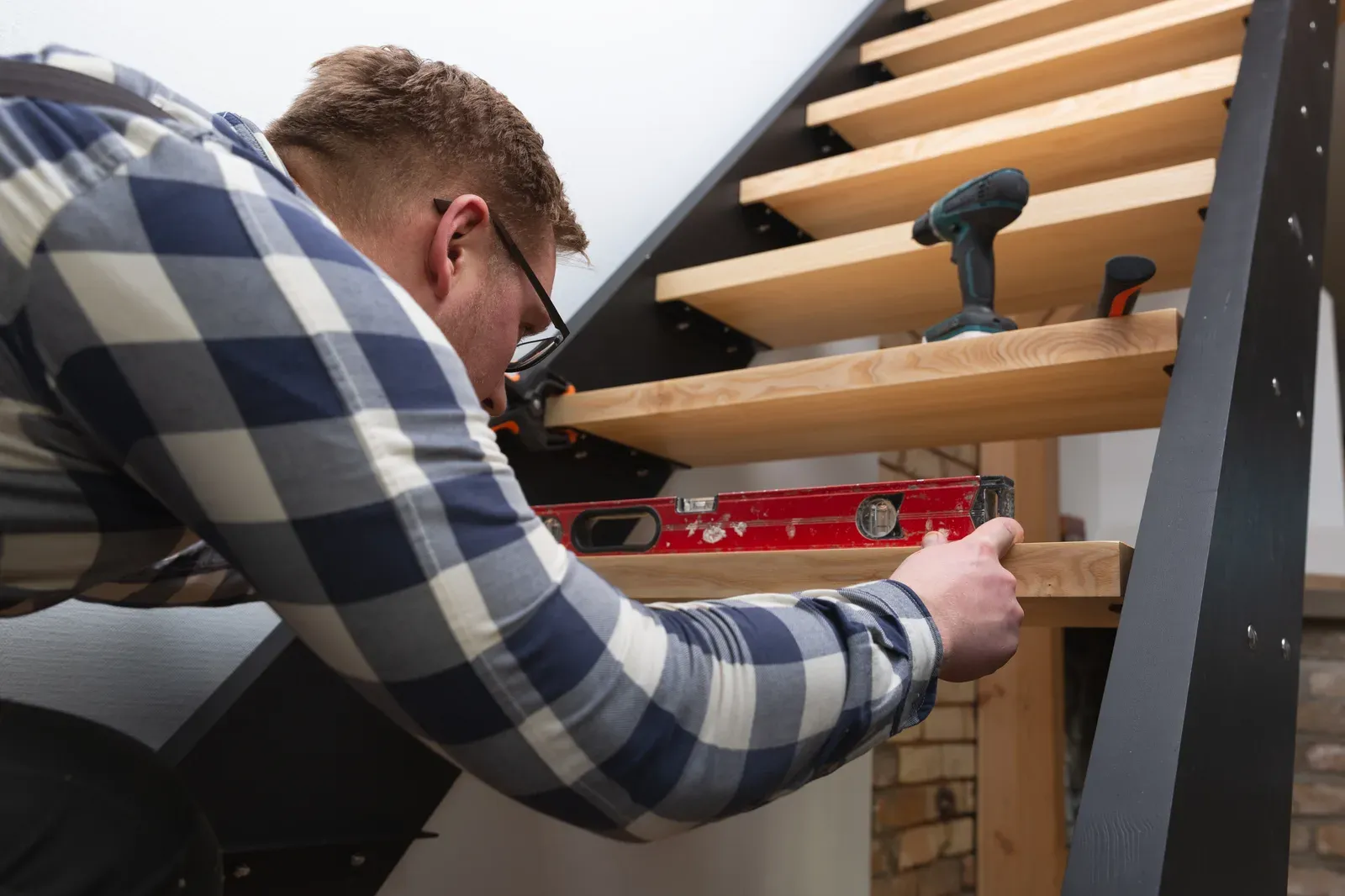
Stair specialists do treads, railings and posts all day. For a standalone recap or a railing rebuild, they usually deliver the sharpest joinery and the best per-step pricing, because their shop is set up for exactly this. Their limit is scope: the moment the project touches walls, structure or permits, you are outside their lane.
Flooring crews often quote stairs as an add-on to a main-floor install. Some do it well; some treat stairs as fourteen awkward little floors. The stair is the hardest part of a flooring package — nosings, returns, scribing against stringers — so an installer's stair photos matter more than their floor photos.
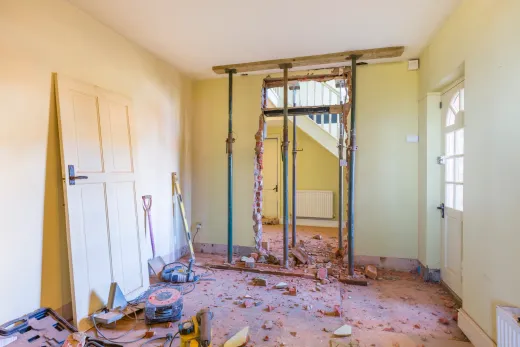
General renovation contractors make sense when the staircase is part of something bigger: refinishing stairs to match new hardwood, moving a stair during an open-concept project, or building basement-suite access. One accountable party coordinates the carpentry, drywall, railings and permits. That is where we sit — stairs inside flooring and full renovation scopes — and the honest trade-off is that a GC brings project management you do not need for a one-day squeak repair.
Match the trade to the scope, and most hiring mistakes disappear.
Credentials: Insurance, WSIB and Warranty Terms
Stair work is physical, done at height, inside your finished home — which makes the boring paperwork questions the important ones. Before price enters the conversation, confirm three things. Liability insurance: ask for a current certificate, not a verbal yes. WSIB coverage: if a worker is hurt on your property and the contractor has no clearance, the exposure can land on you as the homeowner. And a written workmanship warranty with a number of years attached — ours is 2 years — because stair problems like squeaks returning or stain failing show up across seasons, not in the first week.
In the City of Toronto, renovators are also required to hold a Building Renovator licence from Municipal Licensing & Standards; it is a checkable credential, and a contractor who has it will not hesitate to say so. Note what does not apply: Tarion's new-home warranty does not cover renovations to an existing home, so your protection comes entirely from the contract, the insurance and the warranty terms you negotiate.
For the fuller checklist, our guide to choosing a renovation contractor covers vetting in depth — everything there applies doubly to the trade rebuilding the thing your family walks down every morning.
Portfolio Checks: Stain Matching and Railing Joinery
Anyone can show you a photo of a nice staircase. You are checking for two specific skills.
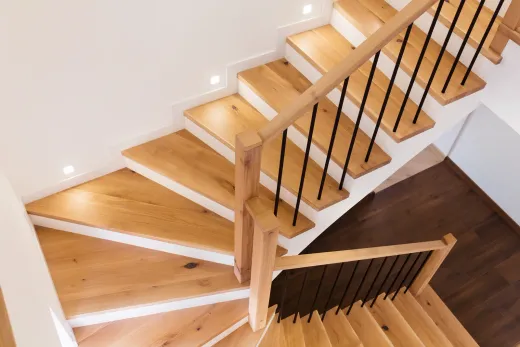
First, stain matching. The most common GTA stair project is making stairs match adjacent flooring — new oak treads beside engineered hardwood, or a 1990s orange-oak staircase in a Richmond Hill or Markham two-storey being brought over to today's neutral browns. Oak takes stain differently than factory-finished flooring, so a real portfolio shows the staircase and the floor it was matched to, in the same photo, in natural light. Ask whether they do sample boards on your actual treads before committing the whole flight — the professional answer is yes.
Second, railing joinery. Look closely at where handrails meet posts and where pickets land: tight, filled, aligned joints versus caulked gaps tell you everything about the shop. Check how returns and nosings are finished on open-sided treads — wrapped and mitred ends are craft; exposed end grain is a shortcut.
One more practical filter: ask to see a project from three or more years ago. Stairs take daily abuse, and finish quality reveals itself over winters of boots and dry forced-air heat, not in handover photos.
Reading Per-Step Quotes: What Should Be Itemized
Stair pricing in the GTA is quoted per step, which makes bids look comparable when they often are not. The 2026 benchmarks: refinishing existing treads and railings runs roughly $50–$125 per step, so a typical 12–13 step flight is about $600–$1,625 for refinishing itself, with realistic project minimums near $3,500 once railings and posts are in scope. Recapping — new solid oak treads and risers over the existing structure — starts around $185 per step for straight treads and $225 for pie or bullnose steps, with typical projects from $4,900, and from about $5,500 with a full railing upgrade.
A trustworthy quote itemizes what the per-step number contains:
- Tread material and thickness (solid oak vs veneered caps), and who supplies stain
- Pie steps, bullnoses, landings and open-sided treads priced separately — they cost more everywhere
- Railing scope: reusing, refinishing or replacing posts, pickets and handrail
- Prep and repairs: squeak fixing, subtread repairs, demolition and disposal
- Finishing system (number of coats, product) and whether HST is included — most quotes exclude the 13%
When bids differ wildly, the difference is almost always hiding in that list — the same reason full renovation quotes vary between contractors, just on a smaller project.
Red Flags: No Site Visit, Vague Materials, Cash Pricing
A few warning signs matter more on stairs than almost any other trade. A firm price with no site visit and no photos is guesswork — step count, winders, railing condition and underside access change the number too much. "Oak treads" with no thickness or grade specified is how veneer caps get invoiced at solid-wood prices. A cash price to skip the HST also skips the paper trail your warranty depends on. High-pressure deposits are their own tell: Ontario norms for deposits and payment schedules are modest, and a stair project has no business demanding half up front.
Be cautious, too, of anyone who calls a structural change — moving the bottom steps, cutting the stringer, reshaping the flight — "no big deal, no permit needed." Structural stair alterations require a building permit in every GTA municipality; a contractor who waves that away is telling you how they handle everything else. The broader pattern-recognition list is in red flags when hiring a renovation contractor.
None of these flags is proof of a bad outfit on its own. Two or more together, walk.
Questions to Ask Before Signing
Bring these six to the final conversation. Who exactly does the work — your crew or a subcontractor, and who supervises? How do you handle stain approval — sample boards on my treads, signed off before full application? What happens to squeaks and loose posts — included in prep or a change order? How long will my staircase be out of service, and is there safe access each night — a real question in a two-storey where every bedroom is upstairs. What does your warranty cover on stairs specifically, and for how long? And what is the payment schedule tied to?
The answers you want are specific and unhesitating; a written scope should follow that matches what was said. What belongs in that document is covered in what a renovation contract should include.
Decision guidance in one paragraph: single-scope stair job, sound structure — a stair specialist with strong joinery photos is a great choice. Stairs plus new flooring — one contractor for both, so the stain matching has one accountable owner. Stairs plus walls, structure or a basement suite — a licensed general contractor who manages permits. We have been renovating staircases across Toronto and the GTA since 2004, insured, WSIB-covered, with a 2-year workmanship warranty; request a free quote with a few photos of your stairs and we will price it properly.
Ready to start your renovation?
Our team is here to help you bring your vision to life. Get a free, no-obligation quote today.
Get Free QuoteFrequently Asked Questions
Clear answers to the questions Ontario homeowners ask most.