A Toronto condo bathroom renovation is half construction, half logistics. Here are the 2026 numbers, the board-approval paperwork, and what you can actually change inside the unit.
What a Condo Bathroom Renovation Costs in Toronto
A full condo bathroom renovation in Toronto typically runs $18,000 to $40,000 in 2026. The construction itself takes two to three weeks; the board approval before it can start adds four to ten weeks of lead time that catches almost every first-time condo renovator off guard.
That range sits noticeably above what an identical freehold bathroom would cost, and the difference is not the tile. Condo work carries logistics a house never sees: elevator bookings, restricted work hours, corridor protection, no on-site wet cutting, and a management office that expects paperwork before anyone touches a wall. For context, in full-unit condo renovations the bathroom line alone commonly lands around $18,000 — and a standalone project with mid-to-premium finishes, glass, and stone climbs from there.
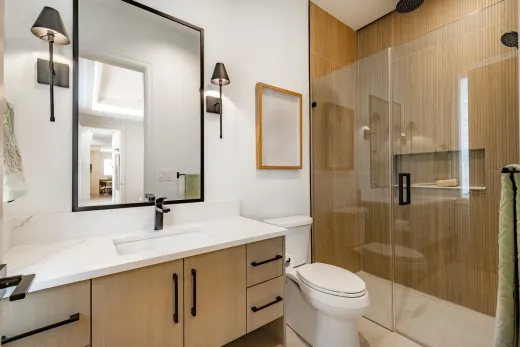
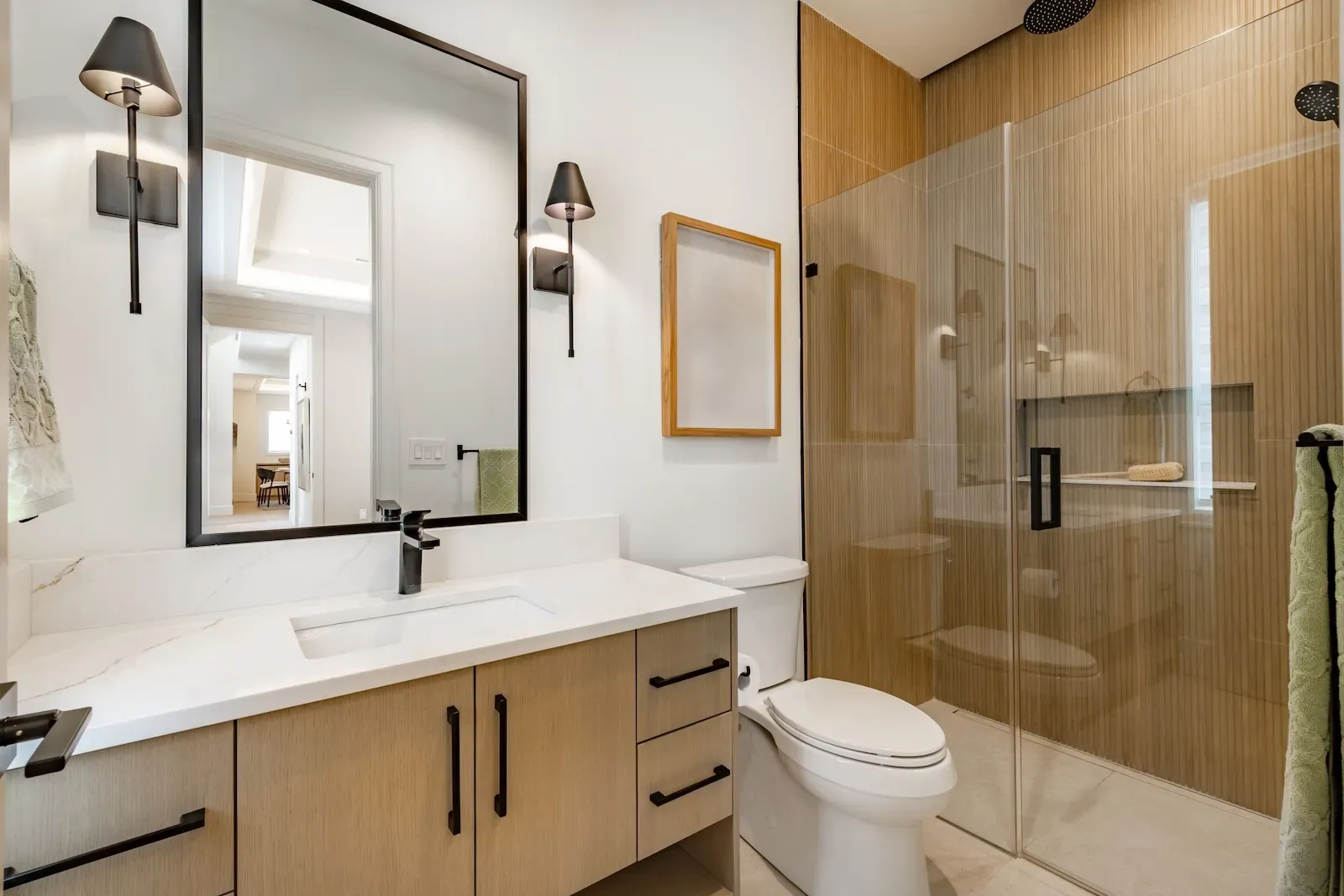
The low end of the range gets you a full gut with quality porcelain, a new vanity, toilet, and tub or shower in the existing layout. The upper end covers heated floors, a curbless-look shower with frameless glass, wall-hung fixtures, and large-format tile. Where your building's rules land you within that range is the subject of the rest of this post; the Toronto condo renovation cost guide covers whole-unit numbers if the bathroom is part of a bigger scope.
Board Approval First: What Your Alteration Package Needs
Effectively every Toronto condo corporation requires written approval before renovation work starts, and the review takes four to ten weeks. Submitting a complete package the first time is the single biggest thing you can do to keep a bathroom project on schedule.
A typical alteration package includes:
- A detailed scope of work with drawings showing what changes and what stays
- The contractor's certificate of insurance — boards commonly require $2M to $5M in commercial general liability with the condo corporation named as additional insured
- WSIB clearance for the contractor
- A construction schedule and, in many buildings, a refundable damage deposit of $1,000 to $5,000 held against common-element damage
We prepare these packages as part of the job, because a rejected or incomplete submission restarts the clock. If you are buying a unit with renovation plans, review the status certificate before you commit — it reveals the corporation's alteration rules, any standing restrictions, and whether previous owners left unapproved work behind that could become your problem.
What You Can and Can't Move in a Condo Bathroom
The pipes inside your walls are yours; the vertical stacks they connect to belong to the corporation, and they are not moving. That single fact shapes every condo bathroom layout.
In practice, fixtures can usually shift modest distances along the same wall — a vanity sliding over, a toilet rotating within reach of the existing drain. Dramatic relocations are harder: drains need slope to reach the stack, and with a concrete floor below you, gaining that slope means building the floor up, which costs height in a room that rarely has any to spare. Moving a toilet across the room is sometimes possible and rarely worth it. We wrote a fuller answer on what plumbing can move in a condo, but the short version: plan the design around the stack, not against it.
Anything touching in-suite plumbing typically needs board approval, and some corporations require an engineer's sign-off for drain changes. One more scheduling reality — replacing your unit's shut-off valves often requires a building-wide or riser water shutdown, which management must schedule and notify neighbours about. We fold that into the project plan early so it never stalls a tiled, half-finished bathroom.
Kitec and Poly-B: Check Before You Open Walls
If your building went up between 1995 and 2007 — which describes a large share of Toronto's condo stock — check for Kitec plumbing before renovating. Kitec is a PEX-aluminum-PEX pipe with brass fittings, usually orange for hot and blue for cold, and its fittings are prone to failure. It was the subject of a $125M class action, but those settlement claims are closed: remediation today is out-of-pocket.
A bathroom renovation is the cheapest moment you will ever have to deal with it. The walls are open, the trades are on site, and swapping the bathroom's Kitec runs for new PEX is incremental work instead of a standalone demolition project. Some buildings have already mandated replacement; your property manager will know, and the status certificate often mentions it.
Poly-B is the other name that comes up — a grey plastic supply pipe from the 1978 to 1995 era. It is a different product with a different failure mode and is less common in Toronto condos than Kitec, but it appears in some older buildings. Do not conflate the two, and do not assume either is present or absent: a five-minute look under the vanity and at the water heater connections during our site visit settles it.
Compact Design Ideas That Live Large
Most Toronto condo bathrooms measure somewhere between a generous closet and a compact bedroom, and the design moves that work are the ones that manufacture visual space.
A wall-hung vanity floats above visible floor, which reads as square footage. Large-format porcelain with tight grout lines does the same on walls — here is why large tile works in small bathrooms despite the instinct that small rooms need small tile. A frameless glass panel instead of a framed door or curtain, typically $2,000 to $4,000, removes the single most view-blocking object in the room. Recessed niches replace shelving; a medicine cabinet mirror replaces both.
Two comfort upgrades punch above their price in a condo. Electric in-floor heating, $1,500 to $3,000, transforms a concrete-slab bathroom that never quite warms up — we just confirm the unit's electrical capacity supports it first. And a properly sized, quiet exhaust fan matters more in a sealed high-rise than anywhere else, because that moisture has nowhere to go on its own. None of these moves change the footprint. All of them change how the room feels to stand in.
Scheduling Around Elevator Bookings and Work Hours
Condo construction runs on the building's clock. Work hours are typically Monday to Friday, 9 a.m. to 5 p.m., with no weekends or holidays — which stretches schedules 20 to 30 percent compared with the same scope in a house. Every load of demolition debris and every delivery of tile rides a service elevator booked in advance at $200 to $500 per day, and cutting happens off-site or in designated areas because most buildings prohibit wet cutting in suites. Corridor and elevator protection goes up and comes down daily. The details are worth reading before you book anything: how elevator bookings and work hours shape a condo renovation.
A realistic 2026 timeline for a Toronto condo bathroom, end to end: two to four weeks to prepare the alteration package, four to ten weeks of board review, then two to three weeks of construction. Call it three to four months from decision to finished room, most of it waiting rather than working.
Our advice: start the paperwork the day you decide to renovate, order long-lead items like vanities and glass during the approval window, and hire a contractor who has managed condo logistics before — it is a different trade than house work. Our condo renovation team in Toronto handles the board package, the bookings, and the build under one contract, with a free quote to start.
Ready to start your renovation?
Our team is here to help you bring your vision to life. Get a free, no-obligation quote today.
Get Free QuoteFrequently Asked Questions
Clear answers to the questions Ontario homeowners ask most.