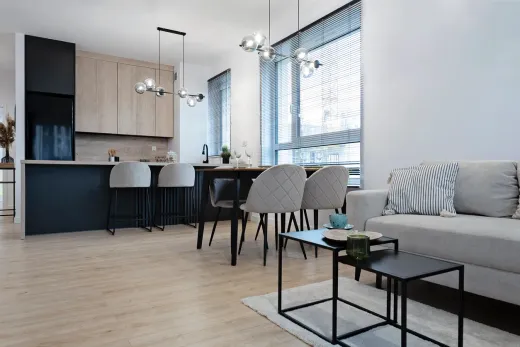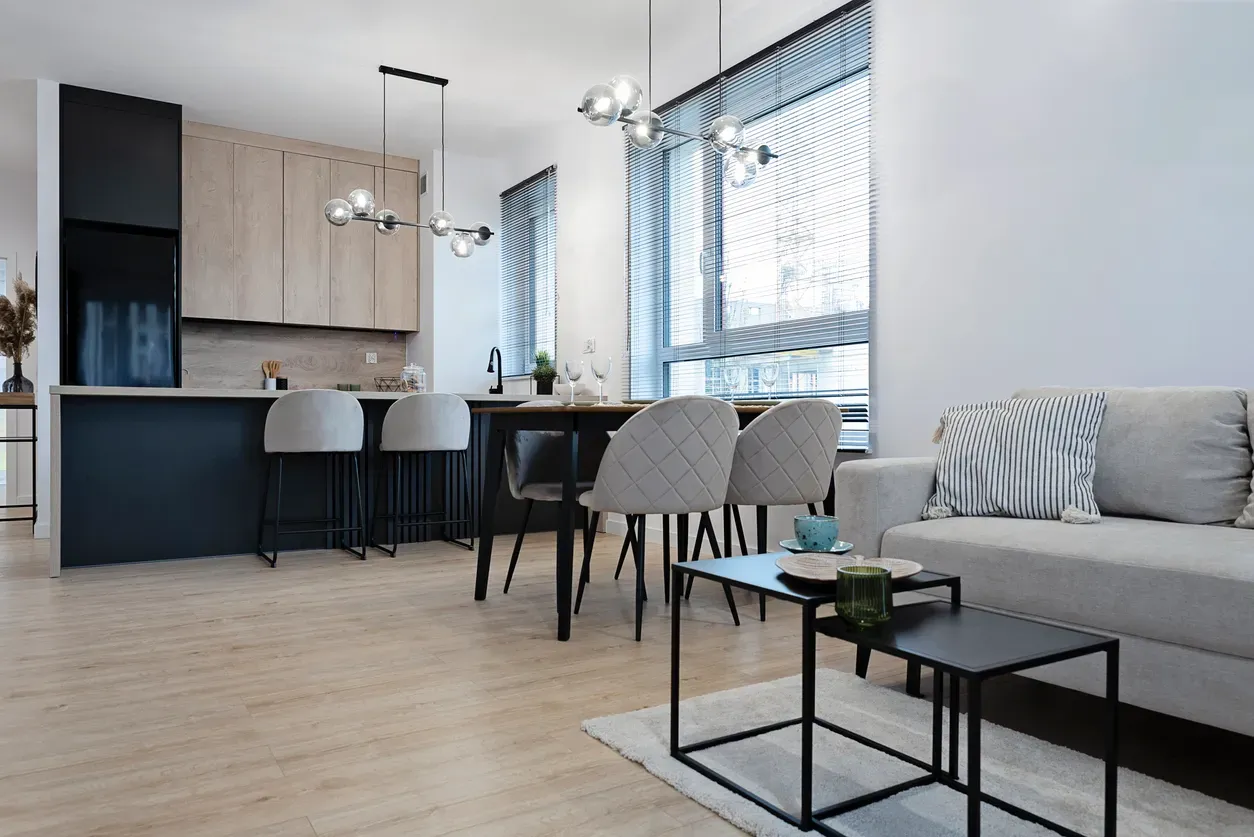
A concrete slab overhead doesn't mean living with one sad ceiling fixture. Track, coves and layered light can relight a Toronto condo without touching the structure.
Why Condo Ceilings Fight Good Lighting
Most Toronto condos come with exactly one ceiling junction box — usually over the dining area — plus maybe a builder track in the kitchen. The rest of the unit relies on floor-to-ceiling glass by day and lamps by night, which is why so many units in CityPlace, Liberty Village or Humber Bay feel bright at the window and dim at the core. The reason is structural: your ceiling is the concrete slab of the floor above, with no cavity to fish wire through and no framing to clip a pot light into.
The fix isn't to fight the slab; it's to layer light where you're allowed to put it. Track and rail systems, wall sconces, cove strips, under-cabinet LEDs and well-chosen plug-in fixtures can relight a whole unit. On the budget side, licensed electricians in Toronto run $95–$150 per hour as of 2026, and most single-fixture jobs take hours, not days — which makes lighting one of the highest-impact-per-dollar moves in a condo renovation.
What Concrete Slabs Allow — and Forbid
Start with the hard limits. You cannot chase channels into the slab or drill deep into it for wiring — in many towers the slab is post-tensioned, meaning steel cables under enormous tension run through the concrete, and hitting one is dangerous and staggeringly expensive to repair. Condo declarations back this up: the slab is a common element, not yours to modify, and boards refuse these requests flat. Our rundown of what you can't change in a condo covers the full list.
What you can do is more generous than most owners expect. Any existing junction box can feed a new surface-mounted fixture or an entire track system. Interior partition walls are ordinary drywall over steel studs, so an electrician can fish wire to new sconces and switches. Kitchens, bathrooms and hallways usually already have dropped drywall ceilings or bulkheads hiding ductwork — those cavities take recessed fixtures happily. New furred-down details, like a perimeter cove, can be built below the slab with board approval. All of it runs through a licensed electrical contractor who files the ESA notification.
Track and Rail Systems That Look Intentional
Track lighting earned a bad reputation from the chunky halogen systems of the 1990s, but current low-voltage rail and magnetic-track products are a different animal. Slim black or white channels carry small adjustable heads, mini pendants and linear washes on one circuit — all fed from that single existing junction box in the ceiling.
Done well, a rail solves the classic condo problem of one fixture straining to light an entire open-plan space. Aim two heads at the kitchen island, a wash at the art wall, a pendant over the table: one box, five light sources, each dimmable. Runs can turn corners and span several metres, and because everything mounts to the surface, the slab is never touched. If you're building a bulkhead anyway, a magnetic track set flush into the drywall reads as fully architectural — guests assume the building came that way. Fixture pricing varies widely by brand and head count; the electrician's time is typically a half-day to a day for a clean single-run installation.
Sconces, Coves and Plug-In Pendants
Layered lighting comes from the walls as much as the ceiling. Hardwired sconces flanking a bed or a sofa wall are very achievable in a condo because partition walls are hollow — wiring fishes down from an existing circuit without going anywhere near the slab. Where opening walls isn't worth it, plug-in sconces and pendants with tidy cord covers deliver most of the look for a fraction of the cost, and they move out with you — worth remembering in a unit you rent or plan to sell soon.
Cove lighting is the concrete-ceiling workaround we install most. LED strip on top of the kitchen uppers, in a bulkhead reveal, behind a headboard panel or along a floating shelf throws soft indirect light upward and makes a low slab feel taller instead of lower. Two rules keep it from looking like a gimmick: match colour temperature across every source in the room — 2700K to 3000K, warm — and put everything on dimmers. Mixed whites are the fastest way to make a freshly renovated unit feel cheap.
Kitchen and Bathroom Lighting Within Reach
Kitchens and bathrooms are the exception to the no-pot-lights rule, because most builders dropped the ceilings there to hide ventilation runs. If your kitchen or bathroom ceiling sits a few inches below slab height, recessed fixtures can usually go in — an electrician confirms cavity depth in minutes. Modern slim LED pot lights need barely any depth, which has opened up bulkheads that older housings never fit.
Under-cabinet strips are the single best upgrade in a condo kitchen: they light the counter you actually work on instead of the back of your head. In bathrooms, sconces at face height on either side of the mirror beat one overhead bar for shaving and makeup, and a like-for-like fan-light swap on the existing box needs no approvals at all. Remember the building's rhythm while planning: work hours are typically Monday to Friday, 9 to 5, so even small electrical jobs get scheduled on weekdays — the building's renovation rules govern the schedule as much as the scope.
Costing a Whole-Unit Lighting Refresh
As of 2026, condo lighting budgets break into three tiers. A plug-in-only refresh — pendants, sconce lamps, strip kits — is fixture cost plus your own time, with no approvals needed. A hardwired refresh on existing circuits (track system, under-cabinet strips, two or three sconces, a cove) is typically a few days of licensed electrical work at $95–$150 per hour plus fixtures; the ESA notification, usually $90–$300, is built into a proper quote. A full relight with new bulkheads, switching changes and drywall repair belongs inside a broader renovation — see what condo renovations cost in Toronto, where single-area scopes start around $15,000.
Anything that alters wiring or builds new ceiling details needs board approval first: expect 4–10 weeks for sign-off, and be ready to show the contractor's insurance certificate ($2–$5 million liability with the corporation named) and WSIB clearance. Our rule of thumb: renting or moving within two years, go plug-in; staying put, hardwire the track and coves; renovating the kitchen anyway, fold the lighting in — that's the cheapest moment you will ever have to do it.
Ready to start your renovation?
Our team is here to help you bring your vision to life. Get a free, no-obligation quote today.
Get Free QuoteFrequently Asked Questions
Clear answers to the questions Ontario homeowners ask most.