Condo Ensuite Upgrades: Boutique-Hotel Bathrooms in Toronto Units
Builder-basic condo ensuites — beige tub, stock vanity, one sad pot light — upgrade beautifully without moving a single drain. Here is what works inside the plumbing wall, and what it costs.
What a Condo Ensuite Upgrade Costs in 2026
The numbers first. A full condo ensuite renovation in Toronto starts around $15,000, and most land between $15,000 and $30,000 — full demolition, new waterproofing, porcelain tile, new shower or tub, vanity, toilet, and lighting, keeping the existing layout. A tub-to-walk-in-shower conversion on its own runs $3,500–$5,500 basic, $6,000–$8,500 for the mid-range scope most owners choose, and $9,000–$15,000+ for fully tiled custom work with frameless glass.
The reason these projects are so satisfying is the starting point. Toronto towers of the 2000s and 2010s shipped tens of thousands of identical ensuites: acrylic tub with a curtain, stock vanity, strip light, beige 12x12 tile. Developers optimized for cost per unit, not for the person showering in it every morning.
That gap between builder-basic and what the same footprint can be — a glass shower, warm tile, a floating vanity, real lighting — is the whole opportunity. Our Toronto bathroom renovation cost guide has the full pricing detail; the sections below cover what actually works in condo dimensions.
Working Within the Plumbing Wall
Every condo ensuite has one organizing fact: the drains are cast into a concrete slab, and the supply lines run to a shared riser. Relocating a toilet or shower drain means trenching concrete — expensive where possible, prohibited in many buildings, and moving plumbing in a condo needs board approval and often an engineer's sign-off even when it is technically feasible.
So the smart condo ensuite keeps every fixture where the builder put it. That single decision saves the $2,000–$6,000 that plumbing relocation adds in any bathroom, avoids the slowest approval category on the board's list, and — this is the part people miss — costs you almost nothing in design terms. Builder layouts are usually functionally fine; they were just finished cheaply.
Keep the drains, redirect the budget. The tub becomes a walk-in shower in the same footprint. The vanity upgrades in place, often growing wider along the same wall. Tile, glass, lighting, and storage do the transformation. Nearly every ensuite in this post's price ranges follows exactly that playbook.
Walk-In Shower Conversions in Condo Dimensions
The tub-to-shower conversion is the signature condo ensuite move — most owners shower daily and bathe never, and the main bathroom usually keeps a tub for resale anyway.
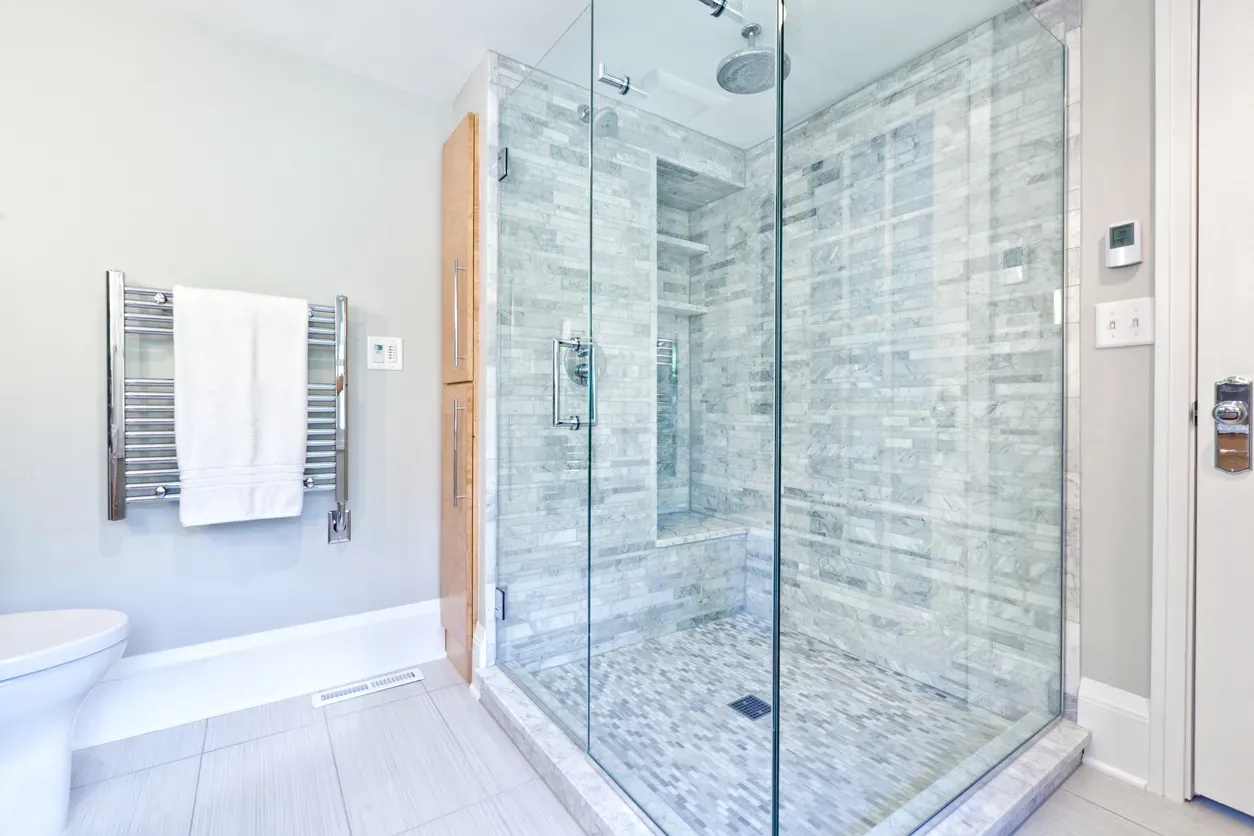
In a standard five-foot condo alcove, the conversion tiers look like this. Basic ($3,500–$5,500): tub out, acrylic base and surround in, existing valve location. Mid-range ($6,000–$8,500): custom tile surround, upgraded fixtures, glass door or panel — the sweet spot for most units. High-end ($9,000–$15,000+): full-height tile, frameless glass, built-in niche and bench, premium valve. Frameless glass alone accounts for $2,000–$4,000 of any budget it appears in.
One condo-specific note on thresholds: a true curbless shower needs the floor build-up to create slope, which is harder over a concrete slab than in a house with joists. A low-profile base achieves most of the same clean look without fighting the slab.
Waterproofing is where conversions succeed or fail — a membrane system behind the tile, properly detailed, is non-negotiable in a building where a leak becomes your downstairs neighbour's ceiling. Our walk-in shower installation service treats it as the core of the job, not an upsell.
Floating Vanities and Mirror-Cabinet Storage
Nothing signals boutique-hotel faster than a wall-hung vanity with light washing the floor beneath it. In a small ensuite the visible floor genuinely changes the perceived size of the room, and the practical benefits stack up: easier cleaning, a spot for a scale, no toe-kick grime.
Budget $1,500–$3,500 for a mid-range vanity and countertop, installed. The condo-specific caveat is structural: a floating vanity hangs its whole weight on the wall, and condo partition walls are typically steel stud. That means proper blocking installed inside the wall during the renovation — an easy step when the wall is open, an ugly retrofit later. It is a good example of why sequencing matters in bathroom work.
For storage, think vertically because you cannot think horizontally. A full-width mirror cabinet over the vanity holds more than most vanity drawers, keeps counters clear, and doubles the light in the room. Recessing it into a partition wall gives a flush, built-in look — possible in stud walls with available depth, not in concrete or plumbing-packed walls, which your contractor should verify before the drywall is ordered. Add a recessed niche in the shower and most ensuites need no other storage at all.
Tile, Light, and Heated Floors: Where Small Bathrooms Go Premium
Small rooms are where premium materials become affordable. An ensuite floor might be 25 square feet — the difference between builder ceramic and a beautiful porcelain is a few hundred dollars, not a few thousand. Standard porcelain installs at $10–$25 per square foot; large-format tile and natural stone run $40+ per square foot installed and still stay reasonable at ensuite scale. Fewer grout lines from large-format tile also make a small room read bigger and clean easier.
Heated floors are the upgrade owners thank us for every February. An electric mat under the tile adds $1,500–$3,000, turns the coldest floor in the unit into the warmest, and in a small ensuite the operating cost is minor. The new circuit involves an ESA electrical notification — typically wrapped into the electrician's price, with ESA fees on a bathroom scope usually running $90–$300.
Lighting deserves equal billing. Replace the single ceiling puck with layered light: sconces or backlit mirror at face height for actual grooming, plus a dimmable ceiling source. It is a small line item that does more for the boutique-hotel effect than any single tile choice.
Costs, Boards, and Your Next Step
Plan the paperwork with the same care as the tile. Even a same-layout ensuite renovation needs board approval — typically 4–10 weeks — plus insurance certificates and a booked elevator for demolition and delivery days. Water shut-offs are the condo-specific wrinkle: isolating your supply usually means shutting down a riser serving other units, which management schedules with building-wide notice. A contractor who plans all shut-off work into one or two coordinated days keeps you off your neighbours' grievance list.
Budget summary, as of 2026: $3,500–$15,000 for a shower conversion alone; $15,000–$30,000 for the full boutique-hotel treatment of a typical condo ensuite; add $1,500–$3,000 for heated floors and $2,000–$4,000 for frameless glass if they are on your list. Quotes typically exclude 13% HST — confirm before comparing.
When does the full renovation beat the conversion-only scope? If the vanity, tile, and lighting are original builder stock, piecemeal upgrades leave the room feeling half-done — the full scope costs more but transforms the space once, with one approval and one round of dust. Our bathroom renovation team in Toronto handles the board package and the build together, with a 2-year workmanship warranty. Get a free quote with your floor plan and a few photos — condo ensuites quote quickly.
Ready to start your renovation?
Our team is here to help you bring your vision to life. Get a free, no-obligation quote today.
Get Free QuoteFrequently Asked Questions
Clear answers to the questions Ontario homeowners ask most.