Engineered hardwood in Etobicoke lands at roughly $7-$13 per square foot installed in 2026. Wear layer, plank width and what is hiding under your old floor decide where in that range you fall.
What Engineered Hardwood Costs in Etobicoke in 2026
Engineered hardwood in Etobicoke generally lands at $7-$13 per square foot installed as of 2026, overlapping the $8-$15 range for solid hardwood. Install labour on its own runs about $2 per square foot at independent GTA flooring retailers - the same as solid - so the spread comes almost entirely from the boards you pick.
On top of the installed rate, real projects carry removal and disposal of the old floor, subfloor repair where needed, new baseboards or quarter-round, transitions, and stair nosings if the wood meets a staircase. Quotes usually exclude 13% HST.
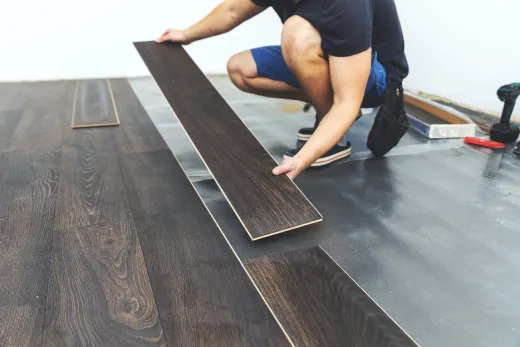
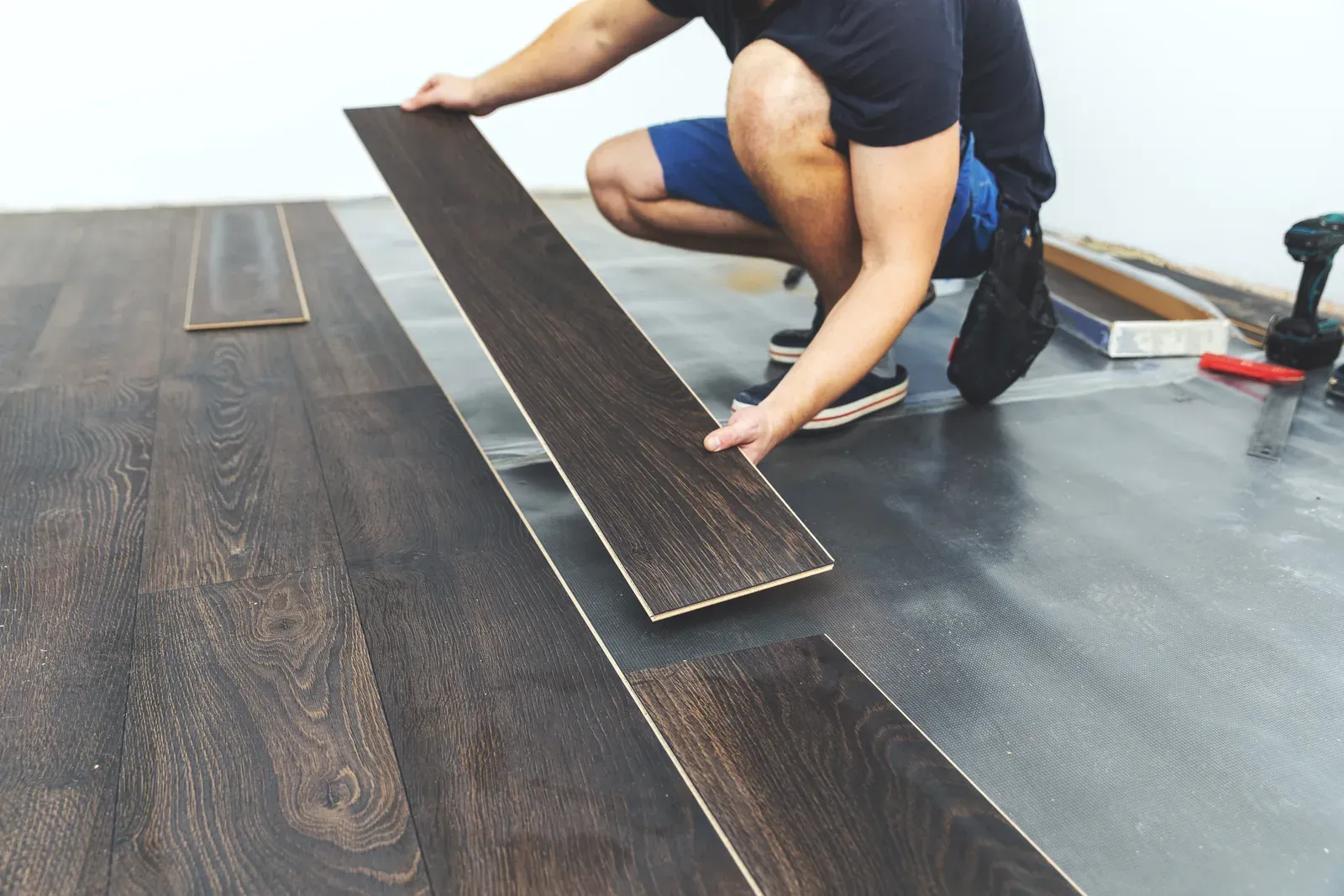
Engineered boards are a plywood or high-density core with a real hardwood veneer on top. That construction is the whole point: it moves less than solid wood through Toronto's swing from humid summers to bone-dry furnace-heated winters, and it can go places solid wood should not. Full details on our hardwood installation service cover both types.
Wear Layer and Plank Width: The Two Big Price Levers
Two spec-sheet numbers explain most of the price difference between a $7 board and a $13 board.
Wear layer is the thickness of real wood above the core. Entry-level product carries a veneer too thin to ever sand; boards with roughly 2 mm or more can take at least one careful refinish, and 3-4 mm layers behave almost like solid wood over a lifetime. Thicker veneer costs more and is worth it anywhere you plan to stay long-term - it is the difference between a floor you refresh in 15 years and one you replace.
Plank width is the fashion lever. The 5- to 7-inch wide planks most clients want use more premium veneer per board and cost more than traditional 3-inch strip. Length matters too: long boards look dramatically better in an open room but carry a price premium.
Finish quality, species (white oak commands more than red oak or maple right now) and brand round out the sticker price. When comparing quotes, make sure the wear layer is written down - two "engineered oak" lines can be entirely different products.
Installing Over Concrete vs Plywood in Etobicoke Homes
Engineered hardwood's other advantage is flexibility in how it goes down, and Etobicoke's housing stock uses all of it.
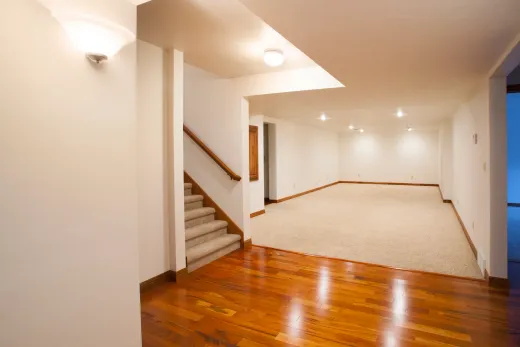
Over the plywood or plank subfloors of a main or second floor, boards are stapled or nailed - the traditional method, and typically the cheapest. Over concrete, engineered can be glued down or floated over an underlay pad, which is what makes it viable where solid hardwood is a bad idea. Central Etobicoke bungalows in Alderwood, Eatonville and Richview often have full-height or near-full-height basements, and a glued or floated engineered floor is a legitimate option down there in a way solid nail-down never is - though we always moisture-test the slab first and walk away from any basement with unresolved dampness.
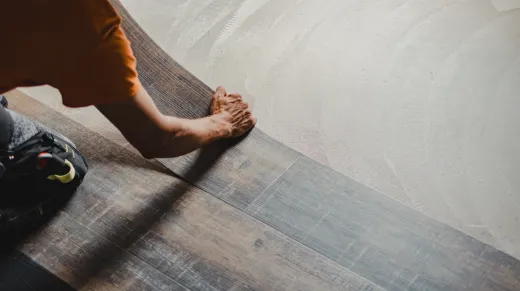
Glue-down installs cost more in labour and adhesive than float or nail-down, but feel more solid underfoot and handle wide planks better. If the choice is between engineered and vinyl plank for a below-grade room, our comparison of engineered hardwood vs LVP covers where each wins.
1950s-60s Bungalows: Removal, Levelling and Trim Costs
Most of central Etobicoke - Alderwood, the Princess-Rosethorn area, Eatonville, Richview - went up in the 1950s and 60s, when Etobicoke was one of the fastest-growing municipalities in Canada. Those houses are solidly built, but sixty-plus years of living sits between you and a flat new floor.
The common line items we see: pulling up two or three generations of old flooring, sistering or screwing down squeaky subfloor sections, levelling dips that settled decades ago, and trimming doors to clear the new floor height. Whether removal is even required depends on what is down now - here is when old flooring has to come up before new material goes in.
One caution specific to this era: 9x9 vinyl floor tiles and some sheet flooring adhesives from before the mid-1980s can contain asbestos. Testing runs a few hundred dollars and is the only way to know. If a sample comes back positive, removal becomes a licensed abatement job - never something to sand, break up, or quietly bag into the garbage. Along the Lakeshore strip in Mimico, New Toronto and Long Branch, the pre-war housing adds plank subfloors and more levelling into the mix.
Engineered vs Solid at Etobicoke Price Points
With engineered at roughly $7-$13 installed and solid at $8-$15, the price overlap is real - so the choice is about behaviour, not budget.
Engineered wins on dimensional stability. A wide-plank solid floor installed during a humid August will show winter gaps once the furnace has run for two months; engineered construction cuts that movement dramatically. It also wins everywhere concrete or moisture is involved, and it installs faster.
Solid wins on total lifespan. A 3/4-inch solid board can be sanded two to five times across 80 years or more - the original strip oak still performing in Toronto's older housing is the proof. A quality engineered board with a 3-4 mm wear layer narrows that gap to one or two refinishes, which honestly covers most ownership timelines.
Our working rule for Etobicoke bungalows: engineered for wide planks, for main floors over in-floor heat, and for anything at or below grade; solid remains a fine choice for classic-width strip on an upper floor you intend to own for decades. Our flooring cost guide puts both against tile and vinyl at 2026 prices.
Sample Quote: 900 Sq Ft Main Floor in Alderwood
A realistic 2026 project, built from the ranges above: a 900 square foot main floor in an Alderwood bungalow, mid-grade 6-inch engineered white oak with a 3 mm wear layer, nailed over the existing plywood after old broadloom and one layer of laminate come up.
At $7-$13 per square foot installed, the flooring itself runs $6,300-$11,700. Removal and disposal, minor subfloor screwing and levelling, new quarter-round throughout, and transitions at the kitchen tile typically add $1,000-$2,500 on a house of this vintage. Most projects like this land in the $8,000-$13,000 range before HST - comfortably above our $5,000 project minimum, and at the lower end when the subfloor cooperates.
The honest caveat: nobody can firm up the prep number without seeing what is under your current floor, which is why we quote after a site visit, not over the phone. We have been installing floors across Etobicoke and the rest of Toronto since 2004, licensed, insured and WSIB-covered, with a 2-year workmanship warranty on every install. Book a free quote or call (416) 995-7855.
Ready to start your renovation?
Our team is here to help you bring your vision to life. Get a free, no-obligation quote today.
Get Free QuoteFrequently Asked Questions
Clear answers to the questions Ontario homeowners ask most.