Most 1960s Etobicoke bungalows hide two things under their floors: original oak strip worth saving, and 9x9 vinyl tiles that need an asbestos test before anyone touches them.
Alderwood to Richview: What 1950s-60s Builders Put Down
Central Etobicoke filled in fast. Alderwood, Eatonville, Princess-Rosethorn and Richview are dominated by 1950s and 60s bungalows and side-splits, built during the decades when Etobicoke was one of Canada's fastest-growing municipalities. The flooring formula was consistent: oak strip in the living room, dining room and bedrooms, 9x9 vinyl tile in the kitchen, and sheet goods or more tile in the basement. Somewhere in the 1980s or 90s, a lot of that oak disappeared under broadloom.
Here is what replacement costs look like as of 2026, installed, in the GTA:
- Luxury vinyl plank: $4-$9 per sq ft
- Engineered hardwood: roughly $7-$13 per sq ft
- Solid hardwood: $8-$15 per sq ft
- Refinishing existing hardwood: $4-$9 per sq ft
A typical 800-1,000 sq ft main floor lands around $6,850 all-in, with real projects ranging from $3,700 to $12,600 depending on material and prep. Our flooring projects start at $5,000. Quotes usually exclude 13% HST, so confirm that before comparing.
The 9x9 Tile Warning: Asbestos Testing Before Demolition
The single most important step in a 1960s bungalow flooring job happens before any demolition. Vinyl floor tile from this era frequently contains asbestos - the 1946-1965 window was the peak period for asbestos building materials in Canada, and 9x9 tile is the classic format. The black mastic adhesive underneath can contain it too, even when the tile itself tests clean.
You cannot tell by looking. The rule we follow across every pre-1990 GTA home: test before disturbing. Lab testing runs $300-$800, and asbestos work in Ontario is governed by Regulation 278/05, which sets out how it must be handled and by whom.
We see these tiles constantly in Alderwood and Eatonville kitchens, usually hiding under one or two later layers of sheet vinyl or laminate. If your kitchen floor feels thick and steps down awkwardly into the hallway, layers are stacked under there - and the bottom one is the layer that needs testing.
Safe Removal vs Encapsulation: Costs Compared
If the tile tests positive, you have two legitimate paths.
Certified removal runs $8-$20+ per sq ft, and typical residential abatement projects land between $3,000 and $12,000. For a 150 sq ft kitchen that is a real but manageable line item; for a full basement it gets significant. Removal is the right call when you need to level the slab, when the tile is loose or broken, or when a future sale makes a clean scope report worth the money.
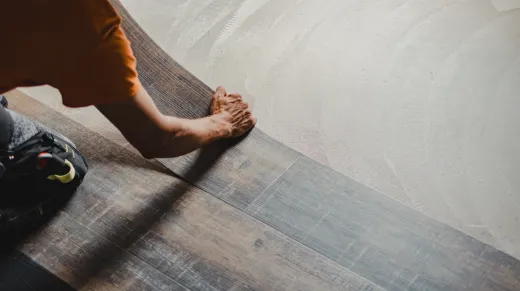
Encapsulation means leaving well-adhered tile in place and floating new flooring over an underlayment on top of it. Undisturbed asbestos tile is stable, and covering it avoids the abatement cost entirely. The trade-offs are height - you gain thickness at doorways and transitions - and the fact that the tile is still there for the next renovation to deal with.
We walk through this decision with homeowners regularly; whether old flooring has to come out depends on condition, height allowances and what is going on top, not on a blanket rule.
Hardwood Under the Broadloom: The Pleasant Surprise
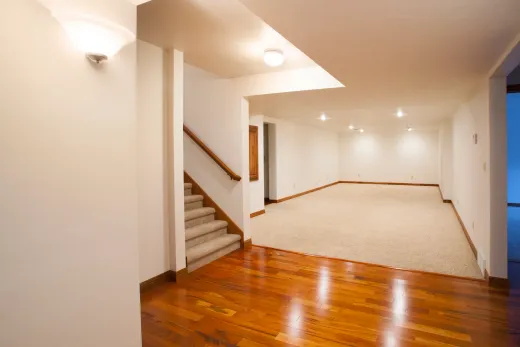
Pull up wall-to-wall carpet in a 1960s Etobicoke bungalow and, more often than not, there is original oak strip flooring underneath. Builders installed it as standard in living areas and bedrooms, and carpet actually protected it for decades.
Refinishing costs $4-$9 per sq ft in the GTA as of 2026. A light screen-and-recoat, where the old finish is still sound, can be as little as $2-$3 per sq ft. Heavier jobs - board repairs, pet stains, custom stain colours, oil-based finishes - sit at the $6-$8 end. Compare that against $8-$15 per sq ft for new solid hardwood and the math usually favours keeping what you have.
The caveats: tack strips leave a perimeter of staple and nail holes that sanding handles fine, but water damage near patio doors and dark pet stains often go too deep to sand out. Boards can be replaced individually, though matching 60-year-old oak takes some hunting. We assess this in person before quoting, because the difference between a $2,500 recoat and a full replacement is worth a site visit.
Best Replacement Floors for Bungalow Layouts
A bungalow gives you something two-storey homes never do: one continuous level. Running a single flooring product from the front door through the kitchen and down the hall makes a 1,100 sq ft main floor feel considerably larger, and it eliminates the transition strips that chop up small rooms.
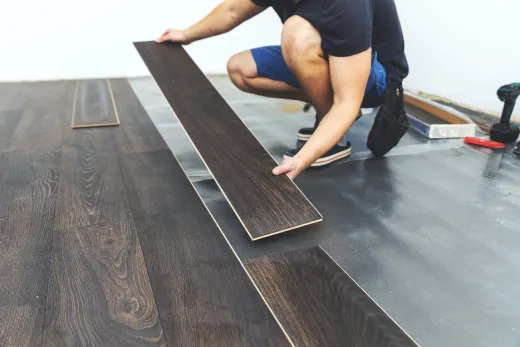
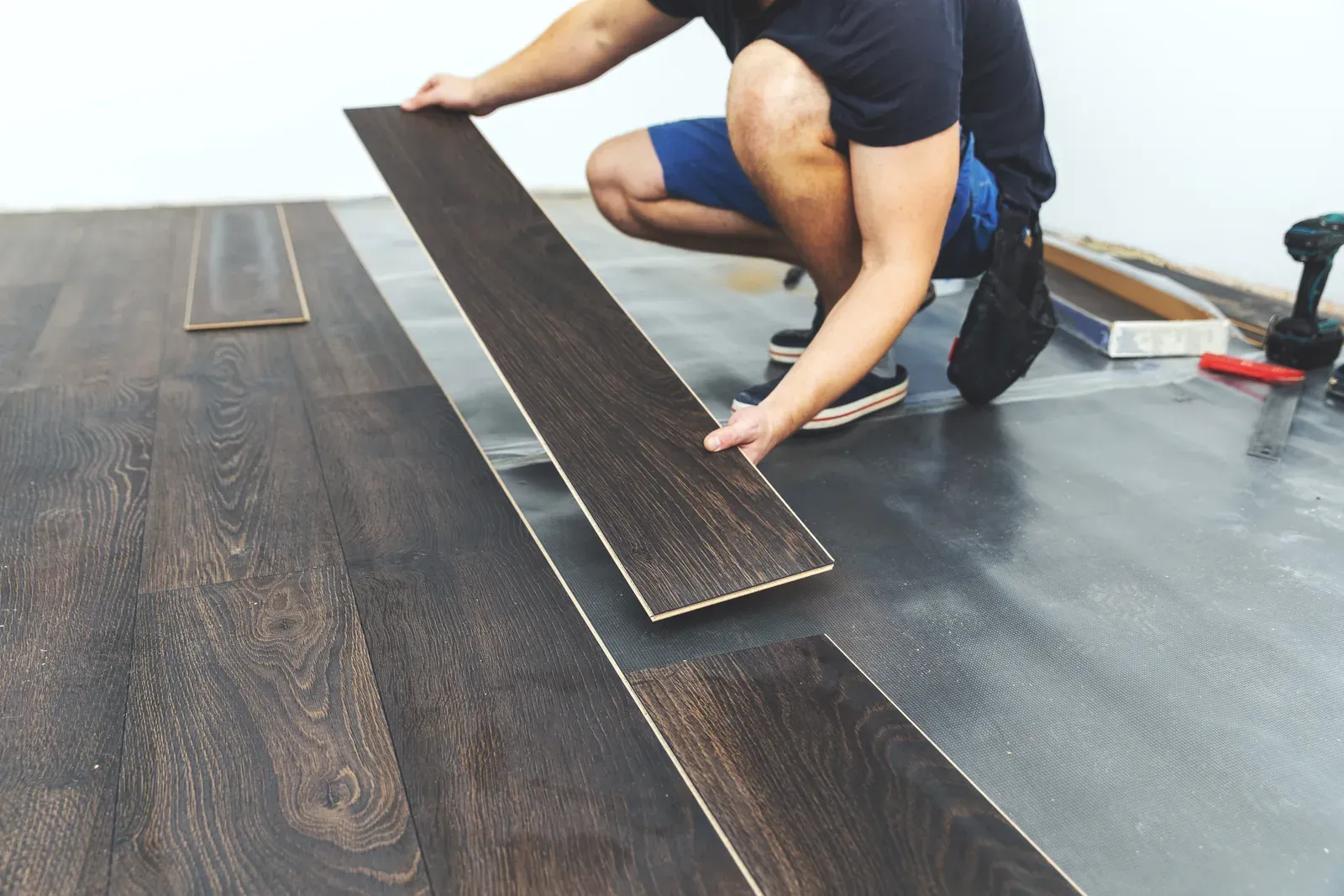
For the main floor, engineered hardwood or solid oak suits the era and the resale market - the difference between engineered hardwood and LVP mostly comes down to moisture tolerance and refinishing potential. For kitchens, LVP at $4-$9 per sq ft handles spills and dropped pots better than site-finished wood, and modern planks blend convincingly with adjacent hardwood.
Etobicoke bungalow basements deserve a mention. Unlike downtown Victorians, they are usually full-height or close to it, which makes them genuine living space worth finishing properly. Concrete slabs rule out solid hardwood down there; the right flooring for a finished basement is almost always vinyl plank or tile over a suitable subfloor.
Sample Budget for a 1,100 Sq Ft Main Floor
Using 2026 installed rates, a full main-floor replacement in a typical Richview or Princess-Rosethorn bungalow prices out roughly like this: LVP $5,000-$9,900 (our flooring projects start at $5,000); engineered hardwood about $7,700-$14,300; solid hardwood $8,800-$16,500. On top of the per-foot rate, budget for old-floor removal and disposal, subfloor repair, new baseboards or quarter-round, door trimming and transitions - the line items that separate low quotes from complete ones. Add $300-$800 for asbestos testing if 9x9 tile is anywhere in scope, and $3,000-$12,000 if abatement turns out to be needed.
Our rule of thumb for these homes: refinish the oak where it exists and is sound, replace the kitchen and any tiled areas with LVP after testing, and treat the basement as its own project. That sequence spends money where it shows and keeps the hazmat handling contained to one visit.
The Toronto flooring cost guide breaks down every material in more detail. When you are ready for firm numbers, request a free quote - we have been renovating these exact houses since 2004 and every estimate accounts for what the era typically hides.
Ready to start your renovation?
Our team is here to help you bring your vision to life. Get a free, no-obligation quote today.
Get Free QuoteFrequently Asked Questions
Clear answers to the questions Ontario homeowners ask most.