A herringbone floor is the fastest way to make a renovation look custom — and the labour bill shows it. What pattern installs actually cost in the GTA, and where they earn their premium.
Why Pattern Installs Cost More Per Sq Ft
Start with the baseline. A straight-lay hardwood floor in the GTA runs $8–$15 per sq ft supplied and installed as of 2026, and LVP runs $4–$9. Herringbone sits above whichever material you choose, for three unglamorous reasons: layout, cutting and waste.
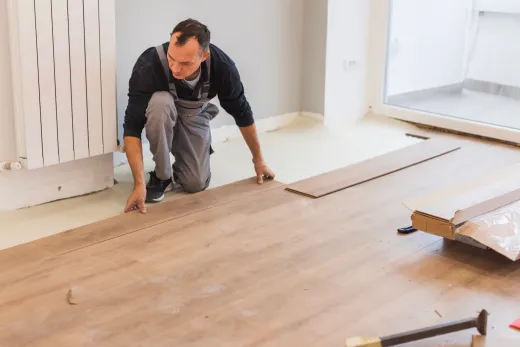
Every herringbone field starts from a snapped centreline that the whole room hangs on — get it a few millimetres off and the error compounds across forty rows. Every board meets its neighbour at a precise 90 degrees, so the installer is checking alignment constantly instead of racking long runs. And every wall, doorway and vent means an angled cut, so we order roughly 10% extra material for pattern work versus the usual allowance for straight lay. The same logic applies in tile: herringbone and other patterns command the top of the $8–$15 per sq ft labour band for standard-format tile, and beyond it for complex layouts. Expect a herringbone floor to take noticeably longer to install than the same square footage laid straight — you are paying for a slower, fussier, more skilled day's work. Our Toronto flooring cost guide has the baseline numbers to build from.
Herringbone vs Chevron: The Difference and the Price Gap
The two patterns get confused constantly, and the difference matters to your invoice. Herringbone uses standard rectangular boards laid in a staggered zigzag — each board's end meets the side of the next, producing the classic broken-weave look. Chevron uses boards with ends pre-cut at an angle (typically 45 degrees) so pairs meet in a crisp point, forming continuous arrows down the room.
Chevron is usually the more expensive of the two. The angled ends must be factory-cut or precision site-cut, the material itself is often sold as a dedicated chevron product at a premium over plain planks, and the pointed seams are unforgiving — any subfloor irregularity telegraphs straight through a chevron line. Herringbone is more tolerant: it uses ordinary rectangular stock (or purpose-made blocks), hides minor imperfections in its busier pattern, and gives installers slightly more room to adjust as they go. If you love the arrow look, budget for chevron. If you want the heritage pattern at the lower cost of entry, herringbone delivers most of the visual impact.
Material Options: Engineered Blocks, Solid and Pattern-Ready LVP
Engineered hardwood herringbone is what we install most. Manufacturers now sell dedicated herringbone blocks — short engineered boards with left- and right-handed tongue-and-groove — which install faster and stay flatter than site-cut solid wood, an advantage in GTA homes that swing from humid summers to furnace-dry winters. Engineered flooring generally overlaps solid pricing at roughly $7–$13 per sq ft installed for straight lay; expect pattern product and pattern labour to push a herringbone project toward and past the top of that band.
Solid oak herringbone is the traditional route and still the right call in century homes, but it demands acclimation, a dead-flat subfloor and a patient installer. At the other end, pattern-ready LVP has become a genuinely good option: rigid-core planks sized for herringbone start from LVP's $4–$9 per sq ft installed range plus the labour premium, and they bring waterproof performance that wood cannot. We compare the underlying materials in engineered hardwood vs LVP — the short version is that the pattern reads beautifully in either, and the choice comes down to budget, moisture exposure and how the floor feels underfoot.
Where Patterns Shine: Entries, Living Rooms, Condos
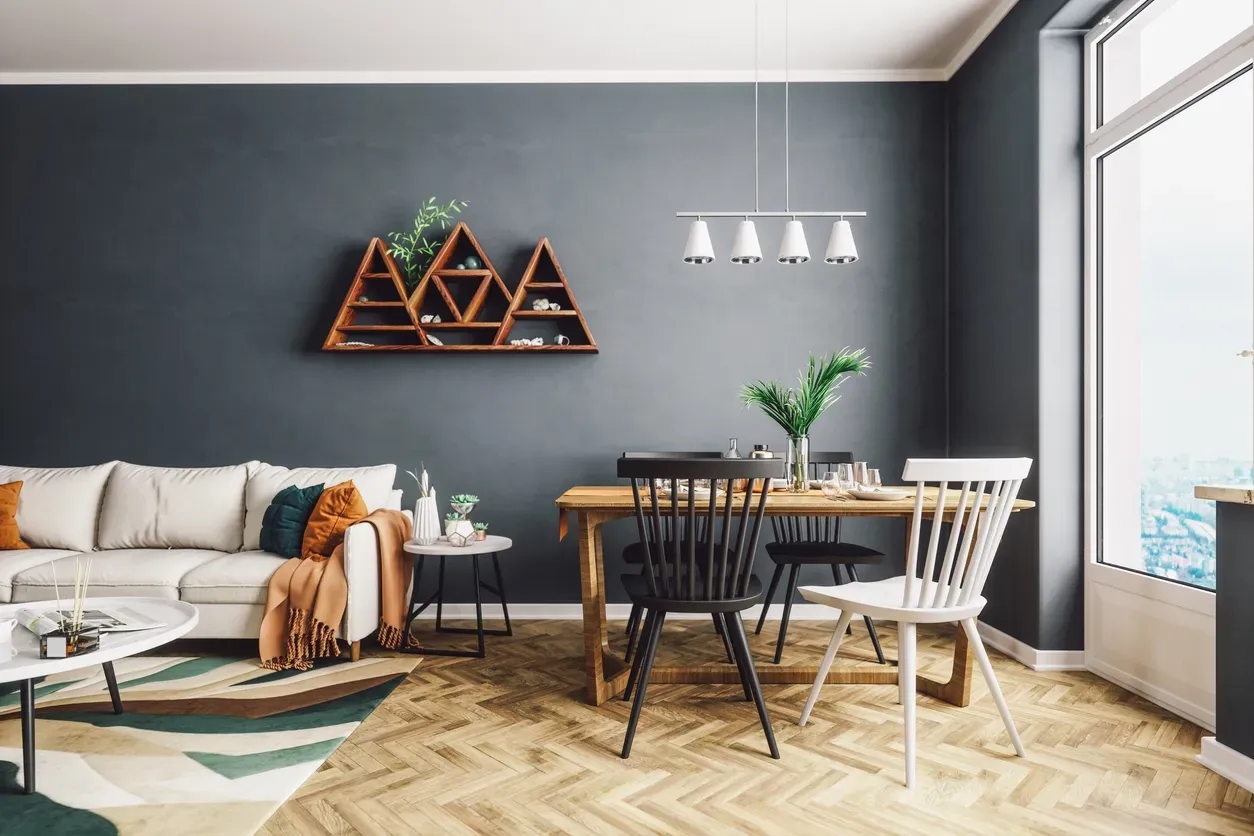
You do not need herringbone everywhere to get the effect — and most of our clients shouldn't. The pattern earns its premium in the rooms people actually look at. A front entry or foyer in herringbone announces the whole renovation in the first three steps. A living or dining room gains a focal floor that carries the space even with restrained furniture. Principal bedrooms take the pattern well as a quiet luxury move.
Condos are the sleeper case. In a 600–900 sq ft unit, a herringbone floor does the decorative work that crown moulding and feature walls do in a house, and the small square footage keeps the labour premium affordable in absolute dollars. Two condo cautions: the concrete slab must be flat (grinding or levelling first is common), and your board will require an acoustic underlay meeting its IIC/STC ratings under any hard flooring — see our answer on condo flooring and soundproofing rules before ordering material. Hallways and kitchens in busy family homes are where we suggest keeping it simple; pattern floors show wear paths sooner in high-traffic pinch points.
Borders, Direction and Layout Planning
A herringbone floor is planned on paper before a single board goes down. The pattern needs a direction — conventionally the zigzag runs toward the main light source or down the room's long axis, which makes the space read longer. The centreline gets snapped so the pattern lands symmetrically between the walls that matter most, usually the ones you see from the entry.
The border question divides clients. A single or double plank border framing the field gives a tailored, traditional finish and neatly solves the ragged edge where angled boards meet the wall — but it costs more layout time and shows any wall that is out of square, which in older Toronto and Hamilton housing stock is most of them. Running the pattern wall-to-wall without a border reads more contemporary and forgives crooked walls. Either way, insist on a dry lay: we set out several rows loose and confirm the look with the homeowner before committing. Moving a centreline on day one costs minutes; regretting it after installation costs a floor.
Budgeting a Herringbone Main Floor in the GTA
Put the numbers together for a typical 800–1,000 sq ft main floor. Laid straight, that project commonly lands around $6,850 all-in, within a $3,700–$12,600 range depending on material. In herringbone, plan for the upper half of that range and beyond: pattern-ready material costs more per box, waste runs higher, and the labour is slower and more skilled. Quotes are typically before 13% HST, and downtown Toronto pricing runs 10–20% above the GTA average. Our flooring projects start from $5,000 — a herringbone entry or single principal room fits that entry point; a full patterned main floor does not.
When does it make sense? Choose herringbone when the room is a showpiece — entries, living areas, condo main spaces — and when you plan to stay long enough, or sell soon enough, for the custom look to pay off. Choose straight lay with a premium plank when the budget is tight or the room is a corridor. If you are weighing it for your own home, our flooring installation team will price both options side by side from one site visit — request a free quote and we will bring pattern samples with us.
Ready to start your renovation?
Our team is here to help you bring your vision to life. Get a free, no-obligation quote today.
Get Free QuoteFrequently Asked Questions
Clear answers to the questions Ontario homeowners ask most.