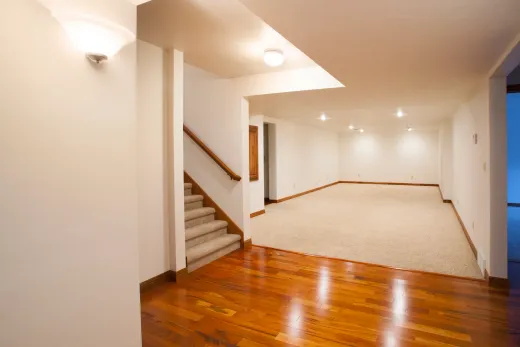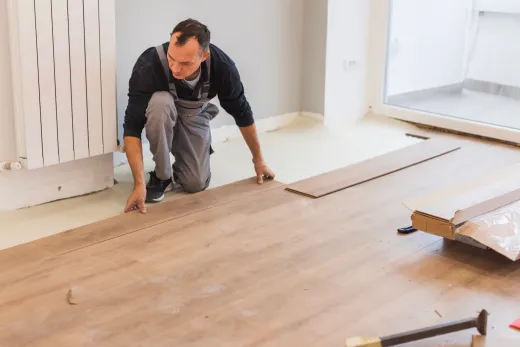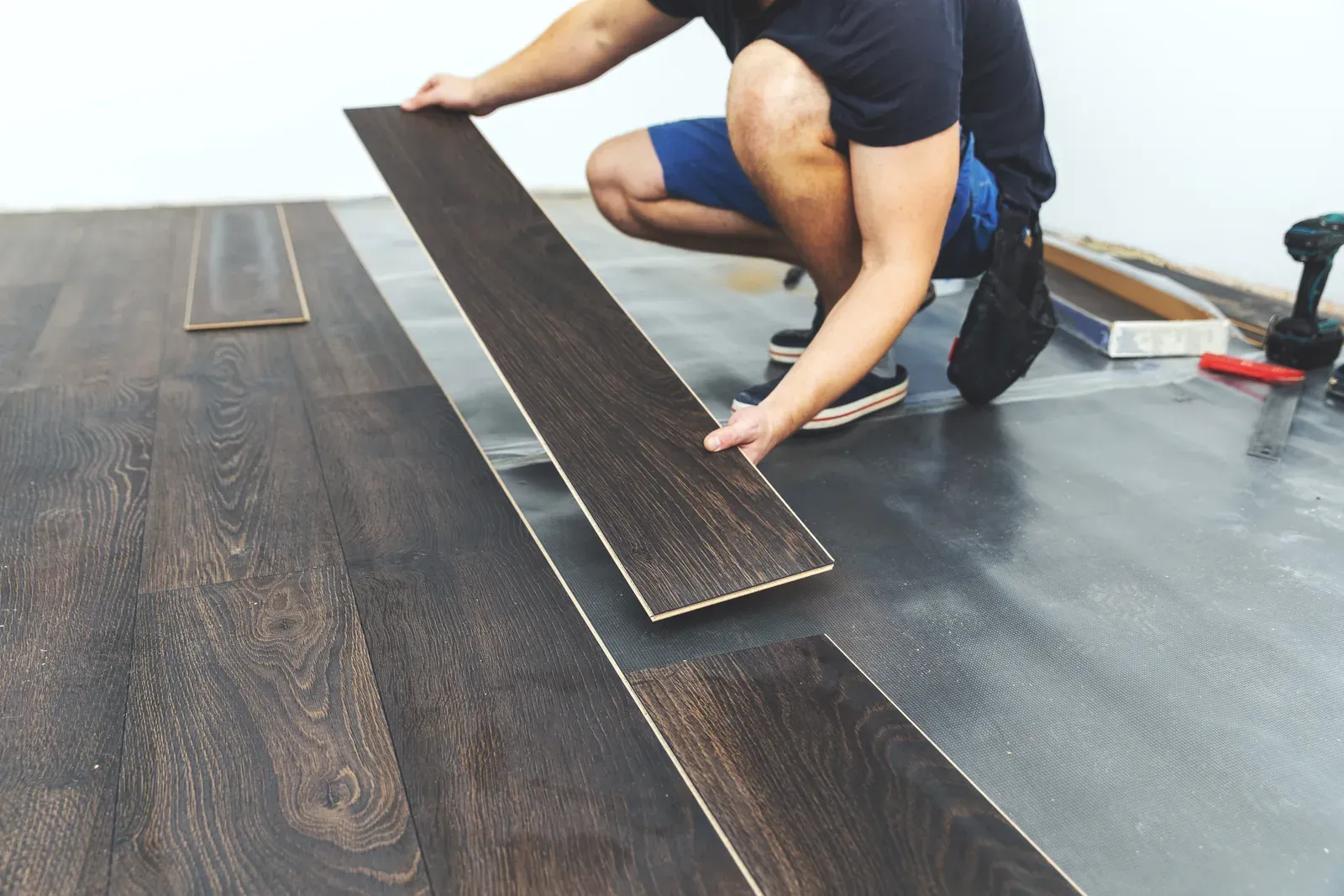
Most GTA flooring installs wrap in one to five working days — but acclimation, subfloor prep and cure times decide the real calendar. Here is how we schedule jobs in 2026.
Quick Reference: Days Required by Material and Area
For a typical 800–1,000 sq ft GTA main floor, the installation itself takes one to five working days once material is on site. As of 2026, this is what we schedule:
- Luxury vinyl plank (LVP/SPC): 1–2 days. Click-lock planks go down fast, and you can walk on them the same evening.
- Laminate: 1–2 days, much like LVP.
- Engineered hardwood: 2–3 days of installation, after a short acclimation period in the home.
- Solid hardwood (nail-down): 2–4 days of installation, after 3–7 days of on-site acclimation.
- Porcelain or ceramic tile: 3–5 days covering prep, setting and grout, plus cure time before furniture returns.
Add a day for tearing out old flooring, another day or two if stairs are included, and a buffer for subfloor repairs. Budget-wise, that same 800–1,000 sq ft project commonly lands around $6,850 all-in, with a realistic span of roughly $3,700–$12,600 depending on material — our Toronto flooring cost guide breaks the numbers down. Our flooring projects start from $5,000.
Why Hardwood Needs Acclimation Before Day One
Wood moves with moisture, and GTA homes swing hard between seasons — humid summers, then bone-dry winters once the furnace runs. Solid hardwood that goes straight from a warehouse into your living room will expand or shrink after installation, and that shows up later as cupped boards or winter gaps. We explain the mechanics in our answer on why hardwood floors cup and gap.
So the boxes sit in the rooms where they will be installed, usually 3–7 days for solid wood and a shorter window for engineered product, with the home at normal living temperature and humidity. Before the first board is nailed, we take moisture-meter readings on both the flooring and the subfloor; they need to be within a few points of each other. It feels like lost time to homeowners eager to see progress. It is the cheapest insurance in the entire project, and it is why our hardwood installation service builds acclimation into every schedule rather than treating it as optional.
Tile's Hidden Timeline: Prep, Set and Grout Cure
Tile always takes longer than the square footage suggests, because half the job happens before any tile is set. The substrate has to be flat and rigid: self-levelling compound runs $3–$8 per sq ft where it is needed, and cement board adds $4–$7 per sq ft on wood subfloors. In older GTA houses that prep can consume a full day on its own.
Then the chemistry sets the pace. Thinset needs to cure overnight before anyone grouts, and grout needs time before the room takes heavy traffic or heavy furniture. Standard-format porcelain runs $8–$15 per sq ft in labour; large-format tile — the 24x24 and 24x48 sizes popular in 2026 — climbs to $12–$22 per sq ft because every piece demands careful back-buttering and lippage control. A heated-floor cable or membrane adds another day to the sequence. None of these stages can be rushed without paying for it later in cracked grout lines or hollow tiles.
Whole-Home Jobs: Sequencing Rooms So You Can Stay Home
Most of our clients stay in the house during a flooring project, and the schedule is built around that. The usual pattern: bedrooms and the upper hall first while the family lives on the main floor, then a flip — furniture migrates up, and the main floor gets done in one continuous run. A 2,000 sq ft two-storey typically takes 4–7 working days this way, a bit longer than doing an empty house but far cheaper than moving out.
Two things smooth the process. First, decide early what happens to the existing floor — we cover the tear-out question in do you have to remove old flooring first, and removal plus disposal usually adds a day. Second, empty each room of small items, electronics and breakables before the crew arrives; installers move the big furniture, but packing drawers is on you. Expect some dust even with floor protection and daily cleanup, especially during tear-out.
What Slows Installs Down: Subfloor Surprises and Stairs
The quoted timeline assumes a sound, flat subfloor. What we actually find under GTA floors, particularly in houses built before 1980, is another story: water-damaged particleboard at exterior doors, squeaky sheathing that needs screwing down, old mortar beds under kitchen tile, and slopes that need shimming or levelling before a rigid floor can go over them. Each surprise adds hours or a full day, which is why we lift a corner and probe suspect areas during the estimate rather than on day one.
Stairs are the other schedule-eater. A straight 13-step flight is slow, fussy work: refinishing existing treads runs $50–$90 per step in the GTA, while recapping with new oak treads starts around $185 per step (more for pie-shaped steps) with full projects from about $4,900. Either way, plan on one to two extra days, and note that the staircase is usually out of service for finish curing overnight — a real consideration if bedrooms are upstairs.
Booking Lead Times With GTA Installers in 2026
Installation days are only half the calendar. In-stock LVP and laminate can usually be picked up within a week, but special-order hardwood — specific widths, custom stains, European white oak lines — routinely takes three to six weeks to arrive, and it still needs acclimation after delivery. Condo projects add their own layer: board approval and elevator bookings can push a simple one-day install several weeks out.
Our rule of thumb: book your installer four to eight weeks before you want boards going down, and earlier if you are targeting the fall rush before the holidays. Get the quote itemized — tear-out, subfloor repair allowance, baseboards, transitions and stair work should each appear as line items, and confirm whether the 13% HST is included. If you are comparing materials as much as timelines, our flooring installation service page outlines what we install across Toronto and the GTA, and a free quote will pin your project to real dates.
Ready to start your renovation?
Our team is here to help you bring your vision to life. Get a free, no-obligation quote today.
Get Free QuoteFrequently Asked Questions
Clear answers to the questions Ontario homeowners ask most.