Flooring looks like the easiest trade to hire and is one of the easiest to get burned on. Paperwork, quote structure and a few pointed questions separate pros from crews you will pay twice.
Licence, Insurance and WSIB: The Non-Negotiables
Start with paperwork, because it filters the field fastest. The City of Toronto requires renovation contractors to hold a Building Renovator licence from Municipal Licensing & Standards — it is a checkable credential, and a company that cannot produce one is telling you something. Then ask for a certificate of commercial general liability insurance and a WSIB clearance certificate. The liability policy protects your house if the crew floods a bathroom or damages something structural; WSIB protects you from being on the hook if a worker is injured on your property. Both documents are routine for a legitimate company — ours come with every quote — and both are exactly the paperwork condo boards demand anyway, so a crew that cannot produce them cannot even legally start in half the buildings downtown.
One distinction worth understanding: flooring installation itself is not a provincially licensed trade the way electrical work is. That is precisely why the barrier to entry is low, why anyone with a mitre saw can call themselves an installer, and why the paperwork check matters more here than in trades where the province filters for you. Our broader vetting checklist in how to choose a renovation contractor applies in full.
Reading a Flooring Quote: Square-Foot Games and Vague Scopes
Flooring quotes are where comparisons go wrong, because a low per-square-foot number is the easiest bait in the business. As of 2026, honest Toronto ranges run about $4-$9 per square foot installed for luxury vinyl plank and $8-$15 for hardwood, supply and install. A quote well below that is missing something, and the missing pieces are predictable: old-floor removal and disposal, subfloor repair or levelling, baseboards and quarter-round, transitions between rooms, door trimming, and furniture moving. Each becomes a mid-job "extra" priced without competition.
A professional quote itemizes scope, not just a rate. It names the product, states what happens if the subfloor needs work, and says who reinstalls the trim. It also states whether 13% HST is included — a favourite spot for quiet gaps between two "identical" bids.
Measure the measurement, too. Waste factors are real (typically about 10%, more for patterns like herringbone), but you should see the actual floor area and the waste allowance stated separately, not a padded blended number. When two quotes are far apart, the reasons are almost always findable in the scope — we break down the usual culprits in why renovation quotes vary between contractors.
Questions That Separate Installers From Order-Takers
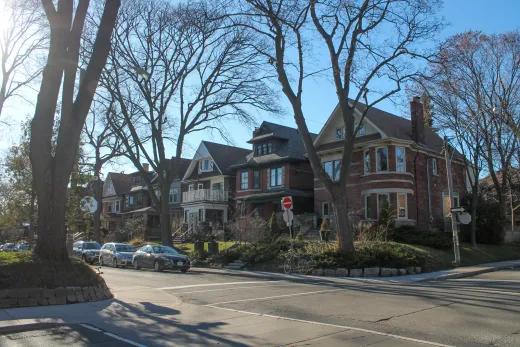
Ten minutes of questions on the site visit tells you more than any review page. Ask how they will handle acclimatization — hardwood and laminate need days in your home's conditions before installation, and in a Toronto winter that answer matters. Ask what they do when the subfloor is out of flat, and what levelling costs per square foot if needed. Ask how they will deal with your specific house: a High Park Victorian with 140 years of settling has no flat floors and often planked subfloor on old joists; a 1960s Scarborough back-split may have three small level changes and asbestos-era vinyl tile hiding under carpet; a St. Lawrence-area condo means board approval, acoustic underlay and elevator bookings before anyone cuts a plank.
An installer who has done real work in Toronto housing answers those instantly and starts telling you things you did not ask — where they will put transitions, how they will handle your out-of-square hallway, what they found in the last house like yours. An order-taker quotes a square-foot price from the doorway and shrugs at everything else. Anything built before about 1990 deserves the asbestos question specifically: old sheet vinyl and 9-inch tiles should be tested before removal, and a pro raises it before you do.
Warranty Terms That Actually Protect You
Two separate warranties cover a new floor, and confusing them is how homeowners end up unprotected. The product warranty comes from the manufacturer and covers the material — wear-through, finish defects, delamination. It can run 25 years or more, but nearly every one is conditional on correct installation: wrong subfloor moisture, missing expansion gaps or unapproved underlay void it entirely. The workmanship warranty comes from the installer and covers the labour — the gaps, lifting planks, loose transitions and squeaks that show up in the first year or two.
So ask two questions. First: what is your workmanship warranty, in writing, and for how long? We stand behind every installation for 2 years, and we put it in the contract. A verbal "we'll come back if there's a problem" from a crew with a cell number and no fixed address is worth what it costs to enforce. Second: will you install to the manufacturer's spec so the product warranty holds? That answer should reference moisture testing, acclimatization and the approved underlay for your product — specifics, not reassurance.
The warranty conversation is also where a company's age matters. A 2-year promise means more from a contractor who has been operating since 2004 than from a numbered company registered last spring.
Red Flags: Cash Deals, Big Deposits, No Site Visit
Some warning signs recur so reliably that we treat any one of them as disqualifying.
- A cash price with no paper. No contract means no warranty, no HST, no lien rights and no recourse. It also usually means no insurance.
- A large upfront deposit. Ontario norms are modest deposits with payments tied to milestones. Flooring has real material costs, so some deposit is fair — but a demand for half or more up front is financing someone's last job. See what a normal renovation deposit looks like in Ontario.
- A quote without a site visit. Nobody can price subfloor condition, moisture risk or trim work from photos. A sight-unseen number is a number that will change.
- No moisture meter on the visit. Covered next — its absence predicts the most expensive category of flooring failure.
- Pressure tactics. "This price is good today only" is a sales script, not a trade practice.
The pattern behind all five is the same: shifting risk from the installer to you. Our full list of contractor red flags applies to every trade, but flooring's low entry barrier makes them more common here.
Why Moisture Testing Belongs in Every Toronto Quote
If one technical habit identifies a serious flooring installer, it is testing before quoting. Concrete slabs — every condo, every basement, plenty of main floors in newer infill — hold moisture that a finished floor will find within a season. Wood subfloors in Toronto's older stock swing with our humid summers and furnace-dry winters. Installing hardwood over a damp slab or unacclimatized laminate into a January house are the two classic failures, and both are invisible on installation day. Both are also excluded from every product warranty. A pro puts a meter on the subfloor and the material, records the readings, and specs vapour protection where the numbers demand it. An order-taker finds out with you, a year later, when the floor cups or the joints peak.
Choosing well comes down to this: verify the licence, insurance and WSIB; get an itemized scope with removal, prep and trim included; confirm both warranties in writing; and watch for the installer who asks more questions about your house than you ask about their price. If you would rather start with a company that has all of it in hand, our flooring team in Toronto quotes for free — current market pricing is laid out in our Toronto flooring cost guide.
Ready to start your renovation?
Our team is here to help you bring your vision to life. Get a free, no-obligation quote today.
Get Free QuoteFrequently Asked Questions
Clear answers to the questions Ontario homeowners ask most.