A floating floor that looked perfect in November and tented up by July failed for one of two reasons: no room to expand, or moisture underneath. Here is how we diagnose it and what fixes cost.
The Usual Suspect: No Room to Expand
When we get called to look at a buckled laminate or vinyl plank floor in the GTA, the first thing we check is the perimeter. Floating floors are designed to move. Laminate swells in humid weather and shrinks in dry weather; even SPC vinyl expands and contracts with temperature. Manufacturers call for a gap of roughly 8-10 mm around every wall, cabinet, pipe and doorway so the whole field can shift as one sheet.
Southern Ontario is a worst-case climate for this. Our summers are humid enough that unconditioned rooms can sit above 60% relative humidity, and our winters, once the furnace runs, drop indoor air bone dry. A floor installed tight to the walls in January has nowhere to go by July. It pushes against the baseboard, the joints ride up, and you get the classic tented ridge down the middle of the room.
The other common version of the same mistake: the floor was pinned somewhere. Heavy kitchen islands set on top of a floating floor, transition strips screwed through the planks, or quarter-round nailed into the flooring instead of the baseboard all lock the field in place. The floor still wants to move. Something has to give, and it is usually a joint.
Moisture From Below: Concrete Slabs and Basements
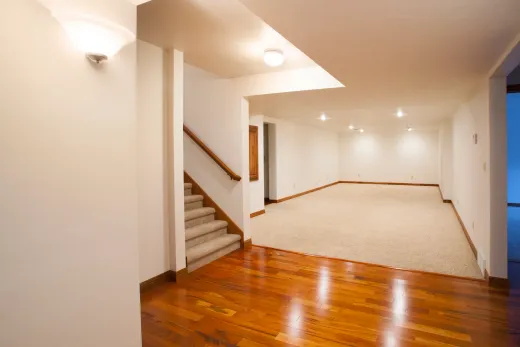
Expansion explains most main-floor failures. Below grade, moisture takes over. Concrete slabs in GTA basements wick ground moisture year-round, and a slab can read dry in winter and damp in a wet spring. Laminate cores are essentially compressed fibreboard; once the underside absorbs vapour, edges swell, joints peak, and the damage is permanent. Vinyl plank handles the water itself, but trapped vapour under it can grow mould and break down click joints over time.
This is why we moisture-test slabs before quoting basement flooring, and why a proper vapour barrier or an underlay rated for below-grade use is non-negotiable down there. If a basement has any history of seepage, that gets solved first — we walk through the logic in our guide to basement moisture and waterproofing before finishing.
A quick self-check: peel back a floor vent or a transition strip and look at the plank edges. Swollen, darkened or crumbly edges point to moisture. Clean edges with lifted joints point to expansion pressure. Our comparison of the best flooring for a finished basement in the GTA covers which products tolerate slab conditions and which never should have been installed there.
Peaking, Gapping and Soft Spots: What Each Symptom Means
Different symptoms have different causes, and reading them correctly decides whether you face a one-day repair or a full reinstall.
- Peaking — joints pushed upward into small ridges. Expansion pressure. The floor has no gap, or something is pinning it.
- Buckling or tenting — whole planks lifting off the subfloor. Severe expansion pressure or major moisture, often both.
- Gapping — planks pulling apart in winter. Dry-season shrinkage, planks that were never fully clicked, or a floor installed in a cold, unacclimatized house.
- Swollen, spongy edges — water damage. Laminate that has absorbed moisture does not recover.
- Soft or bouncy spots — voids in the subfloor or levelling that was skipped. The flooring is telling on what is underneath it.
Hardwood behaves differently again — cupping and crowning follow their own rules, which we cover in why hardwood floors cup and gap. If your "laminate" turns out to be engineered wood, that article is the better diagnostic.
Repair Options: Re-Lay, Partial Replace or Start Over
The good news about floating floors is that they come apart. The realistic news is that the fix depends on what the diagnosis found.
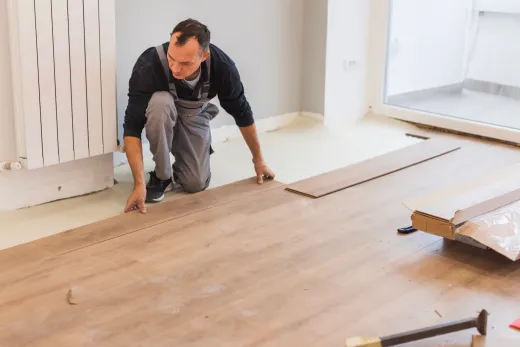
If the planks are undamaged and the problem is pure expansion pressure, the repair is mechanical: pull the baseboards, trim the perimeter planks to restore the gap, release anything pinning the field, and let the floor relax flat. Caught early, peaked joints often settle back down over a few weeks.
If a section is water-swollen, those planks are done. A partial replacement means unclicking the floor from the nearest wall to the damaged area and swapping boards — workable when you have matching material on hand, which is why we always leave homeowners a spare box. Matching a discontinued product three years later is a lottery.
A full reinstall becomes the honest answer when damage is widespread, when the subfloor needs levelling or moisture correction, or when the original product was wrong for the room. Reusing buckled laminate rarely pays; the click edges are usually stressed. Vinyl plank in good condition can sometimes be lifted and re-laid over a corrected subfloor.
What These Repairs Cost in the GTA
As of 2026, GTA numbers look like this. Small corrective work — trimming perimeters, releasing pinned transitions, swapping a handful of planks — is typically priced by the hour or as a short service visit, and the diagnosis matters more than the labour. Once material replacement enters the picture, normal installation rates apply: luxury vinyl plank runs about $4-$9 per square foot installed in Toronto, with labour alone around $1.50-$2 per square foot for click products. Add-ons drive the spread — floor levelling runs $3-$8 per square foot where a slab or old subfloor is out of flat, and below-grade vapour protection adds material cost.
For scale, redoing a full 800-1,000 sq ft main floor typically lands around $6,850 all-in and can push past $12,000 with premium product and heavy prep. Our flooring projects start at $5,000, and most re-installs triggered by a failed floor fall in the $5,000-$10,000 band once removal, disposal and prep are counted. Quotes usually exclude 13% HST, so compare accordingly. Full product-by-product pricing is in our Toronto flooring cost guide.
Installation Details That Prevent Round Two
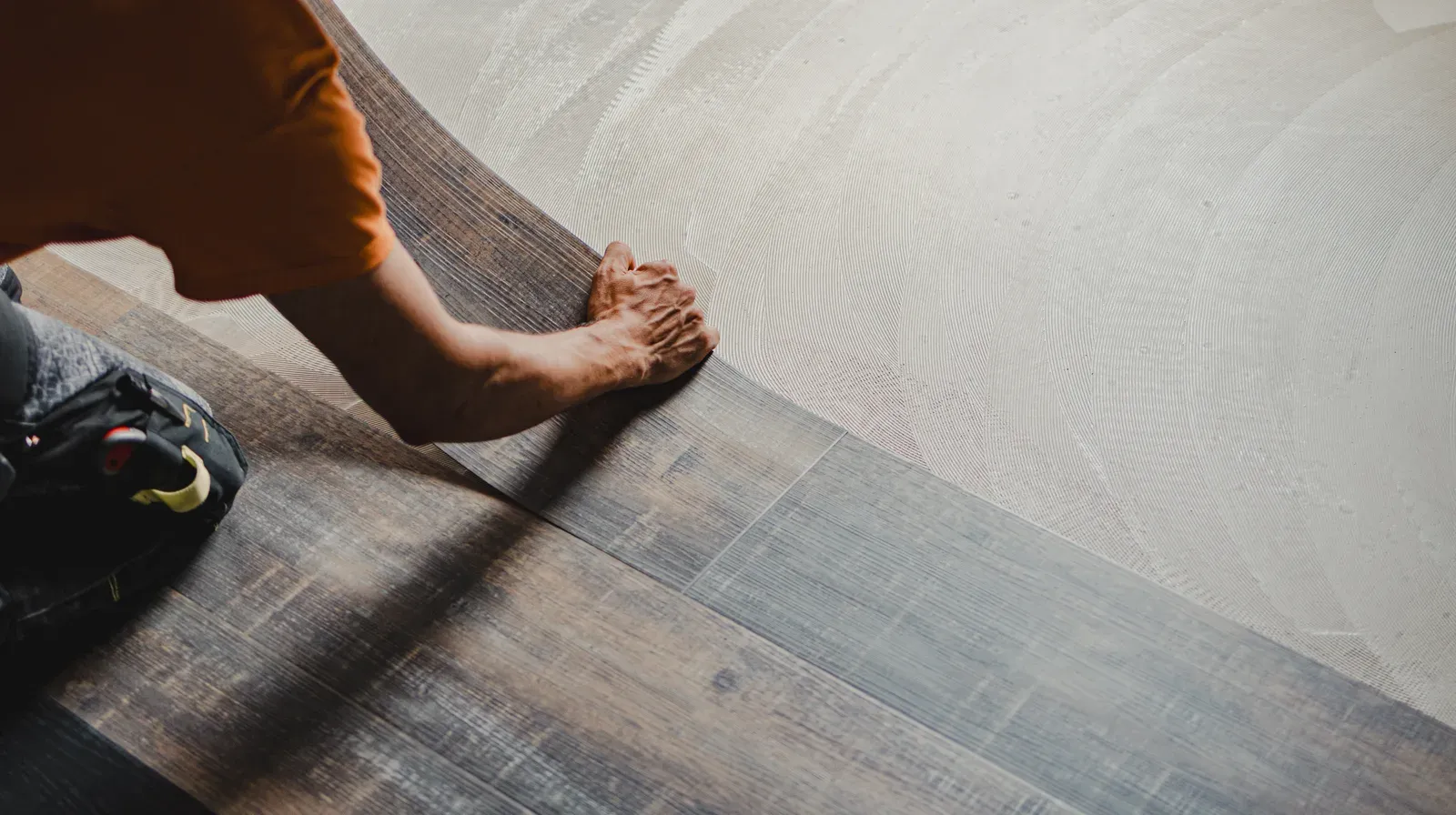
Almost every failed floor we replace failed on details that cost nothing to get right. Acclimatize the product in the room for the period the manufacturer specifies — in a GTA winter, boxes coming off a cold truck need it. Test concrete for moisture before anything goes down. Leave the full expansion gap everywhere, including at cabinet runs and door jambs, and cover it with baseboard fastened to the wall, never through the floor. Break long runs with transitions; most products cap a continuous field around 10-12 metres. Keep islands and other fixed weight off floating floors, or switch to a glue-down luxury vinyl plank installation, which sidesteps the whole expansion problem in kitchens and basements.
When does repair make sense versus starting over? Repair if the damage is local, the cause is fixed, and you have matching material. Reinstall if moisture was the culprit, the damage crosses multiple rooms, or the product was wrong for the space. Either way, get the diagnosis before anyone quotes you a fix — we do that assessment as part of a free quote, and every installation we do carries our 2-year workmanship warranty.
Ready to start your renovation?
Our team is here to help you bring your vision to life. Get a free, no-obligation quote today.
Get Free QuoteFrequently Asked Questions
Clear answers to the questions Ontario homeowners ask most.