Loose Stair Railings: Safety Fixes and Costs in the GTA
A railing that wobbles has already failed at its one job. Here is why newel posts and handrails work loose in GTA homes, how we re-anchor them properly, and when a repair should become an upgrade.
Why Railings Loosen: Posts, Not Pickets
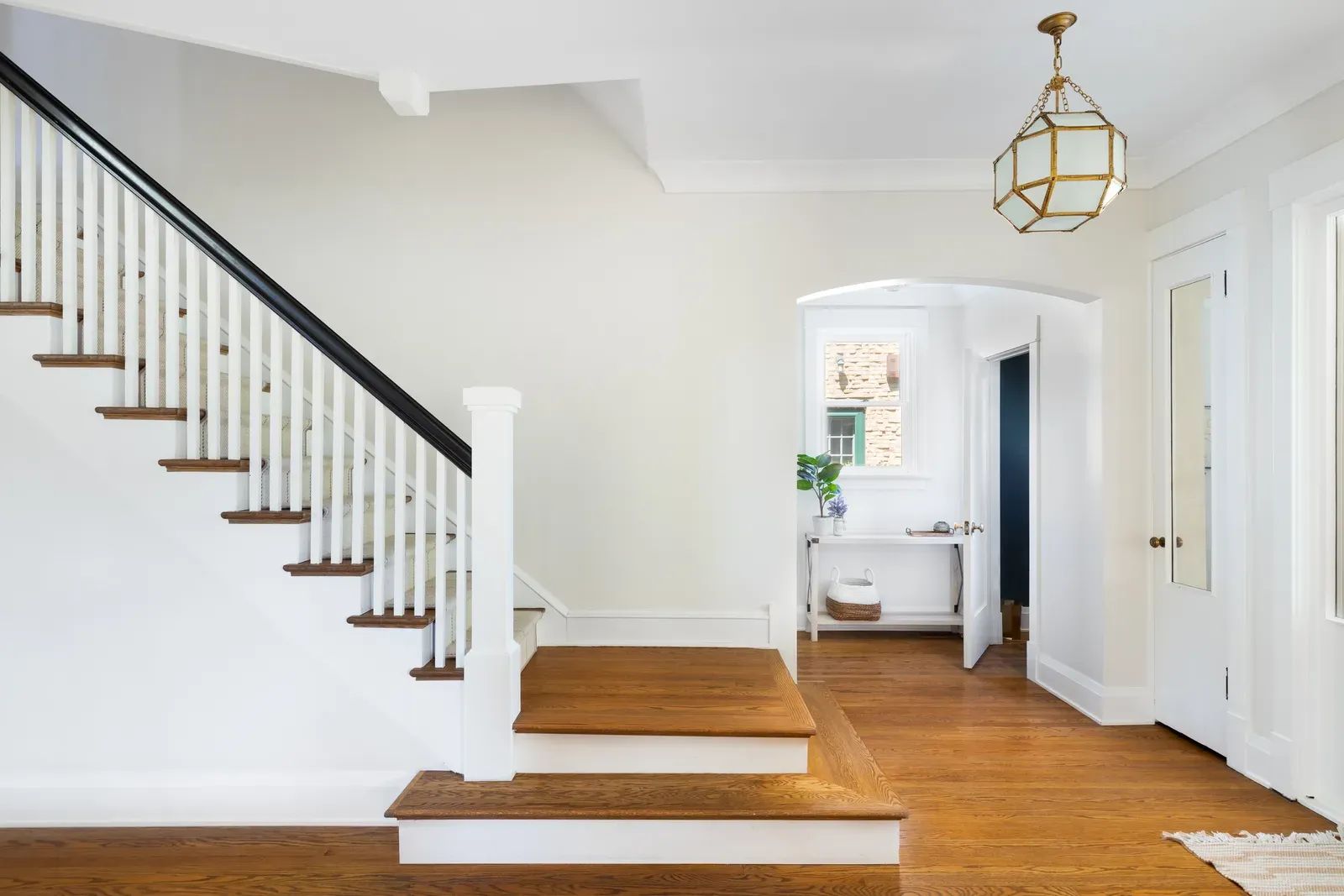
When a railing wobbles, homeowners usually blame the pickets. Nine times out of ten the pickets are fine — the problem is the newel post. The newel is the structural anchor of the whole railing system: it ties into the stringer or the floor framing at the bottom of the stairs, and every hand that grabs the rail loads that one connection. If the newel moves, everything above it moves.
Posts loosen for the same reason stairs squeak. Wood shrinks through GTA winters and swells through humid summers, and after enough cycles the bolts or lag screws holding the post lose their bite. Add twenty years of kids swinging around the bottom post and the connection works itself open. We see it constantly in 1980s and 90s Vaughan and Markham two-storeys, where builder-grade railings were fastened quickly during the subdivision boom, and in older Toronto homes where the post was set into framing that has since been renovated around.
The fix, therefore, starts at the post — not with glue in the picket holes.
The Code Angle: Guards Must Withstand Real Force
A stair railing is not decoration; under the Ontario Building Code it is a guard, and guards exist to stop a falling person. The code requires interior handrails to sit between roughly 865 and 1,070 mm (34–42 inches) above the tread nosings, requires a handrail on stairs with more than two risers, and expects guards and handrails to resist specified lateral loads — a hard shove, not a polite touch. A railing you can rock by hand would not pass a final inspection on new work.
Existing homes are not inspected retroactively, but the risk does not care about grandfathering. The people who load railings hardest — kids taking stairs at a run, older relatives who genuinely depend on the rail — are exactly the people a loose one endangers. Home inspectors flag wobbly railings routinely during resale, so the repair lands on your to-do list eventually either way.
If you are planning wider stair or flooring work, fold the railing into the permit-and-scope conversation early; our home renovation teams treat railing anchorage as a safety item, not an optional extra.
Tightening vs Reinforcing vs Replacing the Post
There are three tiers of repair, and choosing correctly saves money.
Tightening works when the post and its fasteners are sound but loose. Many newels have a concealed bolt or nut at the base — accessible from below the stringer or behind a trim plug — that can be torqued back down. Done right, with thread adhesive so it does not walk loose again, this can be a quick visit.
Reinforcing is the middle tier. When the original fastening was inadequate — a common find in fast-built subdivision homes — we add blocking inside the floor framing, install concealed steel post anchors, or epoxy and re-bolt the connection. The post stays; the connection becomes stronger than original.
Replacing is for posts that have split at the base, been cut short during old carpet-to-wood conversions, or rotted at an exterior-adjacent landing. A new newel also opens the door to updating the railing style, which is why replacement quotes often grow into refresh projects — more on that below.
Typical GTA Repair Costs and Timelines
A standalone re-anchoring job is small-scope work: typically a half day to a full day on site, priced after a site visit because access drives everything. Getting at a newel base under a finished ceiling or inside a closed stringer takes longer than tightening an exposed bolt, and quotes normally exclude 13% HST.
The bundled numbers give useful context. As of 2026, GTA stair refinishing projects realistically start around $3,500 once railings and posts are included in the scope, and a recap with a full railing upgrade — new pickets, posts and handrail over re-capped oak treads — starts around $5,500 for a typical 13-step staircase. So if your railing needs real work and the stairs themselves are tired, the jump from "repair the post" to "renew the whole system" is often smaller than homeowners expect.
Before comparing bids, it helps to know what a renovation quote should include — for railing work, that means named materials, the anchoring method, and finishing details, not a single mystery line item.
Drywall-Mounted Handrails: The Weak Point in Many Homes
The other loose railing we get called about is the wall-mounted handrail — the single rail on brackets running up a closed staircase. These fail for one simple reason: the brackets were screwed into drywall or plaster instead of framing. Drywall anchors have no business holding a handrail; the first real stumble pulls them straight out.
The correct install puts every bracket screw into a stud or into solid wood blocking added behind the wall. In post-war and newer homes, finding studs is straightforward. Century homes are trickier: plaster-and-lath walls in neighbourhoods like Cabbagetown, Parkdale and Riverdale crumble around fasteners, and the framing behind is rarely where a modern stud finder says it is. In those houses we often open a narrow strip of wall, install continuous blocking, patch, and then mount the rail — more work up front, but the rail will hold a falling adult, which is the entire point.
While the wall is open, it is also the cheapest possible moment to fix the humps and cracks plaster staircases accumulate, which is worth folding into any repaint plan.
Upgrading While You Repair: Railing Refresh Options
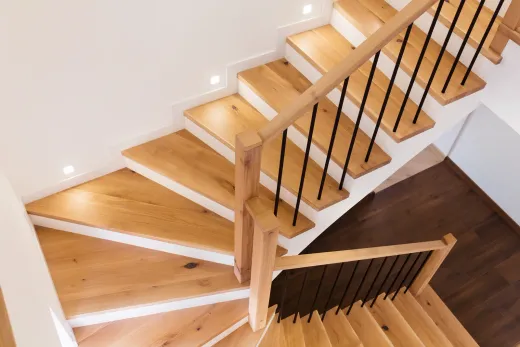
Here is the honest decision guidance. Repair alone makes sense when the railing system suits the house, the parts are sound, and one connection has failed — tighten or reinforce it and move on. Repair plus refresh makes sense when the post needs replacing anyway: swapping dated pickets for metal balusters, updating the handrail profile, and re-staining to match your floors turns a safety fix into a visible upgrade for modest added cost, since the labour is already on site. Full replacement makes sense when the system is under-height, wobbly at multiple points, or you are refinishing or recapping the stairs regardless — at that point the from-$5,500 recap-and-railing package is usually better value than piecemeal fixes.
Whatever tier you land on, treat a loose railing as a this-month problem rather than a someday problem; it is one of the few renovation items that is purely about preventing an injury. Broader budget context lives in our guide to what home renovations cost in Toronto, and if you want eyes on your railing, send us photos for a free quote — we have been doing this across the GTA since 2004, with a 2-year workmanship warranty on repairs.
Ready to start your renovation?
Our team is here to help you bring your vision to life. Get a free, no-obligation quote today.
Get Free QuoteFrequently Asked Questions
Clear answers to the questions Ontario homeowners ask most.