Railing replacement in Hamilton ranges from a pickets-only swap to full stair-and-railing packages from about $5,500. What your home's era, materials and the Building Code mean for the price.
What Drives Railing Costs in Hamilton Homes
Railing pricing in Hamilton starts with what you already have. A pickets-only swap on a sound handrail is the cheapest path. A complete new railing system - handrail, posts and pickets - typically arrives as part of a staircase package: recapping treads plus a full railing upgrade starts near $5,500 for a typical 13-step staircase at 2026 GTA rates, while tread refinishing alone runs $50-$125 per step with full-staircase projects from about $3,500.
Beyond scope, five things move a railing quote most: the length of railing and number of posts, picket material (wood versus metal versus glass), curves and winder sections that need bent or fitted rail, the condition of what the new railing anchors into, and whether treads are being refinished or recapped at the same time.
Hamilton's housing range makes the starting point matter more than in most cities. A Durand Victorian with an ornate original rail, a 1960s Hamilton Mountain side-split with wrought iron, and a 2010s Waterdown two-storey with builder oak are three different projects wearing the same name. Most quotes exclude 13% HST - confirm when comparing.
Wood, Wrought Iron, Steel and Glass: Material Pricing
Material choice is one of the biggest cost levers on any railing project, and the ranking is consistent even though exact pricing depends on your staircase's length and configuration.
- Wood pickets and rail - the economical baseline. Takes stain or paint, suits Hamilton's older housing stock, and repairs cheaply.
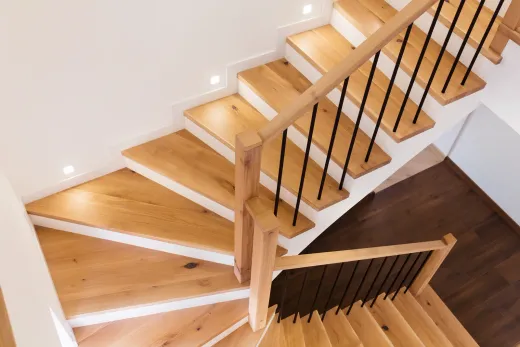
- Metal pickets in a wood rail - the current default for updated homes. Black straight or lightly detailed pickets pair with oak handrails; a moderate step up from all-wood.
- Full steel or iron systems - custom fabrication territory. Wrought iron suits century homes; contemporary steel suits modern builds. Priced per project.
- Glass panels - the premium tier. Tempered panels with minimal hardware maximize light and sightlines and cost the most to supply and install.
One Hamilton-specific note from our experience: original wrought iron in 1950s-70s Mountain homes is often structurally fine but visually dated. Some homeowners replace it; others paint it and put the budget into treads instead. Both are legitimate - the mistake is paying custom-metal prices for a look you are lukewarm about. Configuration compounds material cost: curved sections and winders need bent or segmented rail, which multiplies fabrication time in any material.
Ontario Code: What a New Railing Must Meet
Any new railing we install is built to the current Ontario Building Code, and this is where old Hamilton homes get interesting. The code sets minimum handrail heights, minimum guard heights where there is a drop, maximum gaps between pickets, and strength requirements for how the assembly is anchored. Railings in pre-1950 lower-city homes - and plenty of 1960s-70s Mountain builds - frequently sit lower than today's minimums, with picket spacing wide enough for a toddler to slip through. That was legal when built; it is not what anyone should install today.
The practical rules. Like-for-like refinishing of an existing railing is cosmetic work and needs no permit. Replacing a railing does not require a building permit on its own either - but new work should meet current code regardless, because a too-low guard beside a stairwell is a fall hazard whatever the paperwork says. And when a railing is replaced as part of permitted work - a basement renovation in Hamilton, an addition, a legal second unit - the inspector will look at it, and undersized guards become a deficiency you fix on their schedule.
Homes with young kids or aging parents are the ones where we push hardest to bring railings to modern standards even when nothing forces it. It is the cheapest safety upgrade in the house.
Replacing Pickets Only vs the Full Railing System
Not every dated railing needs full replacement, and the difference in cost is substantial.
Pickets-only works when the handrail and posts are solid, well-anchored, at code-compliant height, and a shape you can live with. Old wood or iron pickets come out, new wood or metal ones go in, the rail gets refinished to suit. This is the highest-impact-per-dollar railing update available - a 1980s oak rail with new black metal pickets reads as a different staircase.
Full-system replacement is the answer when posts wobble at the base, when the rail height falls short of current code, when curves or damage make reuse impractical, or when the profile itself is what you want gone. Everything anchors fresh: new posts into structure, new rail, new pickets. Done alongside tread recapping, this is the from-$5,500 package territory - and bundling is genuinely cheaper than doing railings and treads a year apart, because demolition, protection and finishing overlap.
The honest test we apply on site: grab the newel post at the bottom of the stairs and push hard. If it moves, the problem is anchoring, not pickets, and a cosmetic swap would be money spent on the wrong layer.
Pairing Railings With Tread Refinishing or Recapping
A new railing above worn carpet-grade treads is a mismatch you notice every day, which is why railing projects in Hamilton usually grow into staircase projects. The economics favour it: tread refinishing runs $50-$125 per step, recapping with new solid oak runs from $185 per step ($225 for pie steps) with projects from $4,900, and the combined recap-plus-railing package from about $5,500 costs less than the two scopes priced separately.
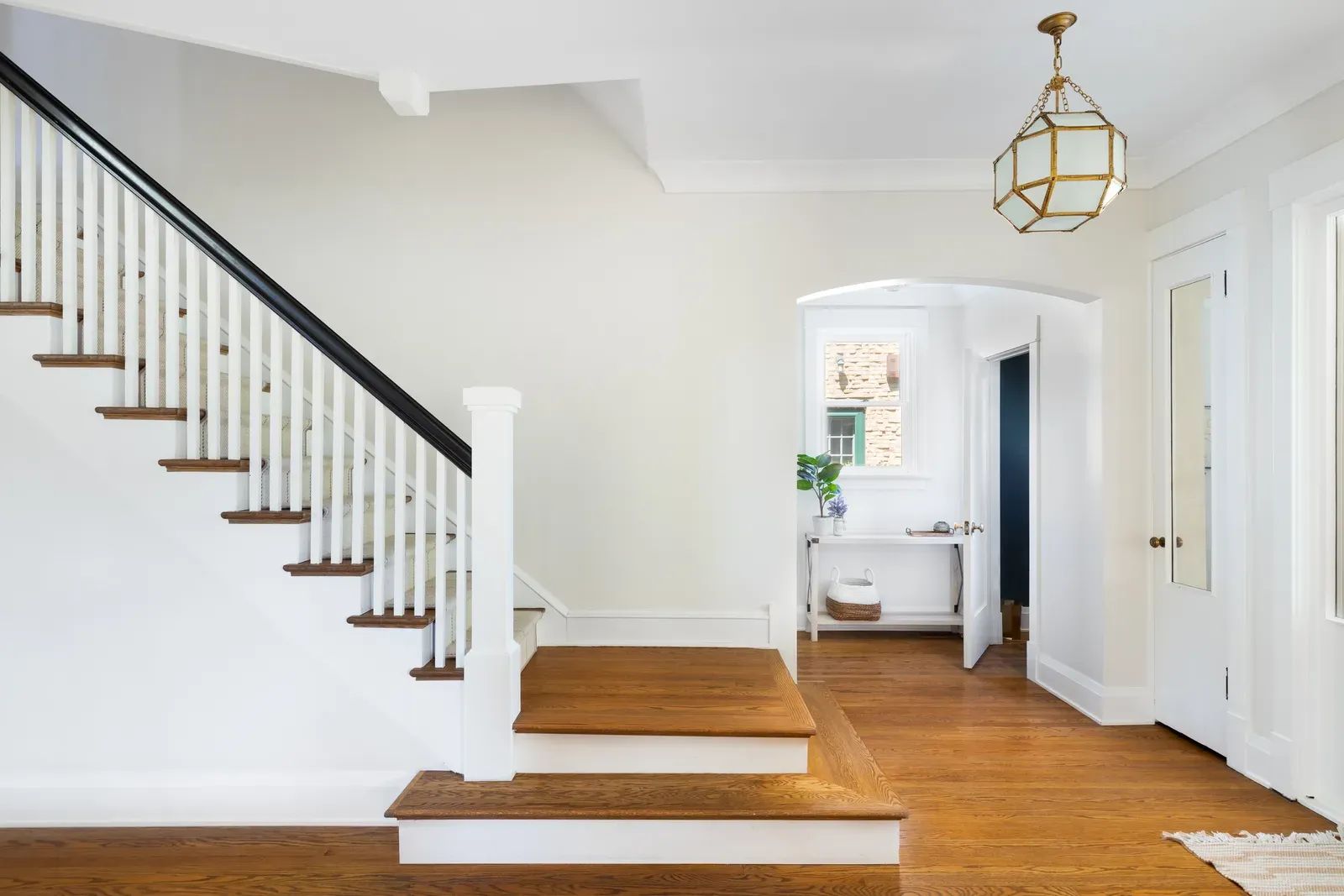
Which tread path pairs with your railing depends on era. Lower-city century homes in Durand, Kirkendall and Dundas often have original hardwood treads worth refinishing under a rebuilt or restored rail. Post-war Mountain homes and 1990s-2010s builds in Ancaster, Waterdown and upper Stoney Creek more often hide plywood or softwood treads under broadloom - recap territory. If new flooring is happening anyway, fold the staircase in: same crew, same stain batch, one disruption instead of two. Our flooring team in Hamilton runs stairs and floors as a single scope for exactly this reason.
Sequence matters too. Treads first, then railing installation, then finishing - a railing installed before tread work gets masked, bumped and touched up. One coordinated schedule avoids that entirely.
Getting a Firm Railing Quote in Hamilton
Phone estimates on railings are unreliable, and not because contractors are hedging. Price depends on measurements and anchoring conditions nobody can see remotely: railing length, post count, curves, what the posts tie into, and whether the existing rail height passes current code. A firm number follows a site visit.
What a complete railing quote should itemize: demolition and disposal of the old railing, materials by component (rail, posts, pickets, hardware), fabrication for any curved sections, installation and anchoring, finishing, and whether tread work is included or excluded. Vague single-line quotes are where surprise extras live. Renovation quotes are free from any contractor worth hiring, and the itemization is what makes two bids comparable.
Where to land: swap pickets if your rail is solid and at proper height; replace the system when anchoring or height fails; bundle with tread recapping when the whole staircase is dated - the package pricing rewards it. We are licensed, insured and WSIB-covered, we have been doing this work across the GTA and Hamilton since 2004, and every staircase carries our 2-year workmanship warranty. Book a free quote and we will measure, check your railing against current code, and price the options plainly.
Ready to start your renovation?
Our team is here to help you bring your vision to life. Get a free, no-obligation quote today.
Get Free QuoteFrequently Asked Questions
Clear answers to the questions Ontario homeowners ask most.