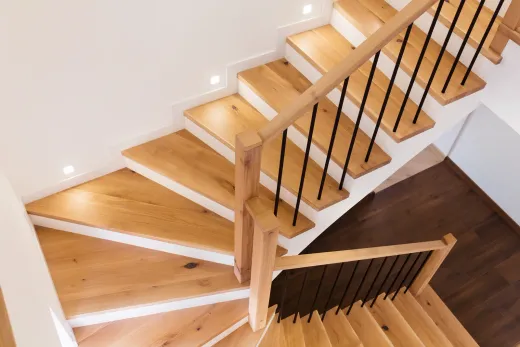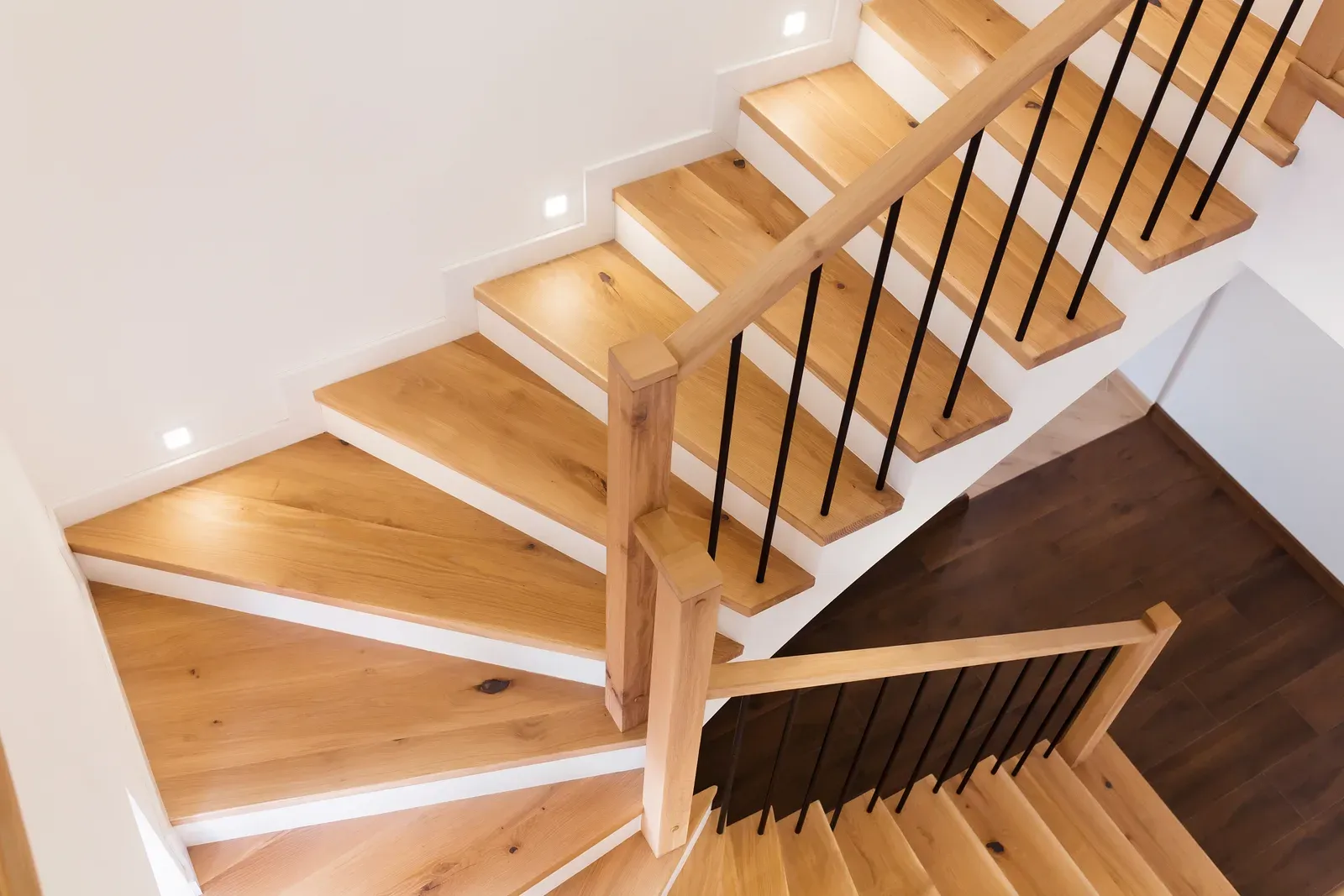
Recapping puts new solid oak treads over your existing staircase - no demolition, no permit. In Oakville it runs $185-$225 per step, with typical projects from $4,900.
How Recapping Works: New Oak Over Your Existing Stairs
Recapping - sometimes called stair capping or cladding - installs new solid oak treads and risers directly over your existing staircase structure. The stringers, the framing, the geometry: all of it stays. Only the surfaces change, from carpet-grade lumber or worn material to genuine hardwood, finished to match or complement your floors.
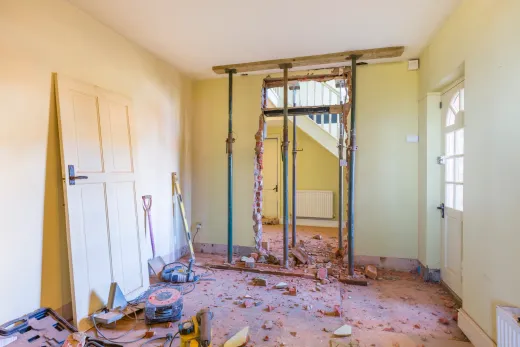
That structural reuse is the whole appeal. There is no demolition mess, no rebuilt framing, and no building permit - the staircase is not being moved or structurally altered, which is what triggers permits under the Ontario Building Code. A typical straight staircase is done in days, not weeks, and the finished result is indistinguishable from a staircase built with oak treads from day one.
The honest precondition: the structure underneath must be sound. Recapping fixes surfaces, not sagging stringers or spongy framing. In our experience across Oakville that is rarely a problem - the housing stock is young enough that the bones are almost always fine, and a site visit confirms it before we quote. For most homes here, recapping is the middle path between refinishing (which needs hardwood to already exist) and a full rebuild (which most staircases never need).
Oakville Pricing: $185-$225 Per Step, Projects From $4,900
As of 2026, recapping in the GTA - Oakville included - prices out as follows:
- Straight treads: from $185 per step
- Pie and bullnose steps: from $225 per step
- Typical complete project: from $4,900
- Recap plus full railing upgrade (new pickets, posts, handrail): from $5,500 for a typical 13-step staircase
A standard staircase between floors has 12-13 steps, so the per-step arithmetic on a straight run lands around $2,400-$2,900 in tread work - the gap up to the $4,900 project figure covers risers, nosings, stringers cladding, finishing and the landings and details every real staircase has. Quotes typically exclude 13% HST; confirm before comparing bids.
What moves the number: step count, pie steps and curves, open risers, landings, and whether railings join the scope. Two-storey homes in Glen Abbey, River Oaks and West Oak Trails mostly have straight or L-shaped runs with a couple of pie steps at the turn - which is why so many Oakville quotes land close to that typical figure. Our flooring cost guide shows how staircase work fits alongside per-square-foot flooring pricing.
Straight Runs vs Pie and Bullnose Steps
The $40 difference between a straight tread and a pie step is pure labour. A straight tread is a rectangle - measured, cut, eased and installed in a predictable sequence. A pie step is a one-off: each wedge-shaped tread at a staircase turn has its own angles, and each is templated and cut individually to fit tight against the wall and the adjacent steps.
Bullnose steps - the wider, rounded starter steps at the bottom of many Oakville staircases - are the same story. The curved nosing is shaped rather than straight-cut, and the tread often wraps a volute or starter post. Elegant, and priced accordingly at the $225-per-step rate.
Count your own staircase before calling for quotes. A typical L-shaped run in a Glen Abbey two-storey might be ten straight treads plus three pie steps at the turn - roughly $1,850 in straight treads and $675 in pie steps before risers, finishing and details. Knowing that split is the difference between reading a quote and guessing at one. Fully curved staircases, which appear in some of Oakville's larger custom homes, push further into fitted-carpentry territory and are best priced on site.
Removing Carpet First: What's Usually Underneath
Most recapping candidates start life as carpeted staircases, and Oakville's development history explains why. Glen Abbey was master-planned in the 1980s with build-out into the early 2000s; River Oaks, West Oak Trails and the newer north-Oakville subdivisions followed. Builders through that whole era carpeted stairs as standard - and built them accordingly, with construction-grade softwood or plywood treads that were never meant to be visible.
So when the carpet comes off, what is underneath is usually not a refinishing candidate. It is solid structurally, but it will not take stain like furniture-grade oak, and sanding it is effort spent on the wrong material. This is the discovery moment where recapping earns its keep: the plywood becomes the substrate, and new oak goes over it.
The carpet strip itself involves hundreds of staples and tack strips on every step - tedious, and included in a proper recapping scope along with disposal. The same logic applies to old flooring elsewhere in the house; whether old flooring must come out first depends on what is going on top. One exception worth checking: stairs in Old Oakville's older homes sometimes hide genuine hardwood treads under later carpet. There, refinishing at $50-$125 per step may beat recapping - lift a corner and look before deciding.
Stain and Finish Options to Match Your Floors
New oak treads take stain predictably - one of recapping's quiet advantages over refinishing weathered, patched wood. That control matters most when the staircase needs to sit beside new flooring.
If your floors are site-finished hardwood, we stain sample tread offcuts and check them against the installed floor in your actual light before committing to the full staircase. If your floors are prefinished engineered or vinyl plank, an exact match is the wrong goal - factory finishes have texture and tone variation that site-applied stain cannot replicate - so we aim for a coordinated tone, commonly with white-painted risers for contrast. The classic combination that suits most Oakville two-storeys: mid-to-dark stained treads, white risers and stringers, and a handrail stained to match the treads.
Sheen and durability choices round it out. Stairs take concentrated wear down the centre of every tread, so we finish with durable multi-coat systems in satin or matte - the sheens that hide wear longest. Households with dogs should mention it: claw traffic argues for the most durable finish spec, not the default. Handled as one project with flooring installation in Oakville, stairs and floors come out of the same stain conversation instead of two mismatched ones a year apart.
Recap vs Full Rebuild: Where the Line Falls
Recapping covers the overwhelming majority of Oakville staircase projects, but not all of them. The line falls at structure and layout.
Recap when the staircase is structurally sound and staying where it is - the case in nearly every Glen Abbey, River Oaks or Bronte home we visit. Rebuild when stringers have failed or sagged, when a renovation relocates the staircase, or when you want a fundamentally different configuration: open risers, a floating design, a new curve. Rebuilds are quote-required work that commonly runs well into five figures, and relocating or structurally altering a staircase also triggers a building permit with drawings - a different project in cost, timeline and paperwork.
The decision sequence we recommend: confirm what is under the carpet, check the structure, then choose. Hardwood in good shape - refinish, $50-$125 per step. Plywood or worn-out treads on sound structure - recap, $185-$225 per step, projects from $4,900. Failed structure or a new layout - rebuild, priced on site. If a staircase change is part of a bigger plan, fold it into the larger scope; we coordinate staircases within full home renovations in Oakville routinely. Either way, request a free quote - we will count the steps, check the structure and give you firm per-step numbers backed by our 2-year workmanship warranty.
Ready to start your renovation?
Our team is here to help you bring your vision to life. Get a free, no-obligation quote today.
Get Free QuoteFrequently Asked Questions
Clear answers to the questions Ontario homeowners ask most.