Staircase Renovation Timeline: From Quote to Final Coat
The on-site portion of a staircase renovation is short — two to five days for most projects. The real schedule lives in material lead times before the crew arrives and cure times after they leave.
Typical Timelines: Refinish, Recap and Rebuild Compared
On-site time is short for most stair projects. A straight refinish of an existing oak staircase — sand, stain, multiple coats — takes two to three days. Recapping, where we install new solid oak treads and risers over the existing structure with no demolition, runs three to five days including railing work. A full structural rebuild with new stringers is a different job entirely: it involves engineering, sometimes a permit, and weeks rather than days, so we price those by quote only.
As of 2026, GTA refinishing runs $50–$125 per step, which puts a typical 13-step staircase around $650–$1,600 for the steps alone; once railings and posts join the scope, project minimums sit near $3,500. Recapping starts around $185 per step for straight treads and $225 for pie or bullnose steps, with complete projects typically from $4,900 — or from about $5,500 when new pickets, posts and handrail are included.
Here is the catch homeowners miss: those two to five site days sit inside a longer calendar. Material lead times before the work and finish cure times after it usually stretch a staircase project across two to four weeks from deposit to normal use.
Before Work Starts: Quotes, Measures and Material Lead Times
The pre-construction phase begins with a site visit. We count steps, flag winders and pie steps (they cost more per step and take longer to fit), check the stringers for movement, and measure railing runs. In Ontario, renovation quotes are free and should itemize the scope — per-step pricing, railing components, stain and finish system all spelled out.
Then comes the part that actually sets your start date: materials. Solid oak treads in standard sizes are usually available within days, but custom-milled treads for wider stairs, pie steps cut to template, and stain-matched railing parts typically need one to two weeks. Metal pickets are mostly stock items; glass panels and custom newel posts take longer. Stain approval matters too — we sample colours on your actual wood, not a brochure, because oak from 1995 takes stain differently than fresh-milled stock.
If your stairs are part of a larger flooring project, sequence matters. Stairs are finished after the adjacent hardwood flooring installation so the stain match is made against the floor that will actually sit beside them.
Day by Day on a Recapping Project
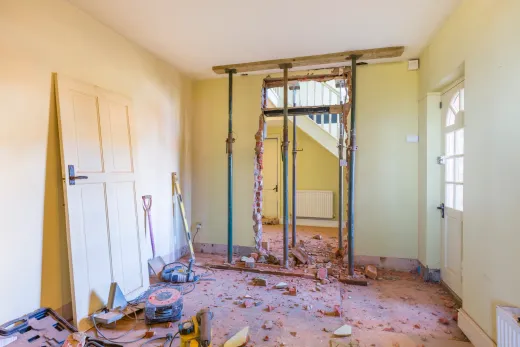
A typical 13-step straight recap with a railing upgrade runs like this. Day one is demolition and prep: carpet and underpad off, old nosings cut back, staples pulled, stringers checked and shimmed, squeaks screwed down while everything is open. This is also the day surprises surface — more on that below.
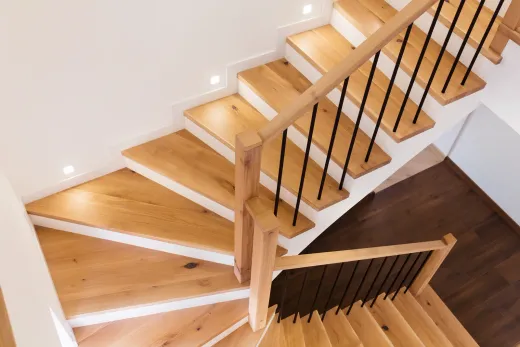
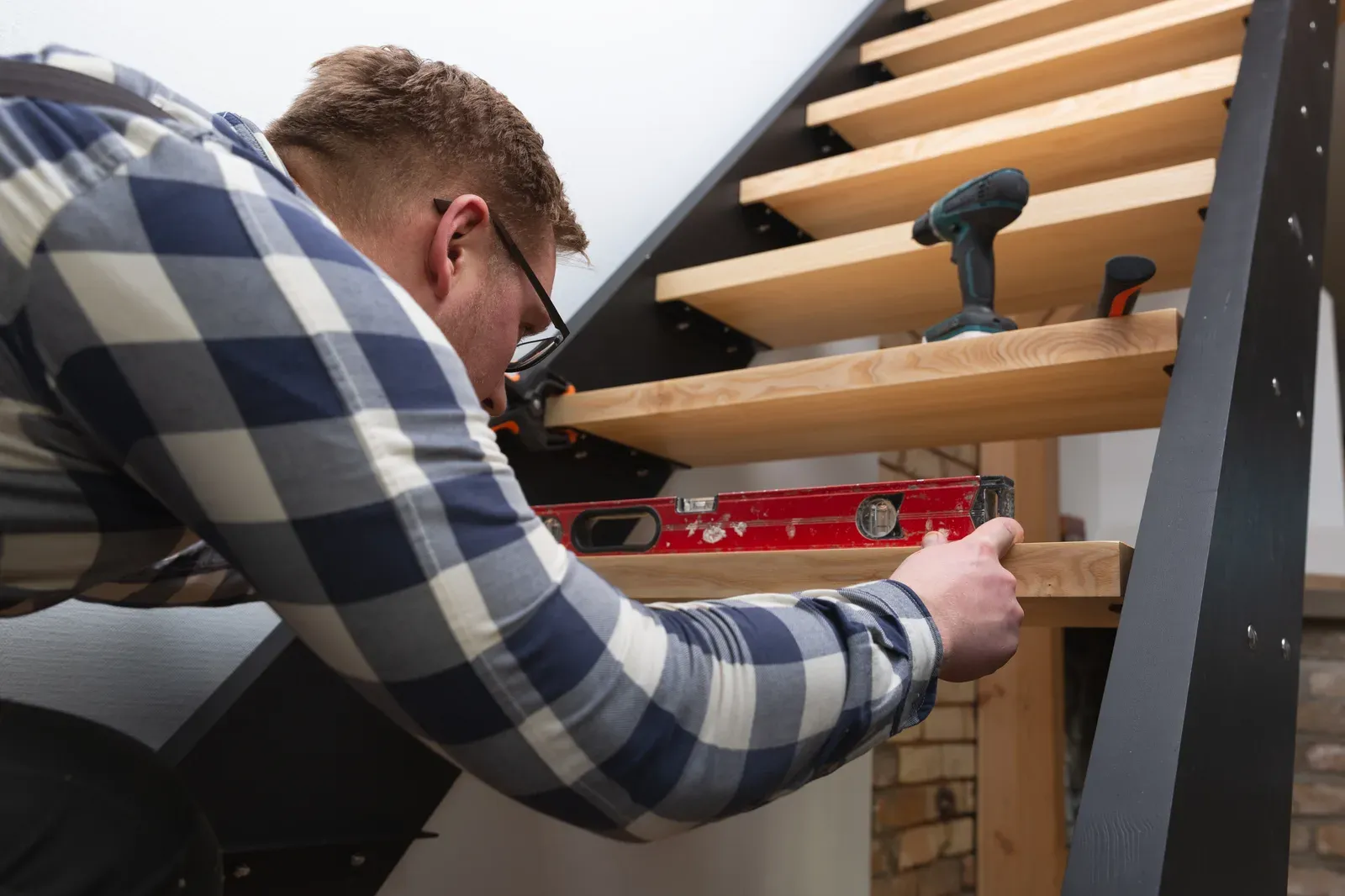
Day two is tread and riser installation. New solid oak treads and risers go over the existing structure, glued and fastened, gaps scribed tight to the skirt. Day three is railing day: posts anchored, handrail set to code height, pickets spaced so openings meet Ontario Building Code guard rules. Day four is finishing — final sand, stain, first coats. Day five, if needed, covers additional coats and touch-ups.
Pie-step staircases, double-height foyers and open-two-sided stairs add a day or two. Winter projects in the GTA sometimes gain a day as well, because furnace-dry January air changes how stain flashes off and we adjust coat timing to suit.
Finish Cure Times: When You Can Use the Stairs
Dry and cured are different things. With the water-based finishes we use on most GTA stairs, treads take light sock traffic roughly 24 hours after the final coat. Shoes are fine after two to three days. Full hardness takes one to two weeks, and that last window matters more than people expect: dragging a mattress or letting the dog sprint the stairs in week one can scar a finish that would have shrugged it off in week three.
Oil-based systems look warmer on some oak but dry slower — humid Toronto summers can stretch recoat windows noticeably. Two practical rules regardless of finish: no rugs, runners or stair treads mats until the finish has fully cured, and no painter's tape on fresh finish. If a runner is part of your plan, we book the installer for two to three weeks after the final coat.
Living Upstairs While Your Only Staircase Is Wet
Most GTA two-storey homes have exactly one staircase, and the bedrooms are on the wrong side of it. There are three ways to manage this, and we settle on one before work starts.
- Alternate-tread finishing: we coat every other tread, let those dry, then do the rest. You can always get upstairs — carefully, in socks. Adds a day to the schedule.
- Morning coats: finish goes on early, and by evening the treads take careful sock traffic. Works well with fast-drying water-based products.
- Plan around it: one or two nights sleeping on the main floor, or timing the finish days around a weekend away. Simplest for the crew, fastest overall.
Pets need their own plan — a baby gate at the bottom is standard kit on our stair jobs. And if the only full bathroom is upstairs, tell us at the quote stage; it changes which approach we recommend.
What Delays Stair Projects and How to Avoid It
The delays we actually see are predictable. Slow stain approval is the most common — decide your colour before the crew is standing there. Hidden damage is second: carpet has covered a lot of sins since the 1990s, and cracked treads, broken stringers or particleboard where we expected plywood can add a day and a change order. Third is matching prefinished flooring; factory finishes are hard to replicate on site, so allow an extra sample round. Booking stairs before the adjacent flooring is done causes rework — sequence flooring first.
As for which route fits your home: refinish if the wood is solid and you like the existing profile — it is the cheapest path. Recap if treads are worn, chipped or carpet-grade, or you want a new species or colour without demolition. Rebuild only when the structure has failed or you are changing the layout. Current per-step pricing sits alongside the rest of our numbers in our guide to what flooring costs in Toronto, and a free quote with a firm schedule takes one site visit.
Ready to start your renovation?
Our team is here to help you bring your vision to life. Get a free, no-obligation quote today.
Get Free QuoteFrequently Asked Questions
Clear answers to the questions Ontario homeowners ask most.