Vinyl plank installs for $4-$9 per square foot in the GTA; porcelain tile starts around $13 and climbs fast. Here's how we help kitchen clients choose between them.
The Cost Gap: LVP at $4-$9 vs Tile at $13+ Per Square Foot
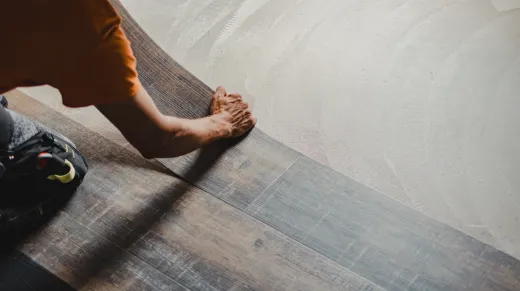
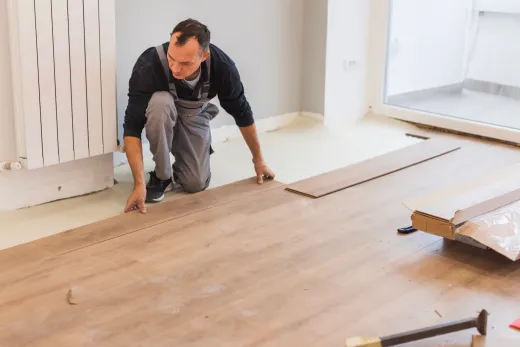
As of 2026, luxury vinyl plank (LVP) installs for $4-$9 per square foot in Toronto. Materials run $1.50-$5 per square foot and labour adds roughly $1.50-$2 on top. Porcelain tile is a different budget entirely. Labour alone runs $8-$15 per square foot for standard formats and $12-$22 for large-format 24x24 or 24x48 tile, with mid-range porcelain adding another $5-$15 in material. Installed, most kitchen tile floors land between $13 and $30 per square foot before prep.
That prep is where tile quotes surprise people. Tile needs a stiff, dead-flat base, so quotes often include cement board at $4-$7 per square foot or floor levelling at $3-$8. LVP is far more forgiving and usually skips both line items.
On a typical 200-square-foot GTA kitchen, the spread works out to roughly $800-$1,800 for LVP against $2,600-$6,000 or more for tile. Both figures exclude HST, and most contractor quotes do — confirm before you compare. Our Toronto flooring cost guide breaks down every material in more detail.
Durability in a Busy Kitchen: Dropped Pots, Spills and Dogs
Porcelain is the hardest-wearing kitchen floor you can buy. It shrugs off dog nails, chair legs, grit tracked in from a February sidewalk, and twenty years of traffic without visible wear. Its one weakness is impact. Drop a cast-iron pan from counter height and you can crack a tile outright — and a cracked tile is only an easy repair if you kept spares from the original run. Dye lots change, lines get discontinued, and matching a ten-year-old tile is often impossible.
Good LVP takes the opposite approach. The wear layer resists scratches well, the plank is waterproof through its full thickness, and it never cracks on impact. What it can do is dent. A fridge rolled across it without protection leaves tracks, and a dropped knife can leave a nick. The consolation: individual planks can be swapped far more easily than tile.
Spills are a wash between the two. Both handle standing water far better than hardwood, which is why these two floors dominate our list of durable, low-maintenance flooring options for busy family kitchens.
Comfort and Warmth: Why Some Kitchens Regret Tile
Tile is cold, and in a GTA January you feel it through socks. Kitchens over unheated crawl spaces, slab-on-grade additions, or garages are the worst offenders — we hear the icy-tile complaint most often from clients in 1960s Etobicoke and Scarborough side-splits, where the kitchen frequently sits above cold space that was never insulated properly.
Tile is also unforgiving in daily use. Stand at the counter prepping dinner for an hour and your knees and lower back register it. Drop a wine glass and there is nothing to do but sweep. Households with young kids or aging parents in the kitchen every day notice this more than they expect to.
LVP sits noticeably warmer underfoot, because vinyl doesn't pull heat out of your feet the way dense porcelain does, and it has a slight give that makes long cooking sessions easier. It's also quieter — less clatter, less echo in an open room.
None of this makes tile a bad choice. It means tile deserves a plan: a mat at the sink and prep zone, and ideally heat underneath it. Which brings us to tile's biggest advantage.
Heated Floors: Tile's Trump Card
Electric in-floor heating turns tile's main weakness into its best feature. Heating cable or mats go into the mortar bed, and porcelain conducts that warmth evenly across the whole surface — no cold corners. In a bathroom-sized area, in-floor heat typically adds $1,500-$3,000; a kitchen has more open floor, so the budget scales with the heated area. We've written a full breakdown on whether heated floors are worth the money, and the short answer is that clients who install them almost never regret it.
Vinyl is more complicated under heat. Some LVP products permit in-floor heating, but most cap the allowable surface temperature — check the manufacturer's specification before assuming anything. In practice, a heated vinyl floor never delivers the same warmth as heated porcelain, and an unheated one doesn't need to.
One planning note: retrofitting heat under an existing tile floor means tearing the whole floor out. If warm tile is on your wish list, the decision has to happen before installation day, not after.
What Buyers Expect at Different GTA Price Points
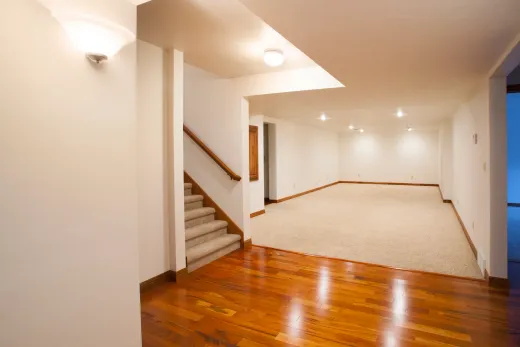
Flooring expectations track the price of the house. In entry and mid-market homes across Brampton, Ajax, Oshawa, and Hamilton Mountain, quality LVP reads as modern and practical, and buyers don't blink at it. It has become the default in basement suites and rental units for the same reason contractors like it: waterproof, tough, quick to install.
Move into upper brackets — Oakville, Lorne Park, central Etobicoke rebuilds — and buyer expectations shift. Those listings typically show porcelain tile or site-finished hardwood running through the main floor, and vinyl in the kitchen can read as a cost-saving decision. That's not the impression you want at listing time in a $2M house.
Open-concept layouts add one more wrinkle. If the kitchen flows into the living and dining space, most designers run a single floor throughout rather than switching materials mid-room. In those homes the real comparison is often LVP everywhere versus hardwood with a tile kitchen inset — a different budget conversation than tile-versus-vinyl in a closed kitchen.
Verdict: Match the Floor to How You Cook
Choose LVP when the budget is working hard, when warmth and comfort underfoot matter more than prestige, when the kitchen floor continues into a family room, or when the house sits in a market segment where vinyl is already the norm. Our luxury vinyl plank installation crews can floor most kitchens in a day or two with minimal disruption.
Choose tile when you want maximum durability and clean resale positioning in an upper-bracket home, when the kitchen is its own room, and especially when in-floor heat is on the list. Budget honestly for prep — a flat, stiff subfloor is what makes a professional tile installation last twenty years instead of cracking in five.
Either way, have the subfloor assessed before you commit, because prep costs can swing the comparison. We've installed both floors across Toronto and the GTA since 2004, and every project carries our 2-year workmanship warranty. Call (416) 995-7855 or send us a note through the contact form and we'll price both options against your actual kitchen.
Ready to start your renovation?
Our team is here to help you bring your vision to life. Get a free, no-obligation quote today.
Get Free QuoteFrequently Asked Questions
Clear answers to the questions Ontario homeowners ask most.