The golden-oak staircase is standard issue in Markham homes built from the late 1980s through the early 2000s. Three routes fix it — restain, recap or rebuild — at very different price points.
Why Milliken and Unionville-Area Homes All Got the Same Oak Stairs
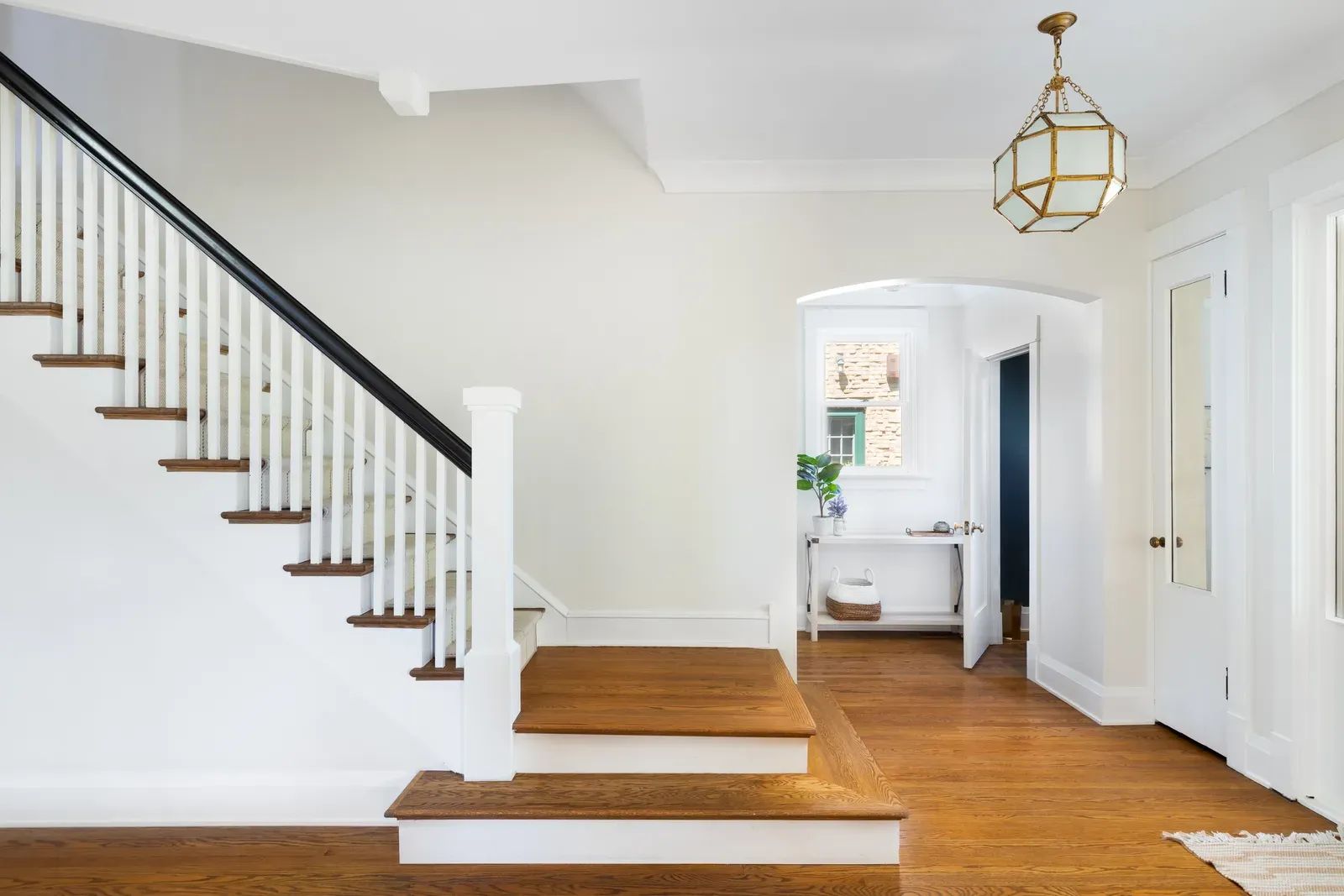
Walk into almost any two-storey home in Milliken or Armadale — subdivisions built through the 1980s and 90s — and the foyer is the same: golden oak treads, turned oak spindles, an oak handrail with a volute at the bottom, all coated in oil-based polyurethane that has spent thirty years turning orange. Builders across Markham bought the same millwork packages by the thousand, so entire streets share one staircase. The newer 2000s-era communities like Berczy and Greensborough got a slightly slimmer version of the same thing, often under carpet.
The short answer on fixing it, as of 2026: restaining the oak you have runs $50–$125 per step (roughly $650–$1,600 for a 13-step flight, with project minimums near $3,500 once railings are involved). Recapping with new treads and modern pickets typically starts at $4,900–$5,500. A full modern rebuild is quote-only and commonly reaches well into five figures. The right route depends on the condition of your wood and how far from oak-and-orange you want to land — so let's take them in order.
Option 1: Restain and Refinish the Oak You Have
If your treads are solid oak — and in pre-2000 Markham homes they usually are — refinishing is the value play. We sand every tread and handrail surface back to bare wood, apply the new stain, and seal with a water-based finish that stays colour-stable instead of ambering the way the original oil-based coats did. That last detail matters more than the stain choice: much of the "golden" in golden oak is the old finish, not the wood.
At $50–$125 per step, a typical project runs two to three days on site. The limitation is honest: you keep the existing tread profile, the bullnose shape, and the turned spindles unless you swap them separately. Deep gouges and decades of wear sand out fine; water stains and pet damage mostly do too, but not always completely.
Refinishing makes particular sense if you are updating to sell. Dated finishes drag on buyer impressions out of all proportion to their fix cost — stairs sit front and centre in the foyer photo — and modest cosmetic updates are consistently among the renovations that return the most value at resale.
Option 2: Recap Treads and Swap the Pickets
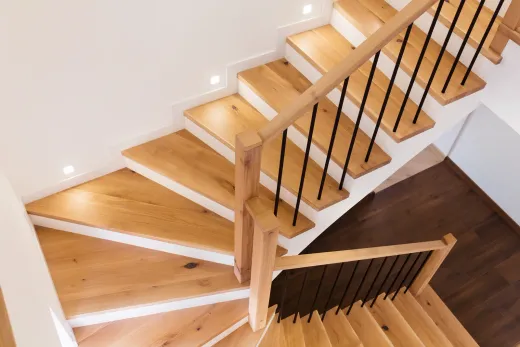
Recapping is the middle path and, in our experience, the one most Markham homeowners choose. New solid oak treads and risers install directly over the existing structure — no demolition, no reframing — and the turned spindles come out in favour of slim matte-black iron. You keep the staircase's footprint and strength and replace everything your eye actually sees.
Pricing as of 2026: from about $185 per step for straight treads and $225 for pie or bullnose steps, with typical projects from $4,900. Add a full railing upgrade — new handrail, square newel posts, iron pickets — and a standard 13-step staircase starts around $5,500. On site the work takes three to five days, and because the new treads arrive pre-milled, you choose any species and stain colour rather than working with 1993's oak.
Recapping is also the fix when carpet comes off and reveals plywood or particleboard treads underneath — common in Berczy and Greensborough-era builds, where oak was a foyer-only upgrade. There is nothing there worth refinishing; capping in solid oak is the direct route to a hardwood staircase.
Option 3: Full Modern Rebuild
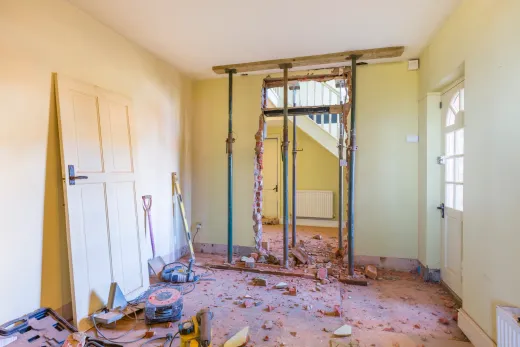
Sometimes the staircase itself is the problem — not its finish. A rebuild means new stringers and structure, and it is the only route when you want to change the staircase's shape: straightening a curved flight, opening a closed stringer to a modern open side, relocating the bottom steps to improve the foyer, or achieving a genuinely floating look with thick treads and minimal structure.
Be clear-eyed about what this involves. Moving or structurally altering a staircase counts as a material alteration under the Ontario Building Code, so a rebuild needs a building permit and often engineered drawings — unlike refinishing or recapping, which are cosmetic and permit-exempt. Budgets are quote-only because scope varies enormously, but rebuilds commonly run well into five figures, and the schedule is weeks rather than days.
Where we see rebuilds earn their cost in Markham: major renovations of older Thornhill-side homes from the 1960s and 70s where the whole main floor is opening up, and Unionville-area projects where a dated staircase sits in the middle of an otherwise high-end renovation. Bolting a $1,500 refinish onto a $200,000 renovation is a mismatch everyone regrets.
Colour Strategy: Killing the Orange Without Replacing Wood
The question behind every Markham stair consultation: how do we get rid of the orange? Three moves, used together, do it reliably.
- Strip the old finish completely. Aged oil-based polyurethane carries most of the orange cast. Sanding to bare wood removes it; the raw oak underneath is far more neutral than you would guess.
- Choose pigment that counters warmth. Espresso and dark walnut simply bury the orange. If you want a lighter look, cooler mid-browns and taupe-leaning stains neutralize oak's warm undertone rather than amplifying it. Pure grey stains on red-toned oak can go pink — we always sample on your actual treads first.
- Seal with water-based finish. It dries clear and stays clear. An oil-based topcoat would start re-ambering the day it cures and hand the problem back to you within a decade.
Pair whichever tread colour you choose with painted white or charcoal risers and stringers, and the last of the 1990s disappears. If new flooring is part of the plan, we match the stair colour to the installed floor — never the reverse.
Cost Comparison Across All Three Routes
Here is the 2026 decision matrix for a typical 13-step Markham staircase. Refinishing: roughly $650–$1,600 for the steps at $50–$125 each, project minimums around $3,500 with railing work — choose it when the oak is solid and the profile suits you. Recapping: from $4,900, or about $5,500 and up with a full railing and picket package — choose it when treads are worn or carpet-grade, or you want a different species and a fully modern railing. Rebuild: five figures and a permit — reserve it for structural problems or layout changes, ideally inside a larger renovation.
A sequencing note that saves money: if main-floor flooring is on your list too, bundle it. Stairs and floors ordered and finished as one project acclimatize together and stain-match properly, and you pay one mobilization instead of two. Current per-step and per-square-foot numbers live in our Toronto flooring cost guide, and you can see the day-to-day work on our hardwood flooring installation page.
We have been updating exactly this staircase across the GTA since 2004. Our flooring crew serving Markham can quote all three routes from one site visit — quotes are free, and every project carries our 2-year workmanship warranty.
Ready to start your renovation?
Our team is here to help you bring your vision to life. Get a free, no-obligation quote today.
Get Free QuoteFrequently Asked Questions
Clear answers to the questions Ontario homeowners ask most.