Under the carpet on most Milton staircases sits plywood, not hardwood. Here's what it actually costs in 2026 to convert builder-grade stairs to solid oak — and how to bundle it with new floors.
What Builders Installed in Hawthorne Village, Beaty and Scott
Milton grew faster than almost anywhere in Canada after lake-based water reached town in the early 2000s, and the subdivisions that boom produced — Hawthorne Village and Coates, Beaty, Scott, Dempsey, Clarke, and later Ford and Willmott — share a construction playbook. Staircases were framed structurally sound, then finished to the minimum: plywood or particleboard treads wrapped in builder broadloom, a basic oak or painted handrail, and turned wood spindles from the standard catalogue.
There is nothing wrong with those bones. Fifteen to twenty years on, though, the carpet is matted on the wear path, the spindles date the foyer, and every squeak has had time to announce itself. The fix — and the headline number — is recapping: new solid oak treads and risers installed over the existing structure at $185–$225 per step as of 2026, with typical projects from $4,900, or from about $5,500 including a new railing and iron pickets. Because the underlying treads are carpet-grade, there is nothing to sand and stain; capping in real oak is the upgrade path for essentially every home in these communities.
Carpet Off, Oak On: The Standard Milton Upgrade
The conversion runs three to five days on site. Day one, carpet and underpad come off and hundreds of staples come out — this is also when we screw down every squeak, because a 2005-era Hawthorne Village staircase has usually loosened a little as the house settled through its first decade, the same way new-build drywall grows nail pops. With the structure exposed and quiet, new solid oak treads and risers are glued and fastened over it, scribed tight to the skirt boards.
Then finishing: stain colour of your choice — most Milton clients are matching pale wide-plank floors or going deliberately dark against white risers — sealed with a durable water-based finish. You never inherit a colour, because the oak arrives raw. Treads take sock traffic about a day after the final coat and shoes within two to three days, with full cure over one to two weeks.
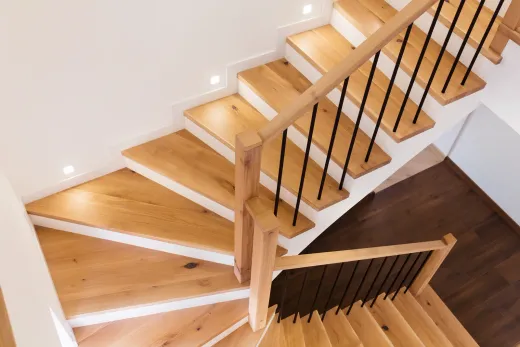
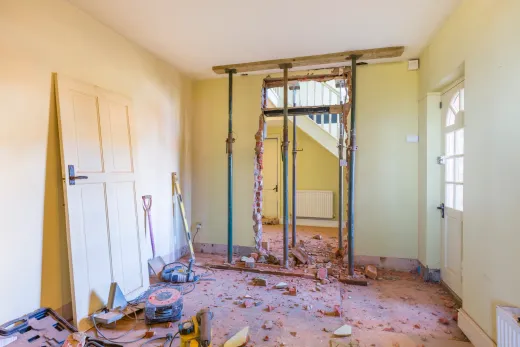
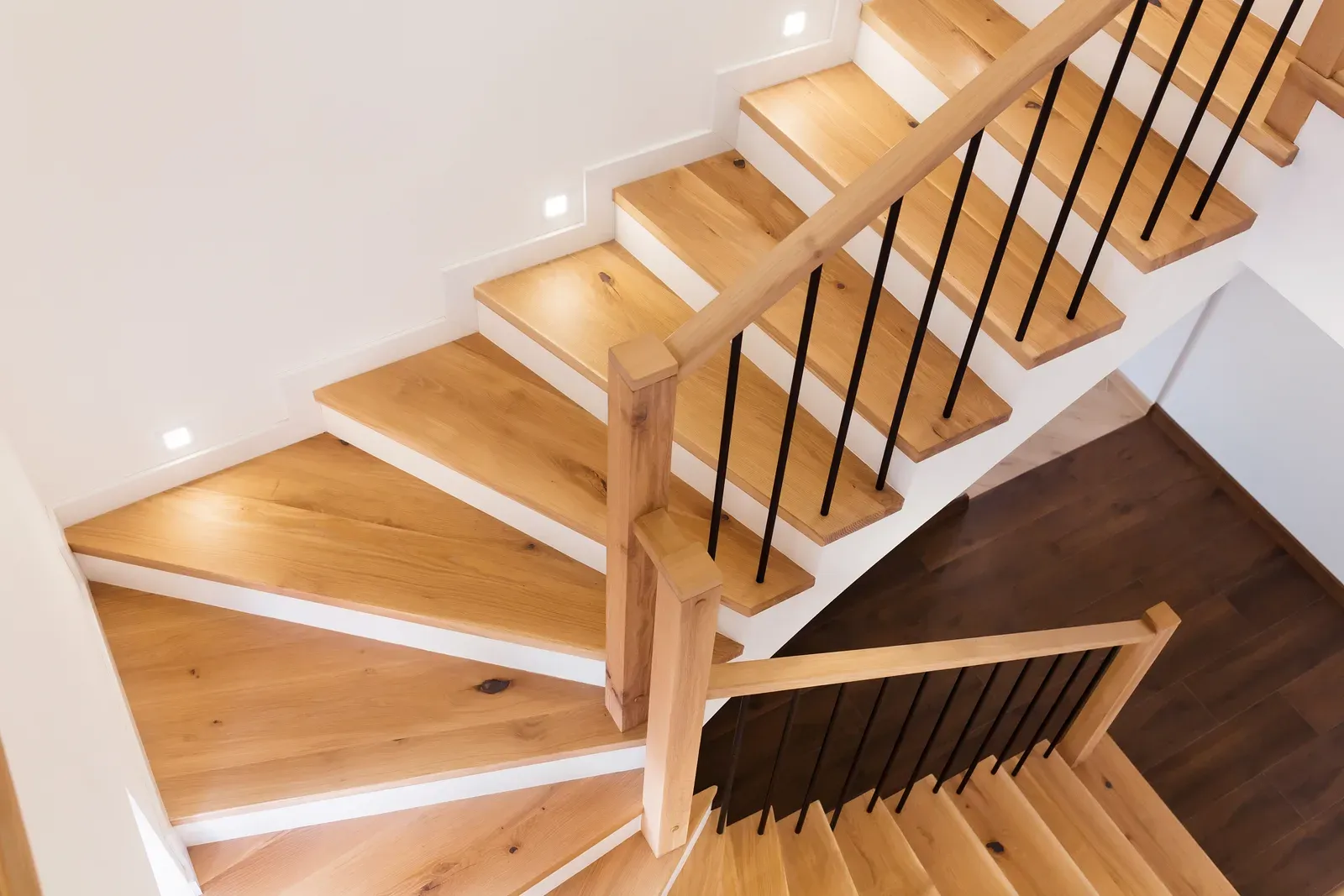
The result reads as a hardwood staircase because it is one: solid oak where your feet land, painted risers and stringers below, no demolition, no reframing, no permit — this is cosmetic work under Ontario rules.
Recapping Costs: $185–$225 Per Step in 2026
Budget math for a typical Milton two-storey, as of 2026:
- Straight treads: from $185 per step. A standard 13-step flight lands around $2,400 in per-step charges before railing work, with complete projects typically from $4,900.
- Pie and bullnose steps: from $225 per step. Common at the bottom of foyer staircases in Beaty and Scott models, and at winders on upper flights.
- Recap plus full railing upgrade: from $5,500 for a typical 13-step staircase — new handrail, square posts, and iron pickets replacing the turned spindles.
- Cost drivers: total step count, winders and curves, open-sided flights, metal versus wood pickets, and matching stain to adjacent flooring.
Two things those numbers assume: sound structure underneath (nearly always true in post-2001 Milton stock) and a straightforward stain match. Note that quotes in Ontario typically exclude 13% HST — confirm when comparing. If your home is in Timberlea or Old Milton rather than the newer communities, the staircase may be older oak worth refinishing instead at $50–$125 per step; a site visit settles which route applies.
Railing and Picket Upgrades to Match New Floors
Recapping treads while keeping 2005's turned spindles is a half-finished look — the eye goes straight to the old railing. The standard pairing is slim matte-black iron pickets, either plain bars or bars with a single collar detail, set into a new flat-profile handrail with square newel posts. Against fresh oak treads and white risers, it is the look that defines this decade of GTA renovations the way golden oak defined the 1990s.
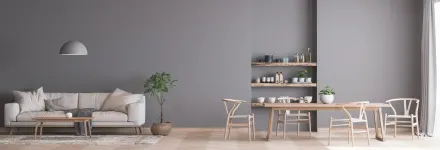
Colour strategy connects stairs to floors. If you are installing pale oak-tone flooring on the main level, matching the tread stain to it makes the staircase flow out of the floor; contrast-lovers go dark on treads instead and repeat the black of the pickets in door hardware and lighting. We always stain-sample on the actual treads in your actual light — Milton's newer homes have big south-facing windows in the great room, and stains read warmer there than in a north-facing foyer.
One durability note: matte and satin finishes on both wood and metal hide the fingerprints, dust and winter boot-grit that gloss magnifies. Foyers in this town see hockey bags. Specify accordingly.
Runner Options for Homes With Kids and Pets
Milton has one of the youngest demographics in the GTA, which is why the runner conversation comes up in almost every stair consultation here. Bare hardwood stairs are beautiful and slippery — for toddlers in socks, for dogs, and honestly for adults carrying laundry baskets.
A modern runner solves it without giving back the upgrade. Today's options are flat-weave wools and tight-loop synthetics in geometric patterns and solid neutrals, fitted down the centre of the flight with oak visible on both edges — nothing like the wall-to-wall broadloom you just removed. The runner takes the wear path and the claw traffic; the finish underneath stays pristine. When the runner wears out in a decade, you replace fabric, not wood.
Timing matters: install the runner two to three weeks after finishing so the coats cure fully underneath. And if slip-resistance is the main concern but you want no fabric at all, a satin finish plus discreet clear anti-slip strips on the nosings is the minimalist alternative. For flooring choices downstairs that survive the same kids and pets, see our guide to the most durable low-maintenance flooring.
Bundling Stairs Into a Main-Floor Flooring Project
Almost every stair project we run in Milton is half of a bigger sentence: "we're ripping out the builder carpet and laminate everywhere." Bundling is the right call, for reasons beyond convenience. The stair oak and the floor material get ordered and acclimatized together, stain matching happens against the real installed floor, and one crew mobilization covers both scopes. Sequence-wise, flooring always goes first, stairs second.
For the flooring half: solid hardwood runs $8–$15 per square foot installed in the GTA as of 2026, engineered hardwood overlaps that range, and a typical 800–1,000 sq ft main floor lands somewhere in the $3,700–$12,600 span depending on material — our Toronto flooring cost guide breaks the options down, and if you are weighing wood against vinyl plank for a busy household, start with engineered hardwood vs LVP.
When does stairs-only make sense? When your floors are staying put — the staircase upgrade stands perfectly well alone at $4,900–$5,500 and transforms the foyer. Either way, our flooring team serving Milton quotes stairs and floors in one free visit, and everything we install carries our 2-year workmanship warranty. Book a quote and we'll bring the stain samples.
Ready to start your renovation?
Our team is here to help you bring your vision to life. Get a free, no-obligation quote today.
Get Free QuoteFrequently Asked Questions
Clear answers to the questions Ontario homeowners ask most.