Vinyl plank and laminate cost about the same and look about the same on day one. The difference is what happens when the dishwasher leaks. Here is how we choose between them.
Price Check: What Each Costs Installed in 2026
Vinyl plank and laminate land in the same budget band. As of 2026, luxury vinyl plank (LVP) runs $4–$9 per square foot installed in the Toronto area — $4–$11 Canada-wide — with materials at $1.50–$5 and installation labour around $1–$2. Laminate tracks closely: install labour at independent GTA flooring retailers is $1.50–$2.00 per square foot for either product, and material pricing overlaps heavily at the entry and mid tiers.
So price will not make this decision for you. On a 1,000 sq ft main floor, both typically land in the $4,000–$9,000 range before HST, well under the $8–$15 per square foot of hardwood. The real differences are water behaviour, wear characteristics and feel underfoot — and those play out differently room by room. For how these products fit into a full project budget, see our flooring cost guide for Toronto; our own flooring projects start at $5,000.
Water Is the Deciding Factor: Kitchens, Baths, Basements
Here is the one-sentence version of this entire comparison: vinyl plank is waterproof; laminate is wood-based and swells when water gets into the joints.
Laminate's core is a high-density fibreboard. A surface spill wiped up promptly is fine — many current laminates carry water-resistance ratings good for hours — but standing water that finds a seam wicks into the core, and swollen edges never flatten again. There is no repair; the damaged boards come out. LVP and its rigid-core (SPC) variants are plastic through and through: a dishwasher leak, a dropped dog bowl or a wet spring in the basement leaves them unbothered.
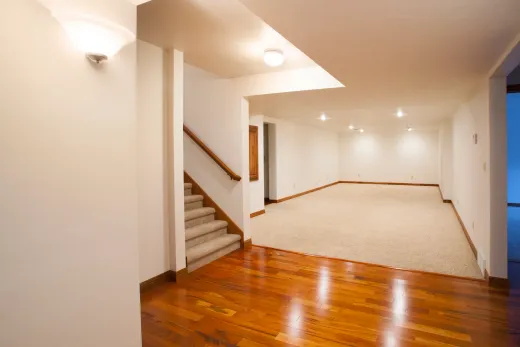
That is why we default to vinyl in kitchens, bathrooms, laundry rooms, entries and anything below grade — Ontario basements and slab moisture are a bad match for a fibreboard core, which is part of why LVP dominates our basement flooring recommendations. Laminate belongs in reliably dry rooms.
Climate stacks the deck further. Humid Ontario summers push moisture into laminate's core from the air itself, so even dry-room laminate wants a dehumidified basement kept out of the equation and expansion gaps left honest at the walls. Vinyl simply does not care.
Durability Head-to-Head: Scratches, Dents, Fading
For surface wear, quality laminate actually has a slight edge. Its aluminum-oxide wear surface is extremely hard, and a good AC-rated laminate resists scratches from chair legs and dog claws impressively well. Vinyl's wear layer is softer plastic — thicker mil ratings resist better, but a dragged appliance can gouge it, and cheap thin-wear-layer vinyl scuffs quickly.
Dents flip the story: rigid-core vinyl handles dropped pots and furniture feet well, while laminate can chip at the click edges, and a chipped laminate corner is more visible than a scuff. Sun fading affects budget versions of both — in a south-facing GTA family room, spend up on UV-stable product either way.
Neither floor is refinishable, so plan on replacement at end of life regardless. The honest summary: at equal price points, laminate wears better on top, vinyl survives more abuse overall. Both make the shortlist in our guide to durable low-maintenance flooring.
Feel and Sound Underfoot: Where Laminate Still Wins
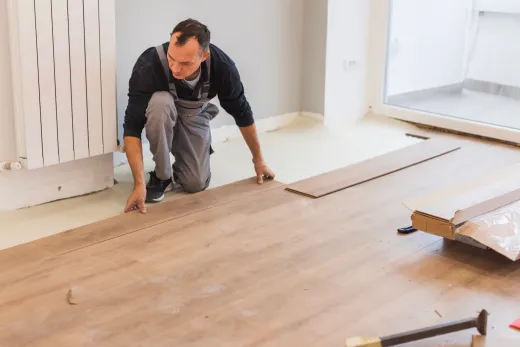
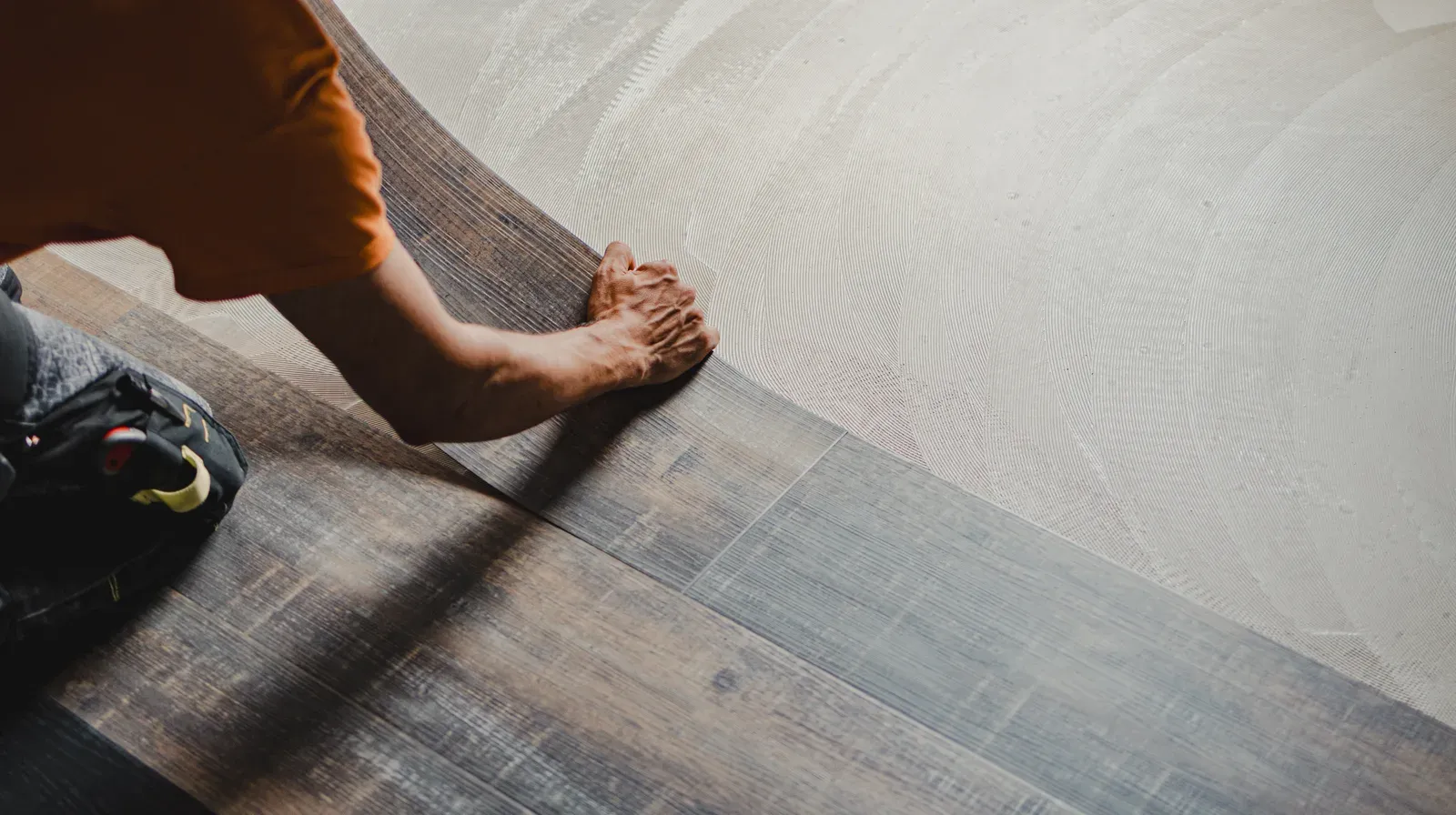
Walk on both in a showroom and you will notice it immediately: laminate feels more like a wood floor. Its boards are thicker and stiffer, so the floor sounds and flexes closer to hardwood, while thin glue-down vinyl can feel slightly plasticky and floating vinyl can sound hollow over an uneven subfloor.
Most of that gap is fixable with spec. Rigid-core SPC planks with an attached cork or foam underlay pad go a long way toward the solid feel, and proper subfloor prep matters more than the product — a flat subfloor is the difference between a quiet floor and a clicky one. Levelling runs $3–$8 per square foot where slabs or old subfloors are out of flat, and it is money better spent than an upgrade to a fancier plank.
Laminate is also the more convincing wood visual at the budget end, which is why it survives in bedrooms and family rooms even as vinyl takes over the wet rooms. Note for condo owners: either product needs a board-approved acoustic underlay first.
Resale Value: What GTA Buyers Actually Notice
Neither product adds value the way hardwood does — GTA buyers and agents read both as sensible, budget-conscious flooring. What moves the needle at resale is condition and continuity: one consistent, undamaged floor through connected spaces shows dramatically better than a patchwork, and swollen laminate seams in a kitchen are exactly the kind of flaw that makes buyers start discounting everything else.
In practice that gives vinyl a quiet resale edge in kitchens, baths and basements simply because it still looks new at sale time. In investment properties and basement apartments, durable rigid-core vinyl has become the default because it survives tenant turnover. If resale is the driving motive and the budget allows, engineered hardwood in the principal rooms with vinyl in wet areas outperforms either product wall-to-wall — the comparison in engineered hardwood vs LVP covers when that upgrade is worth it.
Which to Pick, Room by Room
Our defaults after installing both across thousands of square feet of Ontario housing:
- Kitchens, bathrooms, laundry, entries and mudrooms: vinyl plank — winter boots, road salt and slush make Ontario entryways wet zones half the year
- Basements and basement apartments: rigid-core vinyl, no exceptions below grade
- Bedrooms, upstairs halls, dry family rooms: either; laminate gives a more wood-like feel for the same money
- Whole-house one-product jobs: vinyl plank, so the wet rooms do not force a product change
- Condos: either, over the board-required acoustic underlay
Spend your budget on subfloor prep and a thicker wear layer before spending it on brand names. We supply and install both — see our luxury vinyl plank flooring service or talk to our flooring team about your specific rooms. Quotes are free, itemized, and honest about where the cheaper product is the right call: (416) 995-7855.
Ready to start your renovation?
Our team is here to help you bring your vision to life. Get a free, no-obligation quote today.
Get Free QuoteFrequently Asked Questions
Clear answers to the questions Ontario homeowners ask most.