The best walk-in showers we build across the GTA come down to a handful of design decisions — entry, drain, glass, tile, storage. Here is how each one works, and what it adds to the price.
Design Moves That Define a Great Walk-In Shower
Every walk-in shower we build comes down to five decisions: the entry (curbed or curbless), the drain (centre or linear), the glass (single panel or full enclosure), the tile format, and where storage lives. Get those five right and the shower looks like it was designed for the room instead of dropped into it.
Budget shapes those decisions, so here are the 2026 numbers up front. A basic tub-to-walk-in conversion in the GTA typically runs $3,500–$5,500 with an acrylic base and standard surround. Most homeowners land in the $6,000–$8,500 range — custom tile, upgraded fixtures, and a glass door or panel. A fully tiled custom shower with frameless glass, a bench, and a niche runs $9,000–$15,000 or more. Those figures cover the shower itself; a walk-in shower installation usually happens inside a larger bathroom renovation, and a full-scope professional bathroom starts around $15,000 in the GTA as of 2026.
The good news: several of the moves below cost very little if you decide on them before rough-in. They get expensive only when someone tries to add them after the waterproofing is done.
Niches, Benches, and Ledges: Storage That Looks Built-In
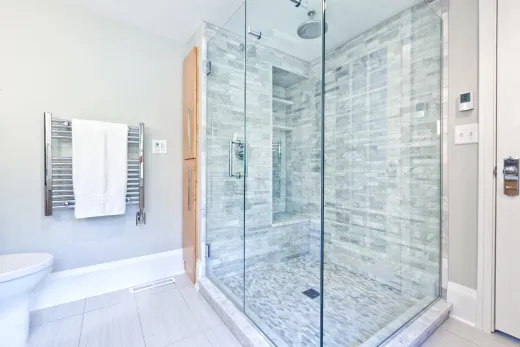
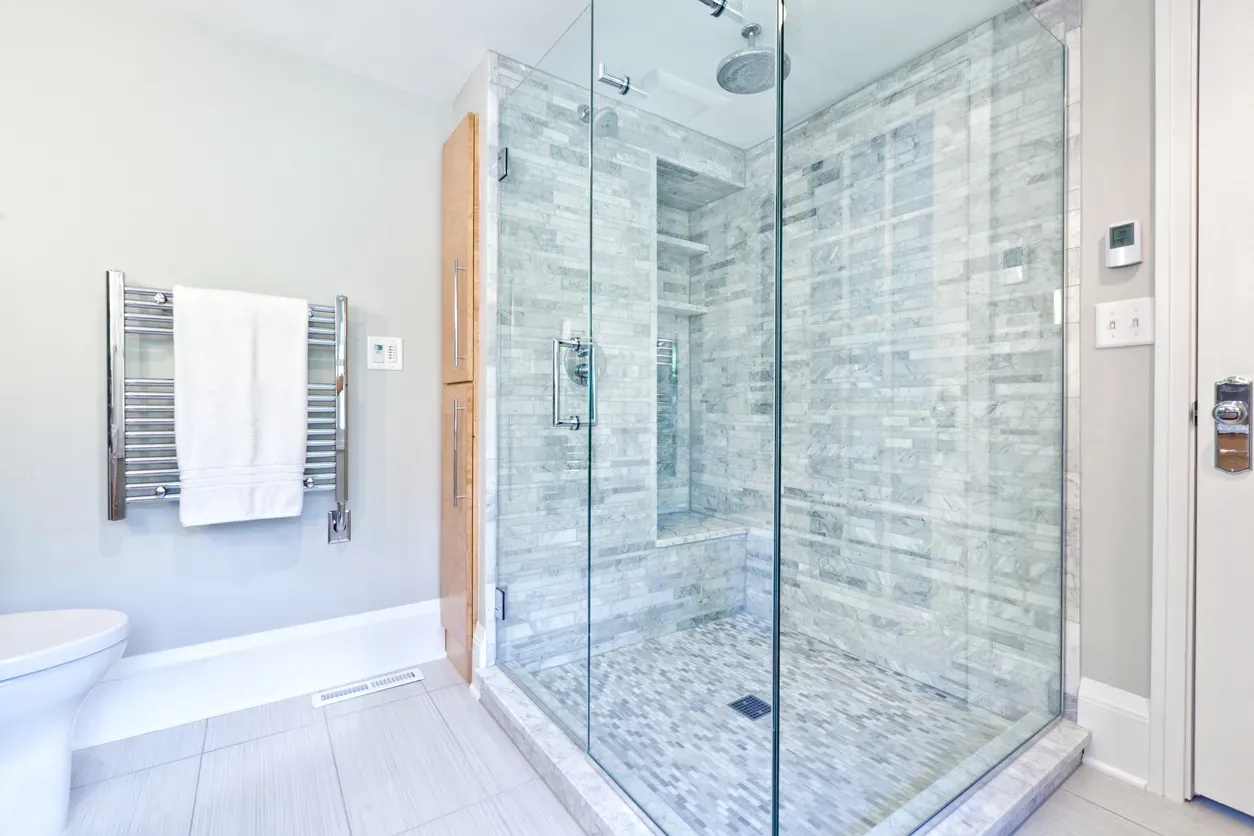
A recessed niche is the cheapest upgrade on this list when it is planned early. The framer builds the pocket between studs, the waterproofing wraps into it, and the tile setter finishes it with mitred edges or a metal profile. Decide the location before drywall: mid-wall on the plumbing wall is common, but we prefer the wall you do not see from the doorway, so shampoo bottles are not the first thing guests notice.
Benches come in two forms. A built-in tiled bench needs framing, sloped waterproofing, and careful tile work — it adds real labour but reads as permanent and doubles as a foot rest for shaving. A floating teak or stone-topped bench costs less and can be removed later. In tighter showers, a corner ledge or a full-length ledge along the back wall gives you most of the storage without eating floor space.
One honest caution: every horizontal surface in a shower is a surface that collects water and soap film. Slope every niche shelf and bench top slightly toward the drain, and you will thank yourself for years.
Linear Drains and Large-Format Tile
Linear drains changed what shower floors can look like. A centre drain needs the floor sloped from four directions, which forces small tile — usually 2-inch mosaic — so the tile can follow the compound slope. A linear drain along one wall lets the whole floor slope in a single plane, which means large-format tile can run continuously from the bathroom floor into the shower. Fewer grout lines, one material, and the room reads bigger.
There is a cost to that look. Large-format porcelain (24x24 and up) runs $12–$22 per square foot in labour across the GTA, versus $8–$15 for standard formats, because the substrate has to be dead flat and the tiles are heavy to handle. The linear drain hardware itself costs more than a standard drain, and the sloping work takes longer.
If the budget will not stretch, a middle path works well: large-format tile on the walls, where installation is more forgiving, and a small-format floor with a standard centre drain. We cover the format question in more detail in our guide to large-format porcelain in small bathrooms.
Glass: Fixed Panel vs Full Enclosure
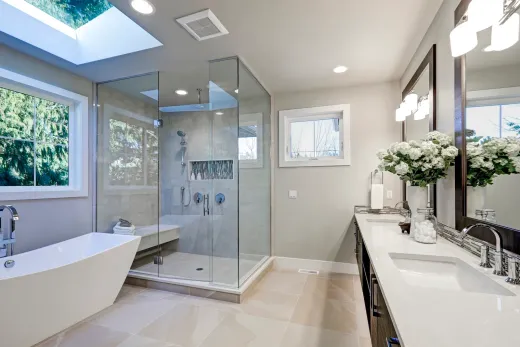
A single fixed glass panel — no door, no hinges — is the quiet hero of walk-in shower design. It costs less than a full enclosure, has no hardware to loosen or leak, nothing to squeegee around a frame, and it keeps sightlines open in a small bathroom. If your shower is at least 42 inches deep and the shower head points away from the opening, a panel usually contains the spray just fine.
A full frameless enclosure makes sense when the shower sits next to the toilet or vanity and overspray would be a daily annoyance, or when you want to hold steam in. Expect $2,000–$4,000 for frameless glass in the GTA as of 2026, depending on size and hardware. Semi-frameless splits the difference on price.
Whichever you choose, order glass after tile is done — the installer templates against the finished walls, which is how you get those tight, caulk-minimal joints.
Lighting and Ventilation Details That Matter
GTA summers are humid, and a tiled shower that never fully dries grows mildew in the grout lines no matter how good the tile is. Two details prevent that. First, a properly sized exhaust fan on a timer switch, vented outside — not into the attic. We wrote a full explainer on sizing a bathroom exhaust fan to prevent mould. Second, a wet-rated recessed light centred over the shower. Older GTA bathrooms almost never have one, and it is the difference between a shower that feels like a spa and one that feels like a closet.
While the electrician is there, consider a heated floor for the bathroom — typically $1,500–$3,000 installed — since the same visit covers the wiring. It is one of the most-loved upgrades we install, especially in bathrooms over unheated space in older Toronto and Etobicoke homes where tile runs cold from November to April.
Matching Shower Design to Your Bathroom's Footprint
The right design depends on the room you actually have. The 5x7 and 5x8 bathrooms common in 1950s–70s bungalows and splits across Scarborough, North York, and Mississauga fit a 30x60-inch walk-in shower in the old tub footprint — a fixed panel, a niche, and a linear drain make that layout feel far larger than it is. Bigger ensuite footprints in newer Vaughan and Markham homes can take a 42x60 shower with a bench, body spray, and full enclosure.
A few decision rules from our last twenty years of bathrooms:
- Keep one tub in the house if you have or plan to have young kids, or expect to sell to a family. Convert the second bathroom instead.
- Go curbless if anyone in the house is thinking ten years ahead — see our comparison of curbless walk-in showers vs tubs.
- Spend on waterproofing and glass before spending on premium tile. A $6 tile installed over perfect waterproofing beats a $40 tile over guesswork.
If you are pricing the whole room and not just the shower, our Toronto bathroom renovation cost guide breaks down the full budget. When you are ready for real numbers on your specific bathroom, send us photos and rough dimensions through our contact form and we will give you a straight answer.
Ready to start your renovation?
Our team is here to help you bring your vision to life. Get a free, no-obligation quote today.
Get Free QuoteFrequently Asked Questions
Clear answers to the questions Ontario homeowners ask most.