Not every soaked hardwood floor is a write-off. Cupped boards often dry flat on their own; buckled ones never do. Here's how we triage water damage and what repairs cost in the GTA.
First 48 Hours: What to Do Before Calling Anyone
Speed decides whether a wet hardwood floor is a repair or a replacement. Before any contractor gets involved, do this:
- Stop the water — shut the supply valve, disconnect the appliance, whatever it takes
- Get standing water up fast: towels, wet-vac, mop; work along board seams where water hides
- Pull area rugs and move furniture off the wet zone so nothing traps moisture
- Run fans across the floor and a dehumidifier in the room, continuously
- Photograph everything with timestamps — the source, the water, the affected area — before cleanup erases the evidence your insurer will want
What not to do matters just as much. Don't blast the furnace or point heaters at the boards; drying wood too fast from the top causes its own distortion. And don't book sanding yet. Wood that looks ruined at day two often looks very different at week six, and refinishing too early locks in problems.
For a big release — a burst pipe while you were away, a failed water heater — professional structural drying with mats and commercial dehumidifiers is worth the call, because it can save a floor that towels and box fans can't.
Cupping vs Buckling vs Staining: Reading the Damage
Hardwood tells you how badly it's hurt if you know the vocabulary.
Cupping is when board edges sit higher than their centres, making a washboard surface. It means the bottom of the boards is wetter than the top — water worked under the floor or humidity rose from below. Cupping is the most recoverable form of water damage, and mild seasonal cupping is common in GTA homes anyway; our guide to why hardwood cups and gaps covers the humidity side.
Crowning is the opposite — centres higher than edges — and often appears when a previously cupped floor was sanded flat too soon, then finished drying.
Buckling is the serious one: boards lift completely off the subfloor, sometimes tenting several centimetres. The wood expanded with nowhere to go and tore free of its fasteners. Buckled boards don't reattach.
Staining ranges from grey shadows in the finish, which sand out, to black marks, which mean water sat long enough to react deep in the wood fibre. Black staining usually signals a slow leak that ran for weeks — dishwashers and fridge lines are the usual suspects.
When Boards Dry Flat, and When They Never Will
Here's what surprises most homeowners: a cupped floor from a short, cleaned-up water event frequently flattens on its own. Once the moisture source is gone and drying is underway, boards release moisture and settle back over four to eight weeks — sometimes longer through a humid Toronto summer, when ambient moisture slows the process. A flooring pro should confirm progress with a moisture meter rather than guessing by eye; boards need to get back within a couple of percentage points of the dry areas before anyone sands.
If residual cupping remains after full drying, a sand and refinish at $4-$9 per square foot restores a flat surface.
Some damage is past saving, though. Buckled boards, black-stained boards, delaminated engineered planks whose plies have separated, and anything soft or spongy underfoot all need replacement. GTA plumbing history supplies many of the culprits: pipes that freeze and burst during cold snaps, Poly-B supply lines in 1978-1995 builds, and Kitec plumbing in 1995-2007 condos and subdivisions — the class-action window has closed, so those failures are now out-of-pocket events.
Board Replacement and Refinishing Costs in the GTA
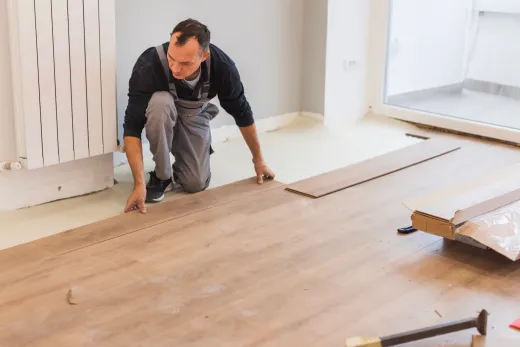
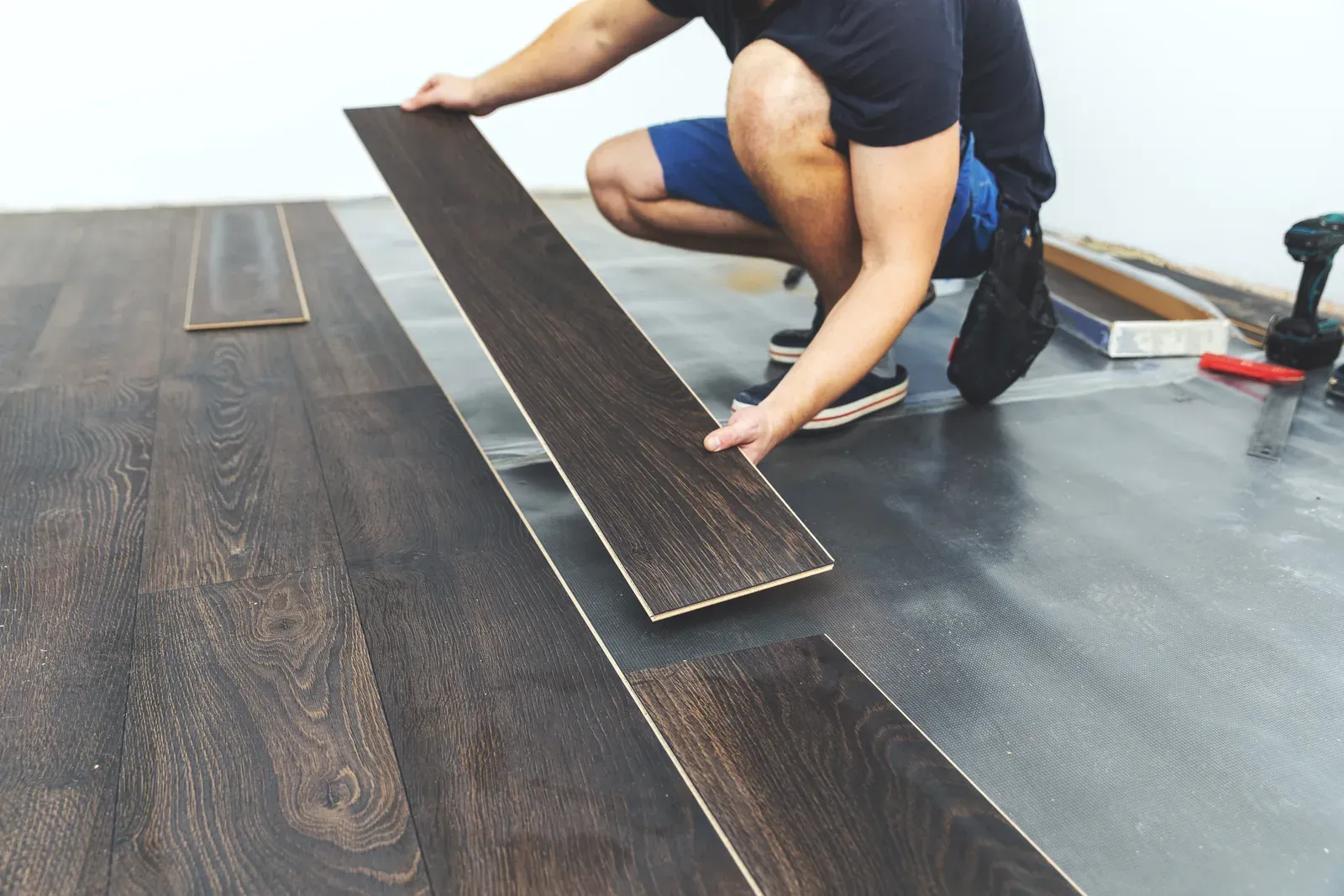
Localized damage gets the weave-and-refinish treatment: cut out the failed boards, lace in new matching material, then sand and finish the full room so the repair disappears into one uniform floor. As of 2026, budget new solid hardwood at $8-$15 per square foot supply and install for the replaced sections, and refinishing at $4-$9 per square foot across the room — standard sand, stain, and poly runs $4-$6, with premium finishes and repair-heavy jobs at the top of the range.
Why refinish the whole room instead of spot-finishing the patch? Because finish ages. A fresh patch in a ten-year-old floor shows forever; a full-room refinish hides the surgery completely.
Matching matters too. The 2 1/4-inch red oak strip in most post-war GTA homes matches easily off the shelf. Older or unusual floors — wide pine in a Riverdale Victorian, discontinued engineered lines from a 2005 condo — can require custom milling or replacing a larger area to reach a natural break like a doorway. Our flooring cost guide has the full pricing landscape if the repair grows into a bigger project.
Dealing With the Subfloor: The Hidden Repair
The floor you walk on is only half the assembly. Water that cupped or buckled your hardwood also soaked the plywood or OSB beneath it, and closing up over a wet subfloor guarantees a second round of damage — plus mould feeding quietly between the layers.
Before any new wood goes down, the subfloor needs a moisture-meter check, and wet sections need real drying time or replacement. OSB that has swollen at the edges and stayed swollen is done; delaminated plywood likewise. Swapping subfloor sheets is not expensive relative to the finished floor, but skipping it is the classic false economy — it's the difference between a repair that lasts and one that fails within a year.
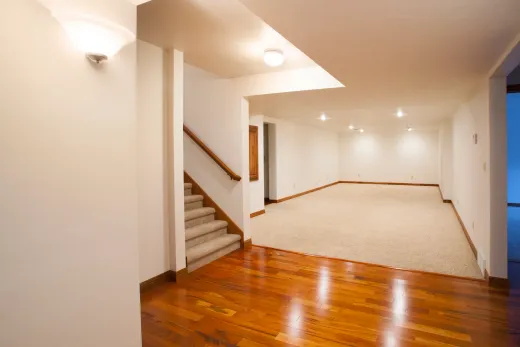
Basement water events deserve extra caution. If the water came through the foundation rather than from plumbing, fix the moisture path before installing anything — we walk through that in basement moisture and waterproofing before finishing. And on slabs or below grade, solid hardwood shouldn't go back at all; engineered wood or vinyl plank are the stable choices there.
Insurance Claims, and Making the Repair-or-Replace Call
Standard Ontario home policies generally cover sudden and accidental water damage — the burst pipe, the failed washing machine hose — including resulting floor repairs. What they typically exclude is gradual damage: the slow dishwasher leak that black-stained the boards over months reads as maintenance, not accident. Sewer backup usually requires its own endorsement, worth checking if your finished basement has hardwood-look flooring at stake. Every policy differs, so confirm your own wording; our job is the repair estimate and documentation that supports your claim. If backups are a recurring worry, Toronto's Basement Flooding Protection Subsidy now covers up to $6,650 per property toward backwater valves and sump pumps as of its May 2026 expansion.
The decision itself comes down to this: repair when damage is localized, boards are cupped rather than buckled, and drying is confirmed by meter. Replace when boards have buckled or blackened, the subfloor is compromised, or matching is impractical. We've made this call in GTA homes since 2004 — call (416) 995-7855 for an honest hardwood repair assessment, warrantied for 2 years like all our work.
Ready to start your renovation?
Our team is here to help you bring your vision to life. Get a free, no-obligation quote today.
Get Free QuoteFrequently Asked Questions
Clear answers to the questions Ontario homeowners ask most.