Wide plank hardwood dominates GTA renovations for good reason — fewer seams, calmer rooms, a custom look. But width changes the engineering, the price and the ordering timeline.
Why Wide Plank Took Over GTA New Builds and Renos
Walk through any recently renovated home in Oakville, Vaughan or the Beaches and the floor is almost certainly wide plank — boards of 5 inches and up, often 7 or more. The look won for a simple visual reason: fewer seams. A room laid in traditional 2 1/4-inch strip oak has a busy, striped surface; the same room in 7-inch planks reads calm and continuous, which suits the open-concept layouts most GTA renovations now produce. Wide boards also show more of each plank's actual grain and character, so the floor looks like wood rather than a pattern of wood.
The cost picture as of 2026: solid hardwood installs at $8–$15 per sq ft supplied and installed in Toronto, and engineered hardwood generally overlaps that at roughly $7–$13 per sq ft depending on wear-layer thickness and plank width. Width pushes you toward the top of either band — wider boards cost more to mill, come from larger trees, and are sold in premium lines. Our Toronto flooring cost guide covers where the rest of a flooring budget goes; our projects start from $5,000.
What Counts as Wide, and What Each Width Costs
There is no official cutoff, but the trade generally treats anything from 5 inches up as wide plank. Here is how the widths break down in practice:
- 2 1/4–3 1/4 inch strip: the traditional standard found in most GTA homes built or floored before the 2010s. Lowest cost, busiest look.
- 4–5 inch: the transitional width — noticeably calmer than strip without a big price jump. A safe pick for smaller semis.
- 6–7 inch: the 2026 sweet spot for open main floors. Mostly sold as engineered product; expect the upper half of the installed range.
- 8 inches and up: statement territory. Almost exclusively engineered, often European white oak in long lengths, priced at the top of the market and frequently special-order.
Length matters as much as width: wide boards in short lengths look choppy, so quality lines pair 7-inch widths with 6- and 7-foot boards. When comparing quotes, check both dimensions — and confirm whether the number includes the 13% HST, tear-out and baseboards, since those extras shift totals meaningfully.
Stability: Why Wide Usually Means Engineered
Wood moves across its grain as humidity changes, and a wider board simply has more width to move. A 2 1/4-inch strip that shifts a hair per season is invisible; a 7-inch solid plank making the same percentage move opens a visible winter gap or cups in a humid July. The GTA is close to a worst case for this — muggy summers, then months of dry forced-air heat — which is why we see the symptoms constantly in older floors. Our answer on why hardwood floors cup and gap explains what those movements look like.
Engineered construction is the fix. A real hardwood wear layer bonded to a cross-laminated core resists cross-grain movement, letting boards run wide and long while staying flat. That is why nearly every wide-plank product sold in the GTA above 5 inches is engineered, and why we recommend engineered for wide floors even in homes where solid would otherwise be fine. Two practical notes regardless of construction: keep indoor humidity in a moderate band year-round (a furnace humidifier in winter helps), and let the material acclimate on site before installation. Solid wide plank still has a place — mainly heritage restorations — but it demands premium material and careful climate control.
Species and Finishes That Suit Wide Boards
White oak owns the wide-plank market in 2026, and deservedly. Its grain is handsome at wide widths without being loud, it takes today's popular natural and light-brown tones evenly, and it is hard enough for family life. Red oak — the classic GTA strip-floor species — costs less and performs well, though its pinkish undertone fights the pale Scandinavian looks many clients want. Walnut brings deep colour for principal rooms but is softer, so we steer it away from kitchens and entries. Maple's subtle grain can look washed out across a wide board and blotches under dark stain.
Finish choices change how the floor lives. Matte and ultra-matte urethanes hide micro-scratches far better than the glossy floors of the 2000s. Wire-brushed texture adds grip and camouflages dents — useful with dogs. Hardwax-oil finishes give a natural, low-sheen look that spot-repairs beautifully, though they ask for occasional re-oiling. If durability tops your list, our comparison of durable low-maintenance flooring options puts wood's real-world toughness in context against the alternatives.
Wide Plank in Small Rooms and Condos: Does It Work?
The instinct says wide boards will overwhelm a small room. Experience says the opposite: fewer seams make a compact space feel less cluttered, and a 10-by-12 bedroom in 6-inch planks reads larger than the same room striped with 2 1/4-inch strip. The genuine scale limits show up only at the extremes — 9- and 10-inch boards in a narrow hallway can look out of proportion. For most GTA semis and townhouses, 5–7 inches is safe everywhere.
Condos take wide plank well, with two caveats. First, the product must be engineered — glue-down over concrete is the standard condo installation, and solid wood does not belong on slab. Second, your building's rules come before your design choices: virtually every Toronto-area board requires an acoustic underlay or acoustic glue meeting minimum IIC/STC ratings beneath hard flooring, and approval paperwork before work starts. We cover the details in condo flooring and soundproofing rules. Budget the underlay at $2–$4 per sq ft of added material cost and build board approval time into your schedule.
Ordering Lead Times and Installation Notes
Wide plank punishes impatience. Entry-level 5-inch engineered lines are often stocked locally, but the 7-inch-plus European oak products that fill design feeds are frequently special-order, with three- to six-week lead times to the GTA — and the material still needs to acclimate in your home after delivery. Order 5–10% overage from a single lot; matching a wide-plank colour from a later production run is a gamble.
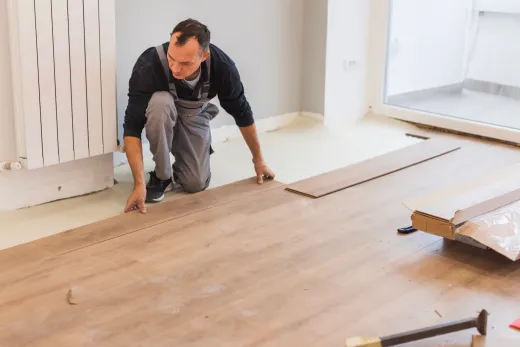
Installation is less forgiving too. Wide boards telegraph subfloor humps and dips that narrow strip would bridge, so flattening the subfloor first is non-negotiable, and wide engineered planks are typically installed with glue-assist or full glue-down to prevent hollow spots and squeaks. This is exactly the work where installer experience shows. Choose wide plank if you are renovating an open main floor, staying past the five-year mark, or chasing a custom look that strip flooring cannot deliver; stick with 4–5 inch boards if budget or lead time is tight. Our hardwood flooring installation crews handle wide-plank work across Toronto and the GTA — request a free quote and we will bring width samples to lay out in your actual light.
Ready to start your renovation?
Our team is here to help you bring your vision to life. Get a free, no-obligation quote today.
Get Free QuoteFrequently Asked Questions
Clear answers to the questions Ontario homeowners ask most.