Swapping stair spindles is the smallest renovation with one of the biggest visual payoffs in a GTA home. Here is how wood and metal compare on cost, upkeep, style — and the code rules both must meet.
The Look: Traditional Oak vs Modern Iron and Steel
Spindles — pickets, balusters, whatever your contractor calls them — are the vertical members between handrail and stairs, and they set the character of the whole staircase more than the treads do. Wood spindles read traditional: turned oak profiles suit century homes and formal spaces, while square-edge painted wood gives a cleaner farmhouse or transitional look. Metal reads current: slim black iron balusters, with or without decorative twists and baskets, dominate GTA renovations right now, and flat steel bar or thin round profiles push further modern.
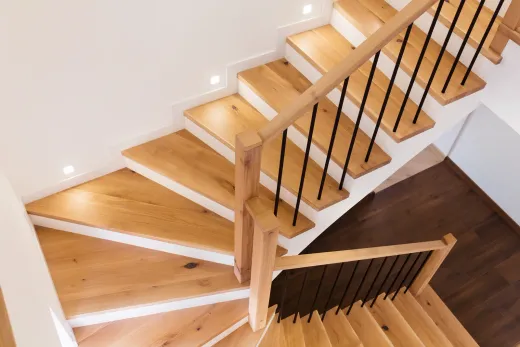
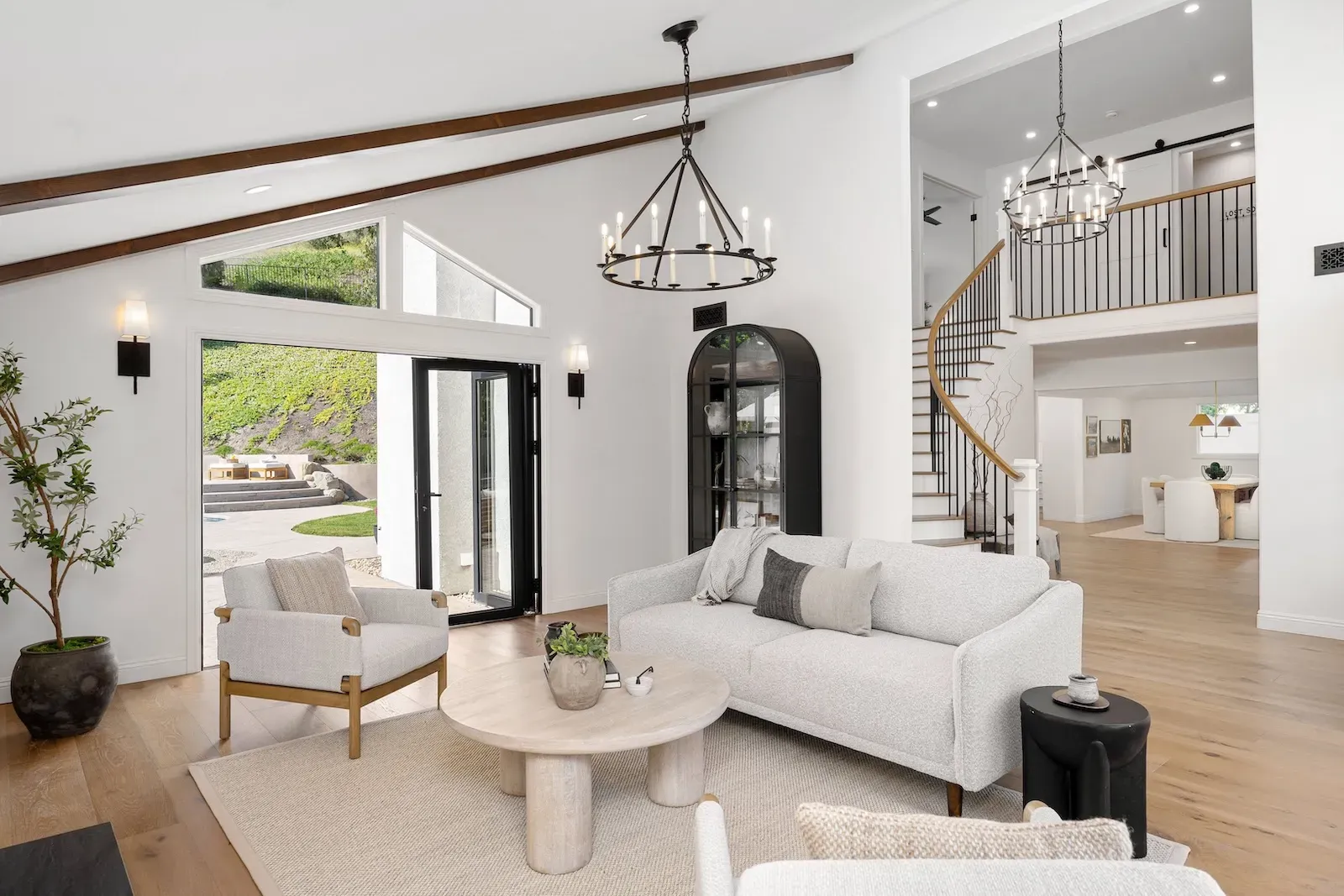
The hybrid is the real winner in our experience across Toronto and the GTA: stained oak handrail and posts with black metal spindles between them. It bridges eras — warm enough for a 1920s semi, sharp enough for a 2010s Vaughan two-storey — and it pairs with almost any flooring. Full glass and cable-rail systems exist at the modern extreme, but they are different animals with different budgets; for most homes the real decision is wood versus iron between the posts you already have.
Cost Per Spindle and Per Staircase
Per-piece prices vary widely with profile and finish — plain primed wood is the cheapest to buy, stain-grade oak costs more, and wrought iron spans a broad range from simple round balusters to hand-detailed patterns — which is why we quote railings by the project, not the picket. Material is only part of it anyway: a typical staircase needs 30-40 spindles, and the labour to remove old ones, fit new ones plumb, and fill and finish as you go is similar whether the picket itself cost a little or a lot.
Useful 2026 anchors for budgeting. A spindle-only swap on a sound existing railing is the entry point, typically landing in the low thousands for a standard flight. A full railing upgrade — new pickets, posts, and handrail — starts around $5,500 when packaged with recapped oak treads. And where existing wood railings are staying, refinishing runs $50-$125 per step with project minimums from about $3,500 once railings and posts are in scope. As always in Ontario, confirm whether quotes include the 13% HST before comparing. Our note on what renovation quotes should include applies here.
Swapping Spindles Only: The Budget Railing Refresh
If your handrail and posts are solid, well-anchored, and a shape you can live with, replacing only the spindles is the best value move in stair renovation. The old balusters come out, new ones — usually metal — go in, and the handrail and posts get cleaned up or restained to suit. Done properly it is a one-to-two-day job with no drywall damage, no structural work, and no permit, and it transforms a 1990s orange-oak railing into something that looks current.
The honest caveats: this only works if the bones are good. Wobbly newel posts, a handrail that flexes when leaned on, or spacing problems mean the swap grows into a fuller railing rebuild — better to know that up front than mid-job. Colour strategy matters too. Pairing new black metal with old orange-toned oak can clash; most clients restain the handrail darker at the same time, which is a modest add while everything is already masked and prepped. It is a textbook example of spending renovation money where it shows without cutting quality.
Ontario Code: Guard Spacing Rules That Apply Either Way
Whatever material you choose, guards on stairs and landings in Ontario homes have to meet the Building Code, and the rule homeowners most often trip over is spacing: openings in a guard must be small enough that a 100 mm sphere — about 4 inches, roughly a small child's head — cannot pass through. That governs the gap between spindles regardless of whether they are oak or iron, and it is why spindle count barely changes when you switch materials. Interior guards also carry minimum height requirements, and handrails must be continuous and graspable.
Why this matters for your project: many older GTA railings, especially wide-spaced mid-century ones, would not meet today's spacing rules. Existing railings are generally left alone, but when you replace a guard, the new work must meet current code. Decorative iron patterns with scrolls and baskets need checking too — a beautiful pattern that opens a 5-inch gap anywhere along its run is a failed inspection waiting to happen. This is stable, province-wide code, but details matter; a contractor who installs railings regularly will lay out spacing correctly as a matter of routine.
Durability and Maintenance Over 10 Years
Over a decade of family use, the two materials age differently. Wood spindles dent and chip at kid height, painted finishes scuff and need repainting every several years, and turned profiles collect dust in their curves. Stain-grade wood hides wear better than paint but still shows contact marks. Loose wood spindles also develop rattles as seasonal humidity cycles — a familiar GTA soundtrack in older homes every winter when forced-air heat dries everything out.
Powder-coated metal is the lower-maintenance option by a wide margin. The factory finish resists chipping, does not need repainting, wipes clean, and the slim profiles collect less dust. Quality iron balusters fitted with proper shoes stay tight for decades. The metal caveats are minor: a hard knock can chip powder coat (touch-up paint fixes it), and budget hollow balusters can feel less substantial than solid ones — worth handling samples before you order. On pure upkeep, metal wins. On repairability and warmth, wood keeps its case: a damaged wood spindle can be made and matched by any decent millwork shop, and some homes simply call for it.
Which Suits Your Home's Era and Flooring
Match the railing to the house, not the trend. Century and pre-war homes across Toronto and Hamilton carry original turned-wood railings with real character — refinish and keep them where they are sound, because replacing heritage millwork with builder stock removes value rather than adding it. Post-war and 1990s-2000s suburban two-storeys across Mississauga, Vaughan, Markham, and Milton are the prime candidates for the oak-plus-black-iron hybrid; it modernizes the builder look without fighting the architecture. Fully modern homes and open-concept renovations can go all-metal or minimal.
Flooring is the tiebreaker. Dark handrail over mid-brown floors, black spindles echoing black door hardware and light fixtures — these small alignments are what make a renovation read as designed rather than assembled. Railings are also one of the finishes buyers register within seconds of walking in, which is why they punch above their cost in renovations that increase home value.
If you are weighing a spindle swap against a fuller staircase project, start with an assessment. We have handled railings, stairs, and complete home renovations across the GTA since 2004 — request a free quote with a photo of your railing and we will tell you whether a simple swap will get you there.
Ready to start your renovation?
Our team is here to help you bring your vision to life. Get a free, no-obligation quote today.
Get Free QuoteFrequently Asked Questions
Clear answers to the questions Ontario homeowners ask most.