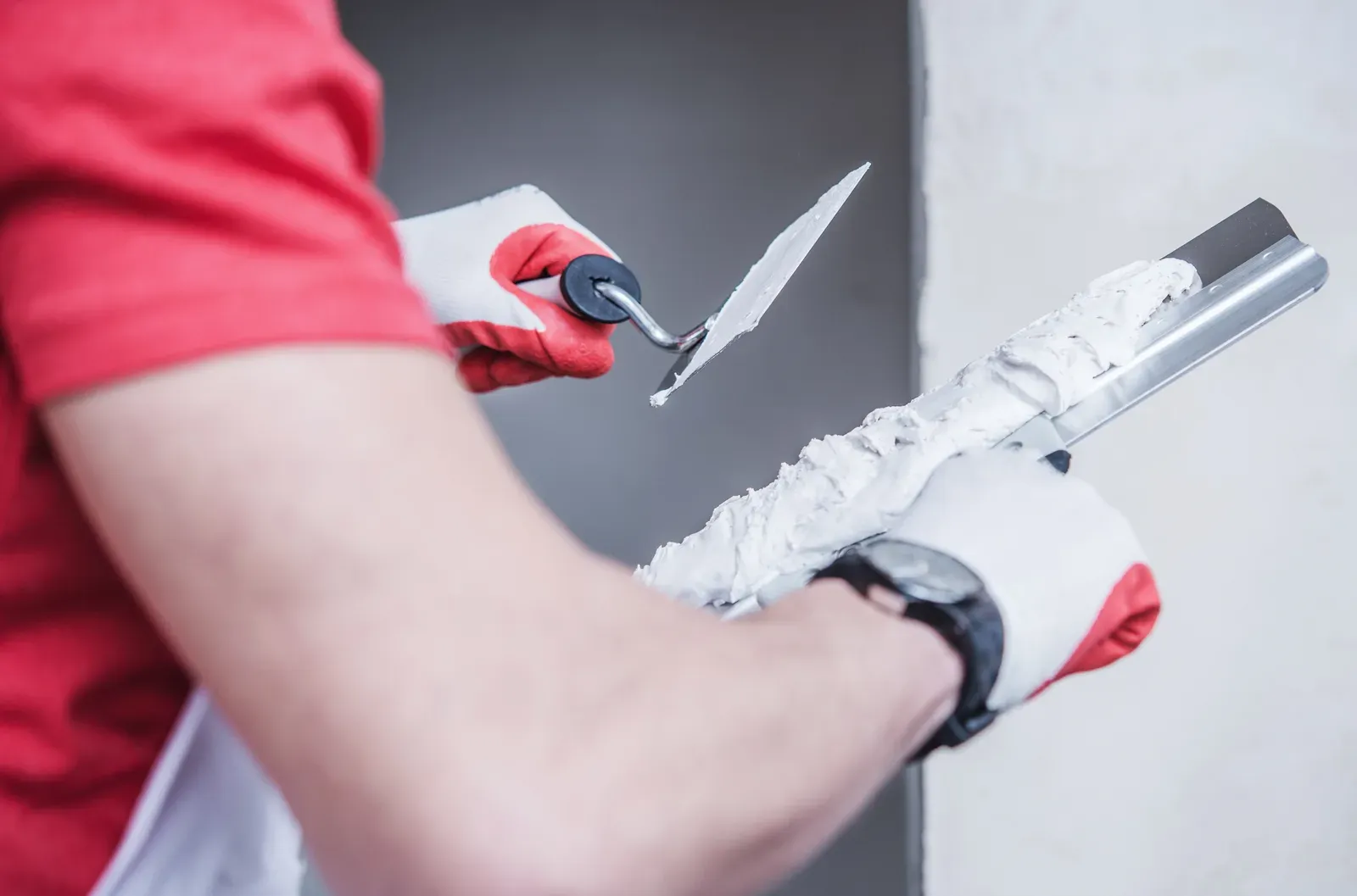
Hanging drywall is a weekend job. Making the seams disappear under paint is a trade. Where DIY holds up, where it falls apart, and what professional finishing costs in the GTA.
The Two Halves of Drywall Work
Drywall is really two different jobs wearing one name. Hanging is measuring, cutting, and screwing board to studs — physical, forgiving, and genuinely DIY-able. Finishing is taping, mudding, and sanding those boards into a single flat plane — and that half is a trade skill that takes years to get fast and clean at.
The 2026 GTA numbers make the split obvious. A full install — hang, tape, finish — runs $1.80–$4.50 per square foot, with $3.00–$4.50 the realistic budget for a standard Level 4 finish. Taping and mudding alone runs $1.75–$3.75 per square foot. The sheets themselves cost only $0.40–$0.65 per square foot, about $11–$15 per 4x8 board.
Read those numbers again: materials are almost nothing, and the finishing labour costs nearly as much as the whole installed job. That is the market telling you where the skill lives. DIY savings on drywall are real, but they sit almost entirely in the hanging — the half most homeowners can actually do well.
Why Taping and Mudding Punish Beginners
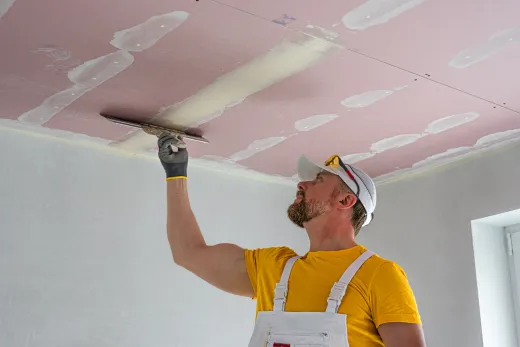
Taping looks simple on video. In practice it is three or more coats of compound, each one wider than the last, each needing to dry fully before the next, each feathered out so the seam vanishes into the wall. Tapered factory edges are forgiving; butt joints — where two cut ends meet — are not, and a beginner's butt joint reads as a visible hump down the wall forever.
Then there are the corners. Inside corners need tape bedded evenly on both faces without gouging the opposite side. Outside corners need bead set straight and mudded in consistent passes. A pro runs these on muscle memory, which is why a good taper walks through a basement in days. A first-timer overworks the mud, leaves ridges, sands through the tape, adds another coat, and repeats.
None of this is a reason not to try — it is a reason to try somewhere invisible. A storage room or garage is a classroom. The ceiling seam over your kitchen island is not.
Sanding, Raking Light, and the Paint Test
Here is the cruel part: taped walls look fine right up until primer goes on. Bare compound hides its own sins. Paint — especially anything with sheen — reveals every ridge, every fat edge, every sanding scratch the moment light rakes across it.
Modern GTA homes are the worst-case scenario for amateur seams. Open-concept main floors mean long, uninterrupted walls with nothing to break sightlines. Big south-facing windows and rows of pot lights throw light down the wall at a low angle, which is precisely the angle that shadows every imperfection. A seam that passed inspection at noon can telegraph badly at 5 p.m. in February sun.
This is why finishers talk about Level 5 — a full skim coat over the entire surface, recommended for gloss and eggshell sheens, feature walls, and hard raking light. It adds roughly $1.00–$1.50 per square foot over Level 4 and 30–50% more finishing time, and it is emphatically not a DIY level. If your room has the light for it, budget for it.
What Pro Finishing Costs and What You Actually Get
At $1.75–$3.75 per square foot for taping and mudding, a professional finisher is not cheap — but look at what the money buys.
Speed, first. A pro crew tapes a whole basement in the time a homeowner spends on one room, because they are not waiting on their own learning curve, only on drying time. Flatness, second: seams that survive primer, sheen, and February raking light. And accountability, third — when we finish drywall as part of a renovation, our 2-year workmanship warranty covers it, so a cracked seam or popped screw a year later is our problem, not yours.
The quotes you collect will vary more than you expect, because scope varies: how many coats, what finish level, whether sanding dust containment is included, whether primer is on the finisher or the painter. That spread is normal — why renovation quotes differ between contractors explains what to compare. Make sure every quote names its finish level in writing.
The Hybrid: You Hang, Pros Finish
The best value for a capable homeowner is often the split: you hang the board, a pro tapes and finishes it. You capture the labour savings on the forgiving half and buy skill for the unforgiving half — one of the few genuinely good ways to save money on a renovation without cutting quality.
One warning from experience, though: finishers charge more to fix bad hanging than to tape good hanging. Screws proud of the paper, joints that don't land on framing, gaps wider than a quarter inch, board run tight to the slab in a basement — each of those turns into extra prep on your invoice. If you take the hybrid route, hang to the finisher's standard: screws just dimpled, factory edges paired where possible, and openings cut clean.
Agree on the handoff before you start. A five-minute call with the finisher about screw pattern and joint layout saves real money at the taping stage.
Small Repairs vs Whole Rooms: How to Decide
Our honest split, after twenty-plus years of fixing both kinds of outcomes across the GTA:
- DIY confidently: patches smaller than a dinner plate, closet interiors, garages and storage rooms, anywhere paint sheen is flat and light is soft.
- DIY with patience: a single bedroom with matte paint and forgiving light — accept that it may take three weekends.
- Hire it out: ceilings, whole rooms, open-concept walls, anything under pot lights or big windows, any wall getting eggshell or gloss, and every square foot of a space you plan to sell soon.
The math backs this up. On a small patch, a pro's minimum charge dwarfs the material cost, so DIY wins. On a whole room, the finishing is the difference between a renovation that looks renovated and one that looks patched — and at $1.75–$3.75 per square foot, bought skill is cheap insurance on everything else you spent.
If the drywall is part of a larger project, it is priced better bundled into the scope — see what a full home renovation costs in Toronto, or talk to us about home renovation work anywhere in the GTA. Free quotes, and we will tell you plainly which parts you could do yourself.
Ready to start your renovation?
Our team is here to help you bring your vision to life. Get a free, no-obligation quote today.
Get Free QuoteFrequently Asked Questions
Clear answers to the questions Ontario homeowners ask most.