After twenty years of patching walls across Toronto and the GTA, we can usually tell from the doorway whether a crack is a taping problem or a foundation conversation. Here is how we read them.
The Crack Taxonomy: Seams, Corners, Stair-Steps, Ceilings
The short version: straight hairline cracks that follow drywall seams, corner-bead lines, or ceiling joints are almost always cosmetic. Diagonal cracks running off the corners of doors and windows sit in the middle — usually seasonal movement, occasionally something more. Stair-step cracks in brick or block, cracks that keep widening year over year, and cracks paired with sticking doors or sloping floors deserve a structural opinion before anyone opens a pail of compound.
Drywall panels meet at taped joints, and tape is the weak point. When framing lumber shrinks or the house moves with the seasons, the joint telegraphs a fine straight line. Corner cracks appear where metal or paper bead separates from the compound over it. Ceiling cracks along a single straight run are typically a joint; a crack that wanders across the middle of a ceiling panel is rarer and worth a closer look, especially under an attic in a 1950s or 1960s bungalow where truss or joist movement is involved.
What we care about is pattern, width, and change over time — not the mere existence of a crack. Every house in the GTA has a few.
Seasonal Movement in GTA Homes: Normal and Manageable
Southern Ontario is hard on houses. Winters are dry enough that framing lumber and trim shrink; summers are humid enough that everything swells back. That annual cycle opens hairline cracks in December and January that all but close by July — the same physics behind hardwood floors gapping in winter. Add freeze-thaw working on the soil around the foundation and you get a building that flexes a little every year of its life.
Certain GTA housing types show it more. Back-split and side-split homes from the 1960s and 70s — all over Scarborough's Bendale and Wexford, and plenty of central Etobicoke — carry their mid-levels on interior bearing walls, so seasonal movement concentrates at level changes and stair openings. Pre-war Toronto houses with plaster-and-lath walls crack differently again: plaster spider-webs and delaminates rather than opening neat seam lines.
A hairline that appears each winter at the same spot, closes in summer, and never gets wider is a maintenance item. Fix it properly once — with the right materials, covered below — and it should stay fixed.
Cracks That Warrant a Structural Look
A handful of patterns make us stop quoting drywall repair and start asking foundation questions:
- Stair-step cracks following mortar joints in brick, block, or a parged foundation wall, inside or out.
- Diagonal cracks off door and window corners that keep growing, reopen within months of a proper repair, or appear suddenly rather than seasonally.
- Cracks with displacement — one side of the crack sits proud of the other, which means the framing has actually shifted.
- Clusters of new cracks plus other symptoms: doors that no longer latch, gaps opening between crown or baseboard and the wall, floors sloping toward one corner.
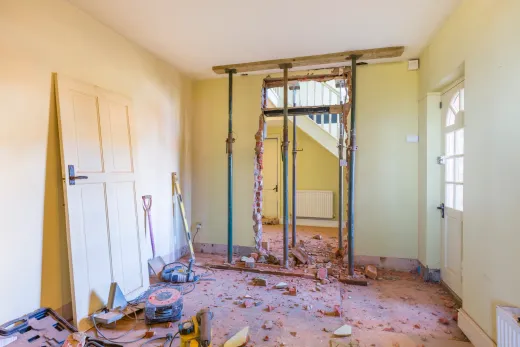
Width and trajectory matter more than length. A long stable hairline is boring; a short crack you can catch a fingernail in that widened noticeably since last year is not. In practice, anything wider than a few millimetres and still moving gets referred to a structural engineer before we repair it — the same discipline we apply when a client wants a load-bearing wall removed. An assessment is a few hundred dollars; skipping one and burying a real problem behind fresh paint costs far more.
Why Painted-Over Cracks Come Back
The most common repair we redo is the crack someone filled with painter's caulk or a smear of compound and rolled over. It looks fine for a season, then telegraphs straight back through — often before the one-year mark.
The reason is simple: a crack is a movement joint the house created for itself. Paint and unreinforced filler have almost no tensile strength, so the next winter's shrinkage cycle reopens the line exactly where it was. Caulk is worse in its own way — it stays flexible but shrinks back and flashes through paint as a shiny, dimpled stripe you can see in raking light.
Old plaster adds another failure mode. In Riverdale, Leslieville, and other pre-war neighbourhoods, cracked plaster is often loose from its lath behind the crack. Filling the surface without reattaching or removing the loose material means the repair is floating on rubble. Any patch is only as good as what it is anchored to, which is why a proper crack repair starts with opening the crack up, not covering it.
Repairs That Last: Tape, Mesh, and Flexible Compounds
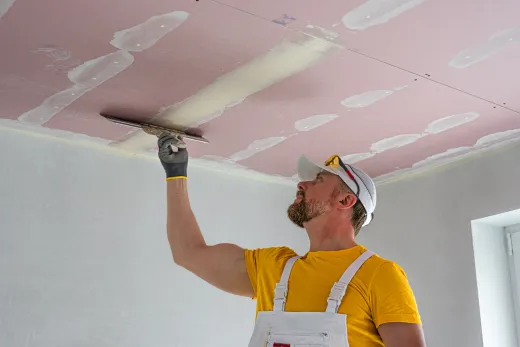
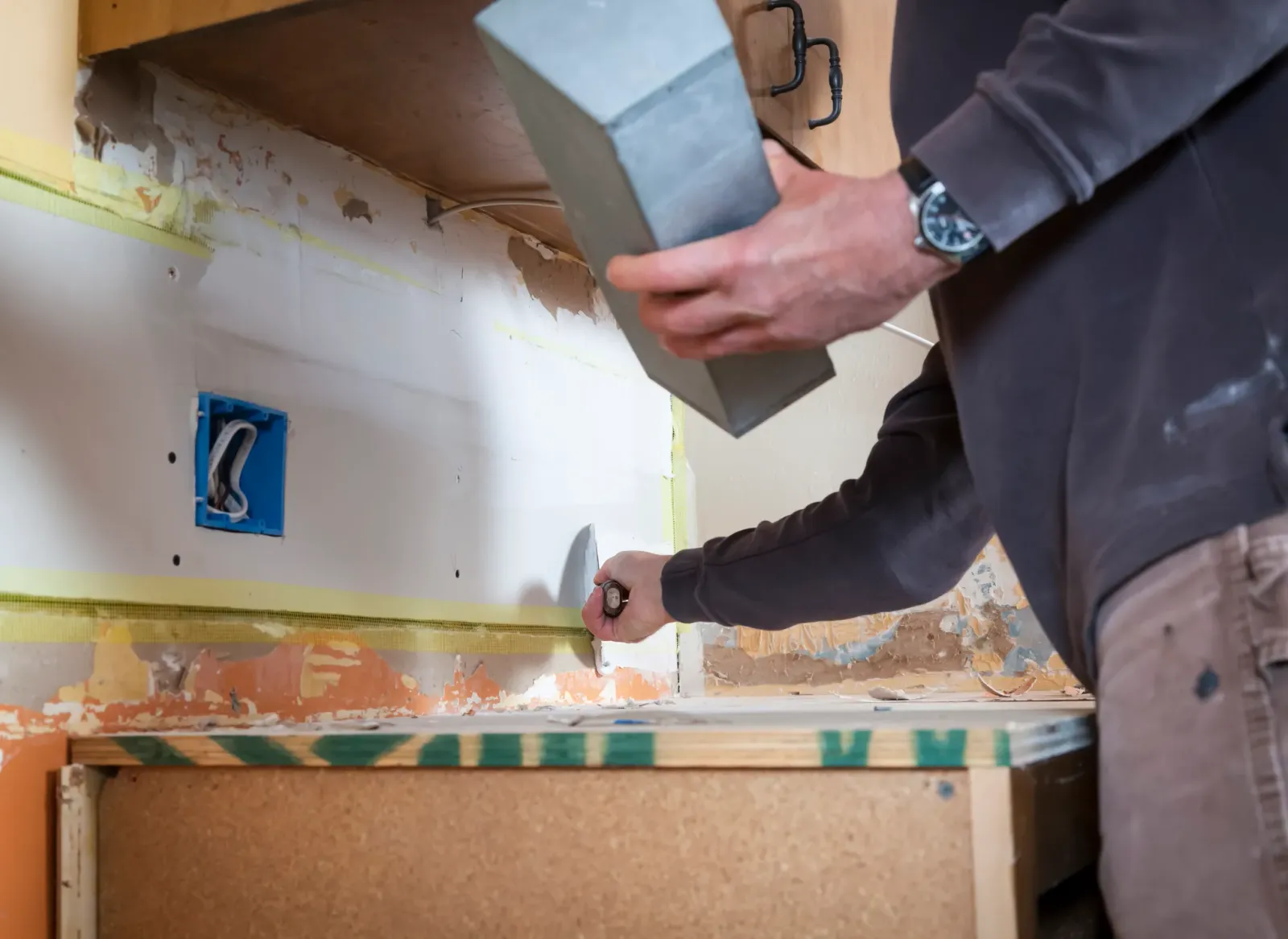
A drywall crack repair that holds has three ingredients: the crack gets opened and cleaned back to sound material, the joint gets bridged with reinforcement — paper tape or fibreglass mesh, not bare filler — and the compound gets built up in thin coats feathered wide enough to disappear. For recurring seasonal cracks we use setting-type compound for strength, and on stubborn ceiling lines a flexible crack-bridging system rather than standard mud.
Properly done, this is affordable work. Taping and mudding in the GTA runs roughly $1.75–$3.75 per square foot as of 2026, and a typical room's worth of crack repair is a small job — often bundled with a repaint, since a patch always needs priming and two coats to vanish. Where a wall is a mess of old patches, a full skim coat and repaint resets the whole surface.
One caution on older homes: textured ceilings and some plaster and compound in houses built before about 1990 can contain asbestos. We test before sanding or scraping suspect material — lab tests run a few hundred dollars and settle the question.
New-Build Settling vs Old-Home Movement: How to Decide
Context changes the diagnosis. In Milton's post-2001 subdivisions — Hawthorne Village, Beaty, Willmott — and in newer Vaughan and Markham builds, cracks and nail pops in the first two or three years are almost always framing lumber drying and the house settling onto its footings. Builders expect it; the sensible move is to let the first heating seasons pass, then repair everything in one round. In a 1920s Hamilton or Toronto house, a fresh crack means something changed in a building that finished settling generations ago — recent excavation next door, a chronically wet corner of the foundation, or a renovation that removed the wrong stud wall.
Our rule of thumb: photograph the crack beside a tape measure, date it, and check it across one full winter-summer cycle. Stable hairline on a seam — repair it once, properly, and move on. Growing, stepped, displaced, or accompanied by sticking doors — engineer first, drywall second. If the cracks are one symptom of a house that needs broader work, it is worth understanding what a full home renovation costs in Toronto before patching piecemeal. Our home renovation team repairs the cause and the cosmetics in the same project, and a quote is free.
Ready to start your renovation?
Our team is here to help you bring your vision to life. Get a free, no-obligation quote today.
Get Free QuoteFrequently Asked Questions
Clear answers to the questions Ontario homeowners ask most.