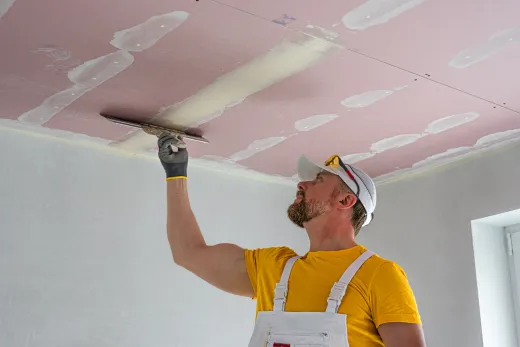
Drywall is priced by the square foot of board, not floor — and the finishing level decides more of the bill than the board itself. Here is what GTA homeowners pay in 2026, room by room.
What Drywall Costs Installed and Finished in the GTA
As of 2026, drywall in the Toronto area runs roughly $1.80–$4.50 per square foot installed — hung, taped, mudded, and sanded ready for primer. For a standard residential job finished to the normal paint-ready standard (Level 4), budget $3.00–$4.50 per square foot. The low end of the wider range reflects large, simple commercial-style areas; typical house renovations land in that $3.00-plus band once ceilings, corners, and real-world site conditions are included.
Two pricing facts save the most confusion. First, drywall is priced per square foot of board surface — walls plus ceilings — not per square foot of floor. A 12x12 bedroom has 144 square feet of floor but well over 500 square feet of drywall. Second, the sheet itself is the cheap part: standard half-inch board retails around $11–$15 per 4x8 sheet, or roughly $0.40–$0.65 per square foot. Everything else is labour and finishing, which run $1.40–$3.85 per square foot depending on complexity.
Location nudges the number too. Downtown Toronto trades typically carry a 10–20% premium over the regional average, while Mississauga and Brampton often price 5–10% below Toronto rates. Most quotes exclude 13% HST — always confirm before comparing.
How the Pricing Breaks Down: Board, Hang, Tape, Sand
A drywall quote bundles four stages, and knowing the split helps you read it.
- Materials: standard 1/2" board about $0.40–$0.65/sq ft; moisture-resistant "green board" for bathrooms and laundry areas costs roughly double at $24–$30 per sheet; screws, tape, and compound add a little more.
- Hanging: cutting and screwing board to studs and ceilings — the fastest stage, but the one where quality framing shows. Bowed studs telegraph through forever.
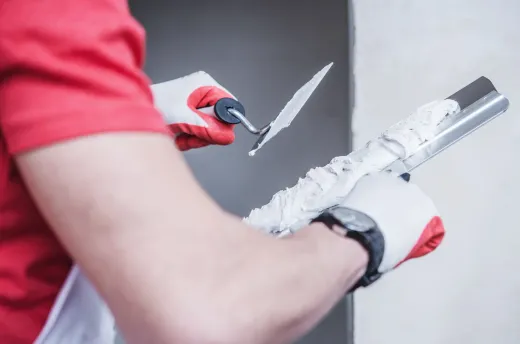
- Taping and mudding: embedding tape in every seam and corner, then two to three progressively wider coats of compound with drying time between each. If you already have board up, taping-only work prices at $1.75–$3.75 per square foot.
- Sanding: the dusty final pass that turns compound into a paint-ready plane.
The drying time is why drywall controls renovation schedules. Each coat of compound needs to dry before the next, so even a small room is a three-to-five-day process no crew can honestly compress — humid GTA summer weeks stretch it further. When a quote seems high, it is usually pricing the three return visits taping actually takes, and when one seems impossibly low, it is often pricing one thick coat and a fast sand, which shows at the first raking light. It is a classic example of why quotes vary so much between contractors.
Finishing Levels 3–5: What Each Costs and Where It Belongs
Drywall finishing has an industry-standard scale, and the level you specify moves real money.
Level 3 leaves seams taped with two coats but not fully feathered — acceptable only where heavy texture or tile will cover the surface. Garages and mechanical rooms live here.
Level 4 is the standard residential finish: all seams and corners taped, three coats, sanded smooth. Under flat or matte paint in normal lighting, Level 4 looks clean. This is what the $3.00–$4.50 installed range buys and what most GTA homes should get.
Level 5 adds a full skim coat of compound across the entire surface, not just the seams. It costs about $1.00–$1.50 per square foot extra and 30–50% more finishing time, with skim labour alone at $2.50–$3.50 per square foot. Where it earns its keep: walls washed by raking light from big windows, ceilings under pot lights, feature walls in eggshell or any glossier sheen, and dark paint colours that spotlight every seam ridge. On a Level 4 wall grazed by afternoon sun, you can often see exactly where every joint runs; Level 5 makes the wall read as one plane.
Our honest rule: Level 4 everywhere by default, Level 5 for the great-room ceiling, the sun-washed wall, and anywhere semi-gloss or dark colour is planned. Paying for Level 5 in a carpeted spare bedroom is money the room will never show you.
Room Examples: Bedroom, Basement, Whole Floor
Applying 2026 rates to real rooms makes the ranges concrete. These assume standard 8-foot ceilings and a Level 4 finish at $3.00–$4.50 per square foot installed.
A 12x12 bedroom carries roughly 380 square feet of wall and 145 of ceiling — call it 500–550 square feet of board after openings. That is about $1,600–$2,400 hung, taped, and sanded. Small rooms can price above the per-foot range because setup and return trips are fixed; nobody boards one bedroom at bulk rates.
A 700-square-foot basement typically needs 1,700–2,000 square feet of board once perimeter walls, partition walls (both faces), and ceilings are counted — roughly $5,000–$9,000 of the project. Basements add wrinkles: strapping or framing around ducts, bulkheads, moisture-resistant board near laundry, and access stairs that slow board delivery. Within a full basement renovation, drywall is usually the second-biggest interior line after framing and electrical, and our basement cost guide shows where it sits in the total.
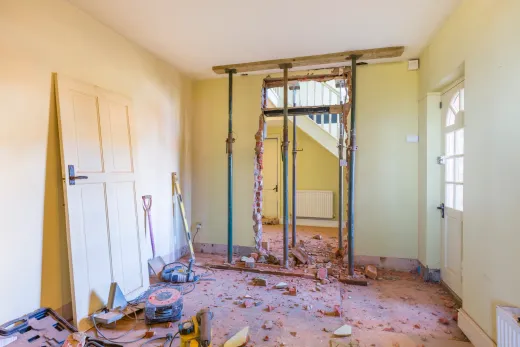
A whole main floor opened up during a renovation — say 1,000 square feet of floor area — commonly involves 2,500–3,000 square feet of board and lands in the $8,000–$13,000 neighbourhood, more with Level 5 ceilings. At that scale the per-foot rate improves, which is one reason gut renovations cost less per square foot of drywall than patchwork jobs.
Ceilings, Curves, and Access: The Price Modifiers
Several conditions push drywall pricing toward — or past — the top of the range, and they are worth flagging before quotes arrive so nobody is surprised.
Ceilings cost more than walls. Overhead hanging is slower and harder on the crew, ceiling board is often heavier or thicker to prevent sag between joists, and taping a ceiling to a flat, shadow-free standard under pot lights is genuinely skilled work. Vaulted and two-storey spaces add staging: a foyer ceiling 17 feet up needs scaffolds, and the setup time bills like the work itself.
Curves, arches, and bulkheads multiply cutting and taping time — every curved bulkhead in a basement hides an hour of fussy work. Old-house conditions matter too: in Toronto's pre-1960 housing stock, crews routinely find out-of-plumb walls and sagging ceiling joists that need shimming or strapping before board goes up, and in homes built before about 1990, existing finishes being demolished may contain asbestos — test before disturbing, because abatement is a separate licensed scope.
Finally, logistics. Downtown streets with no parking, third-floor walk-ups, and condo elevator bookings all add handling time for 4x8 or 4x12 sheets. These are the quiet reasons renovation costs climb between the estimate and the final invoice when they are not scoped up front.
Judging Drywall Quotes and Crews
Drywall is the surface you will stare at for decades, and the difference between crews only becomes visible after paint. Here is how to compare quotes intelligently.
A proper quote states the square footage of board, the finishing level (ask for Level 4 in writing, Level 5 where specified), the board types by room — moisture-resistant in bathrooms and laundry — and whether sanding, dust containment, and debris disposal are included. If one number is a lump sum with no area or level, you cannot compare it to anything.
When you check references, ask to see a finished ceiling in daylight, not a wall in photos. Ceilings under natural light are where taping skill shows or doesn't. Ask how many coats they run on seams (three is the honest answer for Level 4) and how they handle dust — plastic containment and vacuum-assisted sanders are the difference between renovation dust in one room and in every duct in the house.
When drywall makes sense as a standalone hire: single-room repairs and simple basement re-boards. When it belongs inside a bigger contract: any project involving framing, electrical, plumbing, or insulation, because drywall closes the walls — and the moment board goes up, everything behind it is final. We coordinate that sequencing on every home renovation we run, and we are happy to give you a number for yours through our contact form. Quotes are free.
Ready to start your renovation?
Our team is here to help you bring your vision to life. Get a free, no-obligation quote today.
Get Free QuoteFrequently Asked Questions
Clear answers to the questions Ontario homeowners ask most.