Behind the trim of a Cabbagetown or Riverdale semi sits wood lath, coats of plaster, and usually a surprise or two. Repair, overboard, or gut comes down to wiring, insulation, and budget.
What's Actually in Your Century Home's Walls
Quick answer first: sound plaster is worth repairing, cracked-but-attached plaster is often worth overboarding with drywall for $1.80 to $4.50 per square foot installed, and a full gut only pays when wiring or insulation forces the walls open anyway — at which point rewiring alone can run $15,000 to $35,000.
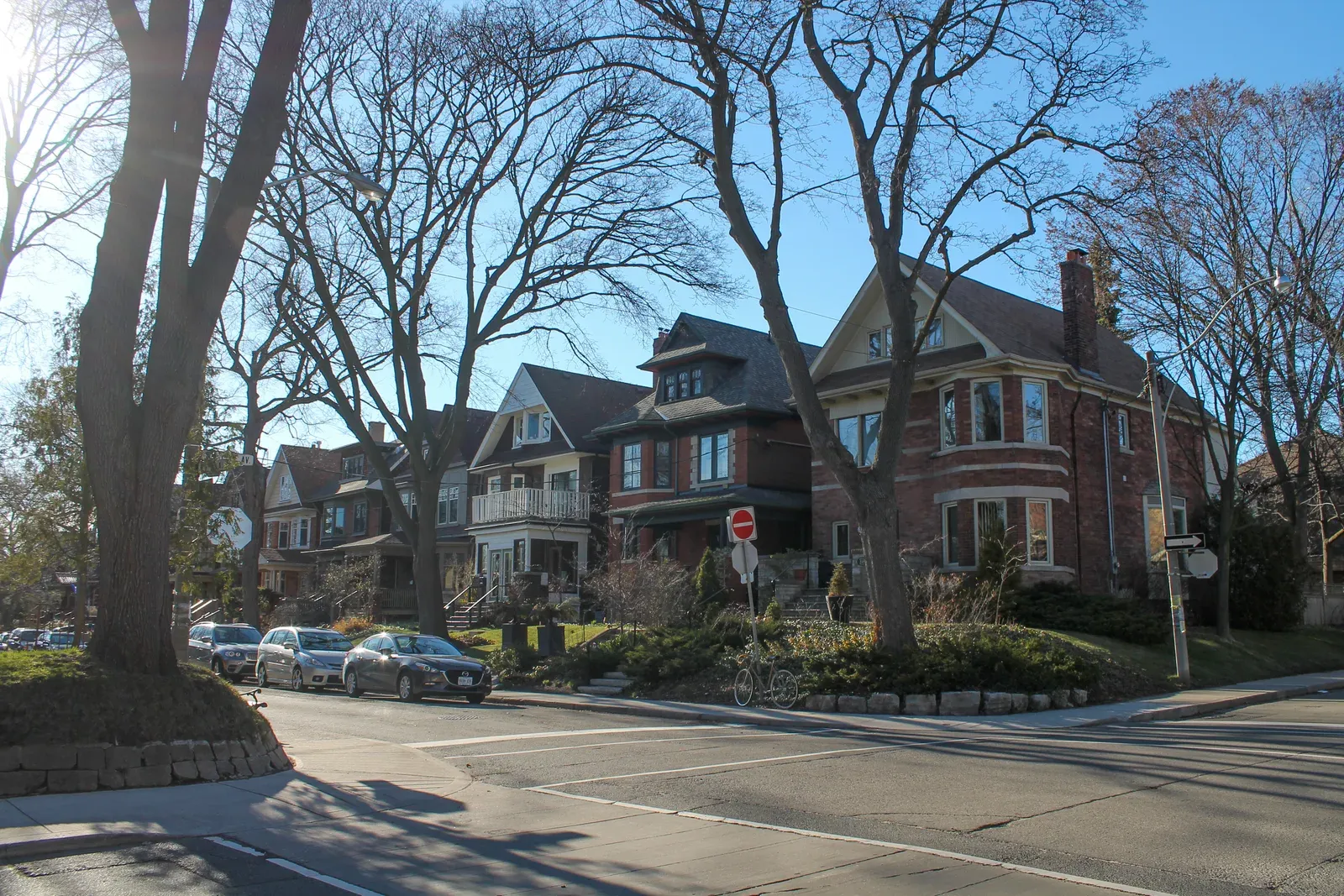
Toronto's Victorian and Edwardian rows — Cabbagetown, Riverdale, Leslieville, Parkdale, Trinity-Bellwoods, the Annex — went up roughly between 1880 and 1915. The walls are double-brick with no cavity insulation, finished inside with wood lath nailed across the studs and two or three coats of plaster pressed into it. The plaster keys — the blobs squeezed between lath strips — are what hold everything up.
Inside those walls, expect company: knob-and-tube wiring was standard in Ontario from about 1900 into the late 1940s, and it hides in ceilings and walls even in houses with modern panels. Pre-1960 painted surfaces can carry lead paint. None of this decides the plaster question by itself, but all of it shapes which of the three paths makes sense for your house.
Plaster's Virtues: Mass, Sound, and Character
Plaster gets dismissed as an obstacle, which is unfair. A three-coat plaster wall is dense — noticeably denser than half-inch drywall — and that mass blocks sound. Anyone who has lived in a Victorian semi knows the party wall between houses is remarkably quiet compared with a wood-framed wall in a newer build. The interior walls benefit the same way.
Plaster also carries the character buyers pay for in these neighbourhoods: gentle undulations that read as age rather than flaw, original crown and medallions bonded to it, curved archways that would be fussy to replicate in board. Rip all of it out and a century home can end up feeling like a new build wearing an old brick coat.
Even the cracks tell you things. Fine map cracking is usually just old finish coat. Diagonal cracks radiating from door and window corners track seasonal movement. A long crack with one edge proud of the other means the plaster has separated from its lath — a mechanical failure, and the signal that repair needs to go beyond filler. Reading the crack pattern honestly is the first step in choosing a path, and it is something we assess in person before quoting any home renovation in Toronto.
Repairing Plaster: Washers, Adhesive, and Skim Coats
Where plaster is mostly sound, repair is the cheapest and least disruptive path — and the right one for heritage interiors. If your house sits in a Heritage Conservation District, exterior rules get most of the attention, but keeping original interior fabric also preserves value; our note on renovating heritage properties in Toronto covers how the approvals side works.
The repair toolkit is well proven:
- Plaster washers — perforated discs screwed through loose plaster into lath or studs, pulling delaminated sections tight again before compound hides the hardware.
- Adhesive reattachment — injectable adhesive bonds separated plaster back to its lath, used where washers alone will not close the gap.
- Patching — failed sections cut back to sound edges and filled, either with setting compound or a drywall inlay shimmed flush.
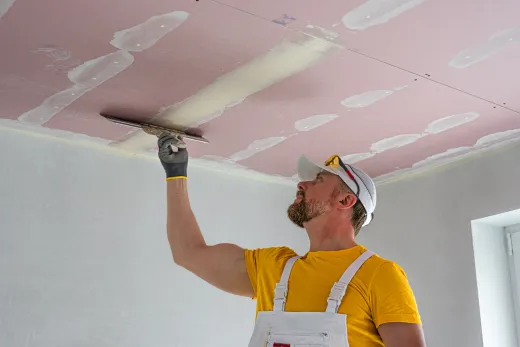
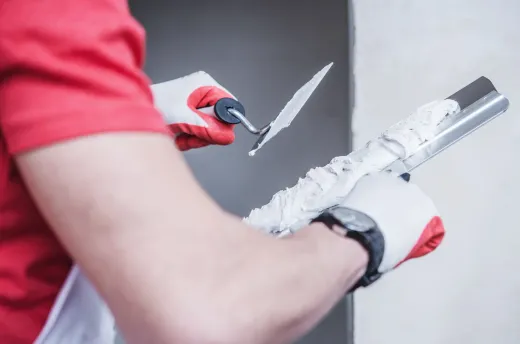
- Skim coating — a tight coat of compound over the repaired wall, restoring one continuous surface. Skim labour typically runs $2.50 to $3.50 per square foot as of 2026.
A repaired, skimmed plaster wall takes paint beautifully and keeps its acoustic mass. The limitation is scope: repair assumes the wall is staying closed. The moment electrical or insulation work needs access, the calculus changes.
Overboarding: Drywall Over Plaster, Done Right
Overboarding — screwing new drywall over the existing plaster — is the middle path, and in our experience the most common choice for main living areas in these houses. The plaster stays as a substrate, keeping its mass and its sound performance, while the new board delivers dead-flat modern surfaces on top. Installed drywall runs $1.80 to $4.50 per square foot in Toronto, and overboarding avoids most of the demolition, dust, and disposal of a gut.
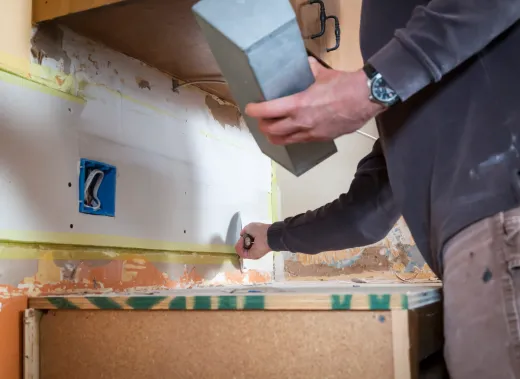
Done right, it means more than screwing sheets to a wavy wall. Screws must reach the studs behind the lath, not just the plaster. Genuinely loose sections get secured or removed first so the new board is not hanging on failing material. Electrical boxes get extended to the new wall depth. Trim either comes off and goes back on, or the board is fitted to it — and in rooms with original casings and baseboards, careful trim handling is where the craft shows.
The trade-offs are honest ones: you lose roughly half an inch of room dimension per wall, door jambs may need extension, and anything buried in the wall stays buried. Overboarding is a commitment to not opening that wall again soon — so settle the wiring question first.
Full Gut: When Wiring and Insulation Force the Issue
Sometimes the walls have to open regardless of how the plaster looks. The two usual reasons are electrical and thermal.
Insurers now routinely refuse or cancel coverage on active knob-and-tube, and some demand certified removal within 30 to 90 days of a purchase. Selective remediation runs $5,000 to $15,000; a substantial rewire of a typical house runs $15,000 to $35,000 with the ESA permit — plus wall repair afterward. If a rewire is touching most rooms anyway, keeping the plaster can mean paying twice: once to fish wire around it, again to fix the damage.
Uninsulated double-brick is the other driver. These walls have no cavity, so insulating from inside means strapping or framing inward — which requires the plaster to come off. In a house that is cold along every exterior wall each February, a gut of the exterior walls (often leaving interior partition plaster alone) can be the move that finally fixes comfort.
A gut also triggers process: removing or altering walls, moving plumbing, or changing room layouts needs a permit, and our guide to building permits in Toronto walks through timelines and 2026 fees. Budget for surprises behind century walls — a 10 to 20 percent contingency is not pessimism here, it is pattern recognition.
Cost Comparison and How to Decide
As of 2026, here is how the three paths compare on a per-room basis for a typical Toronto century home. Repair and skim is the least expensive where plaster is fundamentally sound — skim labour at $2.50 to $3.50 per square foot plus repair work, no demolition, minimal disposal. Overboarding lands in the middle: board and finishing at $1.80 to $4.50 per square foot installed, over walls that mostly stay put. A full gut costs the most by far once you stack demolition and disposal, any hazmat handling, rewiring, insulation, new board, and trim reinstatement — it is the path where whole-home renovation math ($150 to $400 per square foot for a standard full renovation) starts to apply.
Our decision shorthand: repair where the plaster is sound and the room's systems are staying; overboard where surfaces have failed cosmetically but wiring is modern and walls can stay closed; gut where knob-and-tube, insulation, or layout changes mean the walls are opening anyway. Most of the century homes we work on end up with a mix — gutted exterior walls, overboarded ceilings, repaired original plaster around the stair.
For the bigger budget picture, see what home renovations cost in Toronto, and watch for the soft costs that catch owners of older homes. If you want a room-by-room verdict on your walls, request a free quote — we have been reading Toronto plaster since 2004.
Ready to start your renovation?
Our team is here to help you bring your vision to life. Get a free, no-obligation quote today.
Get Free QuoteFrequently Asked Questions
Clear answers to the questions Ontario homeowners ask most.