Fixed-Price vs Cost-Plus Renovation Contracts Explained
The contract model decides who pays when a GTA renovation hits a surprise behind the drywall. Here is how fixed-price and cost-plus actually work — and which fits your house and scope.
How Fixed-Price and Cost-Plus Contracts Actually Work
A fixed-price contract gives you one number for a defined scope: drawings and specifications go in, a total price comes out, and the contractor carries the risk of estimating labour and materials correctly. A cost-plus contract bills the actual cost of labour, materials and subtrades plus an agreed contractor fee — you see every invoice, and you carry the risk of what the project actually costs.
For most GTA renovations — a kitchen, a bathroom, a finished basement, a defined whole-home scope in a newer house — fixed-price is the right default. You can compare bids, arrange financing against a known number, and hold both schedule and price to the contract. Cost-plus earns its place on discovery-heavy projects: century-home guts where nobody honestly knows what the walls hide, and projects where the scope will evolve as spaces open up.
Neither model is a trick. Each simply places the same risk in a different set of hands, and the right choice depends on how much of your project is genuinely knowable before demolition day.
Who Carries the Risk When a Wall Opens on Knob-and-Tube
Here is the scenario that tests every contract. Demolition opens a wall in a 1920s Riverdale semi and finds live knob-and-tube wiring. A substantial rewire runs $15,000–$35,000 as of 2026, and it is not optional — insurers routinely refuse or cancel coverage on active K&T, and some demand certified removal within 30–90 days of a purchase.
Under cost-plus, the answer is mechanical: the rewire is a cost, you pay it, the fee applies, and work continues.
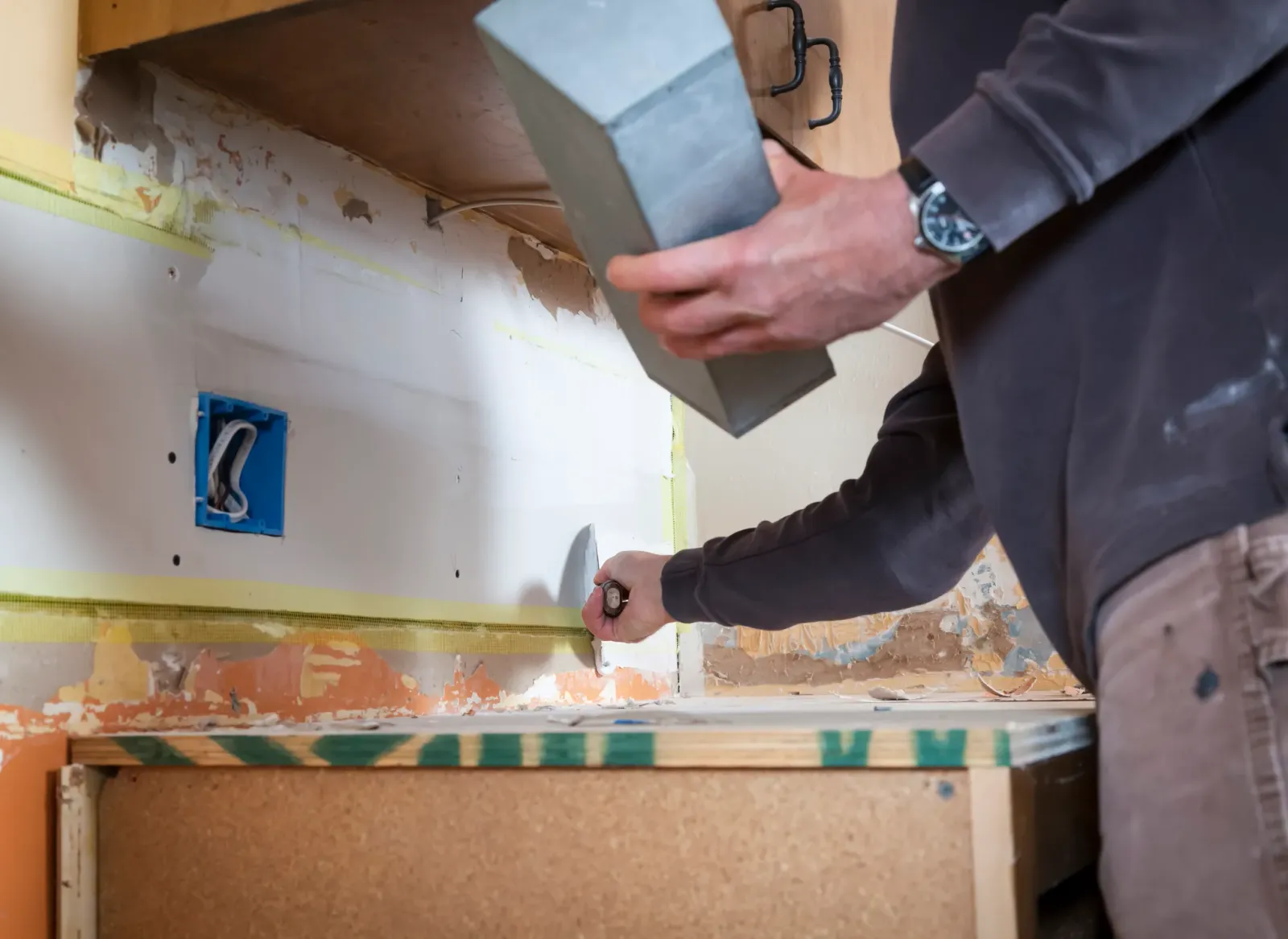
Under fixed-price, read the concealed-conditions clause. No reputable contractor's fixed price includes conditions that could not be seen — hidden wiring, asbestos, rot, undersized framing. Those come back as change orders priced at the time of discovery. A fixed price is certainty about the visible, specified work; it is not insurance against your house's history.
The rest of the pre-1990 list behaves the same way: asbestos testing runs $300–$800 and typical certified abatement projects run $3,000–$12,000. In an older home the real question is not which contract avoids these costs — neither does — but which one handles them with less friction.
Change Orders, Allowances and Contingencies Under Each Model
Three mechanisms manage uncertainty in any renovation contract:
- Change orders — written, priced amendments covering scope changes and concealed conditions. Under fixed-price they are the formal pathway for anything outside the contract; here is how a change order works. Under cost-plus, changes flow through actuals, but you should still require written approval above a set dollar threshold.
- Allowances — placeholder budgets for unselected items like tile or plumbing fixtures. Watch these closely in fixed-price bids: a lowball tile allowance makes a total look cheap and quietly guarantees an overage later.
- Contingency — your reserve, not the contractor's. We recommend 10–20% of the budget, toward the higher end for pre-1990 homes.
The practical difference between models: under fixed-price, uncertainty arrives as discrete, negotiated change orders. Under cost-plus, it arrives continuously through invoices — smoother, but only as safe as your reporting rhythm. Insist on weekly cost tracking against the estimate, or a cost-plus project can drift a long way before anyone says the running total out loud.
When Fixed-Price Wins: Defined Scopes and Newer Homes
Fixed-price is the better tool when the scope is knowable. That means finished drawings and a written specification before signing — brands, models, tile lines, the works — and a house young enough to hold few secrets. Post-1990s Vaughan subdivisions, Milton's post-2001 neighbourhoods, Markham's 2000s builds: no knob-and-tube, no asbestos-era finishes, predictable framing. An experienced contractor can price these tightly, and you get to hold them to it.
It is also the right model when your financing needs a fixed number, or when you are comparing multiple bidders — cost-plus proposals are nearly impossible to compare because the fee structure tells you nothing about the final total.
One caution from two decades of quoting: the lowest fixed price on a vague scope is the most expensive contract in renovation. When the specification is thin, bidders fill the gaps with their own assumptions, which is why quotes vary so widely between contractors. Nail the scope down first; then fixed pricing works exactly the way it should.
When Cost-Plus Wins: Century Homes and Discovery-Heavy Guts
Cost-plus earns its keep where honesty about uncertainty beats false precision. A century home in Cabbagetown or Hamilton's Durand being taken to the studs will surprise everyone — wiring, plumbing, framing repairs, hazmat. A contractor forced to fix-price that project must pad heavily for risk, and if the surprises never materialize, you paid for them anyway. Under cost-plus you pay for what the house actually needed, plus a transparent fee.
It also suits owners who want to make design decisions as spaces open up, and clients who value line-item visibility into every invoice over a single guaranteed number.
For older houses we often recommend a hybrid: cost-plus — or a paid investigation phase — through demolition, then a conversion to fixed price once the structure is exposed and the unknowns are known. You get honest discovery pricing where it matters and a firm number for the predictable finishing half of the renovation. Many of our pre-war projects run exactly this way, and both sides sleep better for it.
Contract Clauses to Demand Either Way
Whatever the model, the paper protects you more than the price does. Insist on a written scope and specification, even under cost-plus. A payment schedule tied to completed milestones, never the calendar — and a normal Ontario deposit, not an outsized one. A written change-order process with signatures before extra work proceeds. Proof of liability insurance and WSIB clearance. A workmanship warranty in writing — ours is 2 years. And under cost-plus specifically: a defined fee, a list of exactly what counts as reimbursable cost, and regular cost reporting against the estimate.
Our advice after 20+ years of GTA renovations: choose fixed-price for defined scopes in newer homes, cost-plus or a hybrid for discovery-heavy older houses — and put more energy into what the contract includes than into which model it uses. We quote both ways depending on the house in front of us. Call (416) 995-7855 or request a free quote, and we will recommend the structure that actually fits yours.
Ready to start your renovation?
Our team is here to help you bring your vision to life. Get a free, no-obligation quote today.
Get Free QuoteFrequently Asked Questions
Clear answers to the questions Ontario homeowners ask most.