A full gut renovation in the GTA runs $400–$550+ per square foot in 2026 once design, permits and HST are counted. Here's what that buys, where budgets blow up, and how the HST rebate claws some back.
What Counts as a Gut Renovation (and What $400+/sq ft Buys)
A gut renovation strips a house back to structure — studs, joists, foundation — and rebuilds everything: wiring, plumbing, HVAC, insulation, drywall, and all finishes. In the GTA in 2026, that work starts around $400 per square foot and typically runs $450–$550+ once design fees, permits, and HST are included. On a 2,000 sq ft house, that is roughly $800,000 to $1.1 million at the high end; broader full-renovation totals span $300,000–$800,000 depending on how deep the scope goes.
The number sounds brutal until you itemize what it replaces: a new electrical service and full rewire, a complete replumb, new mechanical systems, insulation brought to current code, and every surface in the house new. You are effectively buying a new home inside an existing shell — which is also why the tax system treats it that way, as the rebate section below explains.
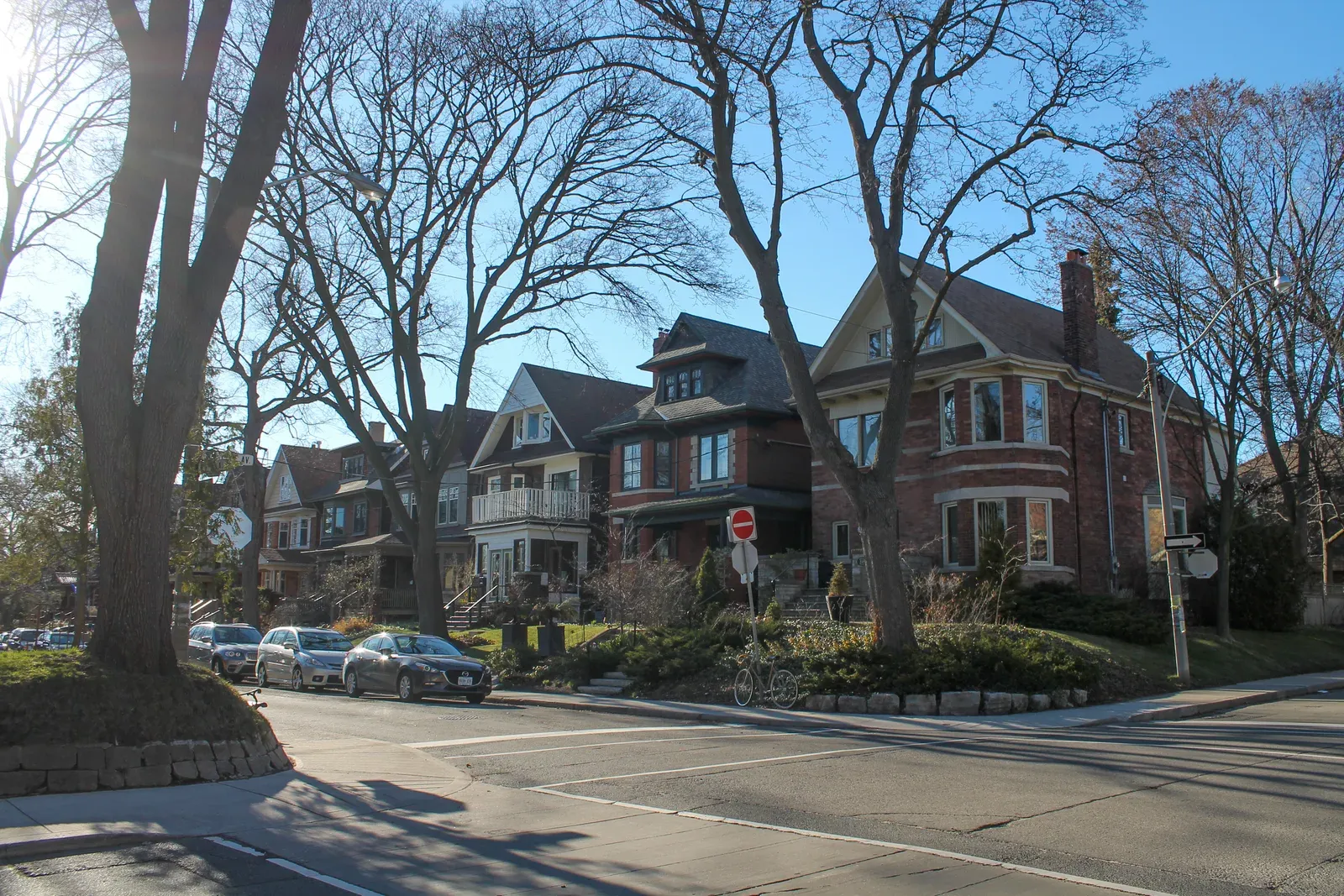
Most gut candidates in the GTA are pre-1960 stock: Victorian and Edwardian rows in neighbourhoods like Riverdale, Leslieville, and Parkdale, or wartime houses in East York, where decades of partial renovations have left layers no cosmetic scope can fix.
2026 Per-Square-Foot Tiers: Cosmetic, Standard and Full Gut Compared
- Cosmetic refresh (paint, flooring, fixtures, no layout changes): $60–$150/sq ft
- Standard full renovation (kitchen, bathrooms, finishes, some walls moved): $150–$400/sq ft
- Full gut (back to structure, all systems new): $400–$550+/sq ft
What moves a project up a tier is rarely the finishes — it is systems and structure. Labour alone runs 30–50% of a typical budget, and a gut maximizes labour: full demolition, rough-ins for every trade, inspections at each stage, then a complete finishing pass through the whole house. Toronto also runs roughly 15–20% above the Ontario average for renovation costs, so identical scopes price differently by postal code. If a gut is more than your house needs, our home renovation cost guide breaks the middle tier down room by room.
Where Gut Budgets Blow Up: Hazmat, Structure and Services
Hazmat discovery mid-renovation is the single most common budget-buster in pre-1990 GTA homes. The big line items at 2026 rates: certified asbestos abatement typically $3,000–$12,000 (test before demolition — lab work runs $300–$800); a substantial knob-and-tube rewire $15,000–$35,000 in pre-1950s houses; galvanized-pipe replacement $2,000–$15,000. And in pre-1955 Toronto neighbourhoods, check the water service — the City replaces its side of a lead line free under its priority program, but the private side runs $1,500–$3,500.
Structure adds its own zeros. Basement underpinning for ceiling height prices at $350–$480 per linear foot in Toronto, and every load-bearing change needs engineered beam design before a permit will issue. This is why we hold a 10–20% contingency on every gut and recommend you do the same — and why the hidden soft costs of a Toronto renovation deserve their own line before construction ever starts.
Old houses hide moisture history too: double-brick walls with no cavity insulation and low basements mean water issues surface the moment demolition opens things up. Put waterproofing in the base scope, not the contingency.
The HST Substantial Renovation Rebate: Up to $24,000 Back
Here is the offset most homeowners miss. If at least 90% of your home's interior is removed or replaced — the CRA's "90% test" — the project counts as a substantial renovation and qualifies for the GST/HST New Housing Rebate. The Ontario portion returns 75% of the 8% provincial HST, capped at $24,000, regardless of the home's market value. The federal portion tops out at $6,300 but only applies where post-renovation value is under $450,000, so it rarely helps in the GTA. You have two years from substantial completion to file, and an addition alone does not qualify — gutting the existing house is what triggers eligibility.
New for 2026: the Ontario Budget announced an Enhanced New Housing Rebate of up to $80,000 for new or substantially renovated homes valued up to $1.5 million, tied to construction starting between April 2026 and March 2027. It is announced policy with administrative details still settling — talk to an accountant before you build it into your financing. Either way, keep every invoice and permit record from day one — the claim rises or falls on documentation.
Gut vs Standard Renovation: When Stripping to Studs Pays Off
A gut earns its cost when the systems are due anyway. Pre-1960 houses carrying the full stack — old wiring, galvanized or lead plumbing, zero wall insulation, tired plaster — often cost nearly as much to renovate gently as to gut, because every room you open reveals work you cannot legally or sensibly ignore. Gutting once also means one permit package, one mobilization, and insulation and air sealing done properly behind brand-new walls instead of piecemeal.
Stick with a standard renovation when the bones are genuinely sound: post-1980 homes with copper wiring, adequate panels, and dry basements rarely justify demolition to the studs. In that case, put the difference into the kitchen and bathrooms you touch every day — the rooms that actually change how the house lives.
There is a middle path worth pricing too: gut the worst floor and renovate the rest to standard tier. It is a common answer in houses where a previous owner already updated one level properly.
Timeline, Cash Flow and Your Next Step
Plan the money before the demolition. Toronto interior-alteration permits typically clear in 4–6 weeks with complete drawings, and 8–14 weeks when files bounce; the build itself runs several months, gated by mandatory inspections at plumbing rough-in, framing, insulation, and final. Payments should track construction milestones, never large up-front sums — here is what a normal deposit and payment schedule looks like in Ontario. Most owners fund a gut through home equity, weighing a HELOC against refinancing, and you will need somewhere else to live: occupied guts are miserable for the family and slower for the trades.
If you are torn between a gut and a lighter scope, start with an assessment of the systems, not the finishes. Our Toronto home renovation team has been making that call with homeowners since 2004 — free quotes, line-item budgets, and a 2-year workmanship warranty on the result.
Ready to start your renovation?
Our team is here to help you bring your vision to life. Get a free, no-obligation quote today.
Get Free QuoteFrequently Asked Questions
Clear answers to the questions Ontario homeowners ask most.