Cabbagetown, Riverdale, Durand: century homes reward the right contractor and punish the wrong one. How to test for real old-house experience before you sign.
Why Century Homes Punish Generalist Contractors
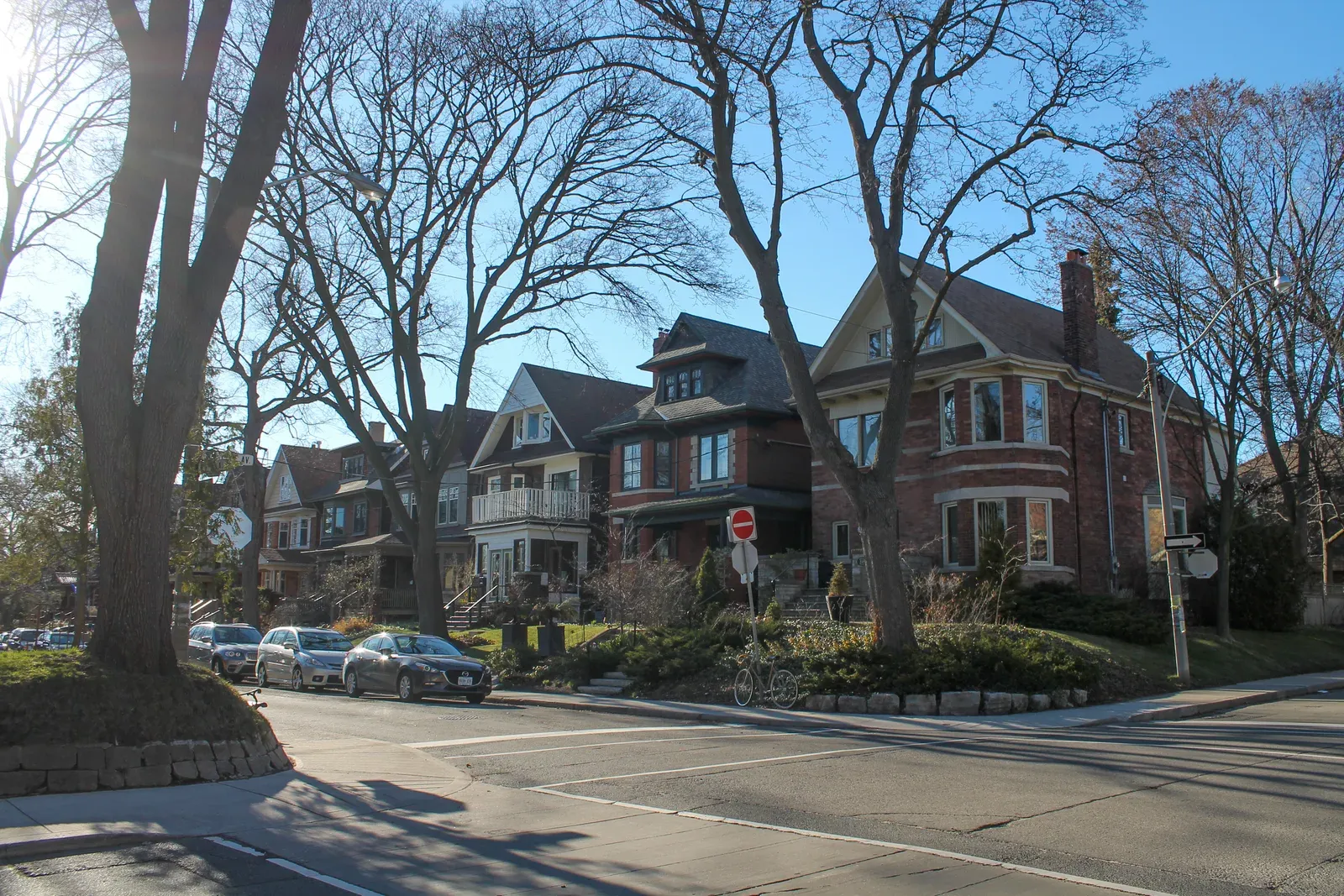
A century home renovation is a different trade practiced with the same tools. The Victorian and Edwardian rows of Cabbagetown, Riverdale, Leslieville, Parkdale, Trinity-Bellwoods and the Annex — and their cousins in Hamilton's Durand and Kirkendall, Old Oakville and downtown Georgetown — went up between roughly 1880 and 1915 with double-brick walls, plaster and lath, balloon framing, rubble or brick foundations, and basements that often clear barely six feet.
The numbers explain why experience matters. Knob-and-tube remediation runs $5,000 to $15,000 for selective work and $15,000 to $35,000 for a substantial rewire, as of 2026. Underpinning a typical Victorian semi to gain basement height lands $40,000 to $90,000 before finishing. Replacing the private side of a lead water service costs $1,500 to $3,500 — and Toronto still has roughly 30,000 to 40,000 lead services concentrated in its pre-1955 neighbourhoods.
A contractor who prices your 1905 semi like a 1995 Vaughan two-storey will either lose money and cut corners, or hit you with change orders until the budget doubles. Hiring for a century home means testing for old-house experience specifically — which is what the rest of this post covers.
Experience Checks: Plaster, Lime Mortar, Balloon Framing, K&T
Four questions separate old-house contractors from generalists.
Ask how they handle original plaster — repair, skim coat, or strip to brick and re-board, and why. The reasoning tells you whether they've actually done it. Ask about mortar: century brick is soft, and repointing with hard modern Portland mortar makes it spall, so the right answer involves lime-based mortar. Ask about balloon framing: wall cavities that run open from basement to attic need fire-blocking added during renovation, and a contractor who has opened these walls knows it before the drywaller shows up.
And ask about knob-and-tube. Insurers now routinely refuse or cancel coverage on active K&T — some demand certified removal within 30 to 90 days of a purchase — and homes renovated decades ago often hide live K&T in ceilings even with a modern panel in the basement. The proper fix ends with an ESA-inspected rewire, not a cover-up.
Bonus points if they raise what you didn't ask about: clay drains prone to root intrusion, galvanized supply pipe, 60-amp services, and the City of Toronto program that replaces the public side of a lead water service free when you replace your side.
Questions to Ask About Discovery, Contingency and Change Orders
In a century home, the real test of a contractor isn't the finish work — it's the process for what nobody can see yet.
Ask what happens when a wall comes open and reveals something ugly. The right answer has structure: work in the affected area stops, you're shown the condition, options are priced in writing, and a signed change order documents the decision before work resumes. The wrong answer is a shrug and "we'll deal with it."
Ask what contingency they'd carry on your house. For pre-1920 stock we recommend 15 to 20% — the top of the standard 10-to-20% range — because hazmat discovery mid-renovation is the single most common budget-buster in older GTA homes. Materials installed before about 1990 can contain asbestos; lab testing costs $300 to $800 and takes days, which is why suspect plaster and flooring should be tested before demolition, not after a stop-work brings the site to a halt.
Finally, ask what they'd investigate before pricing. A contractor who wants to see the panel, probe the basement walls and scope the drain before quoting is pricing your house — not a spreadsheet.
Fixed-Price vs Cost-Plus on a 100-Year-Old House
Contract structure matters more in a century home than anywhere else, because unknowns are guaranteed.
A pure fixed price sounds safest but carries a catch: to hold the number, the contractor either pads it heavily for whatever might be behind the plaster, or excludes discoveries from the scope — in which case it isn't really fixed. A pure cost-plus arrangement (actual costs plus a management fee) is transparent and fair for discovery-heavy work, but it leaves the total open-ended, which most homeowners find hard to live with.
The structure we find works best is a hybrid: fixed pricing on everything that can be seen and measured, stated dollar allowances for probable-but-unconfirmed items, and pre-agreed unit rates for discovered work — a rate for re-plastering an opened wall, a rate for rewiring found knob-and-tube. You get certainty where certainty is possible and honest pricing where it isn't.
Whatever the structure, the discipline is identical: every deviation documented in a signed change order with a price attached before the work happens. Ambiguity, not old wiring, is what wrecks century-home budgets.
Permits, Heritage Overlays and Engineered Drawings
Century homes trigger paperwork newer houses don't. Structural changes to load-bearing masonry — and in a double-brick Victorian, more walls carry load than you'd guess — need engineered drawings before Toronto will issue a permit. Underpinning to gain basement height always needs a permit and adds footing and foundation inspection stages; our answer on underpinning versus benching walks through that decision.
If the property sits in a Heritage Conservation District — common in exactly the neighbourhoods where century homes cluster — exterior alterations can need heritage approvals ahead of the building permit. Read our answer on renovating a heritage property in Toronto before falling in love with new front windows.
On timelines, budget the standard Toronto reality — about 4 to 6 weeks for a clean interior-alteration permit, 8 to 14 weeks when a file gets flagged — plus heritage lead time where it applies. A contractor experienced with century stock folds the approvals into the schedule from day one instead of discovering them in month two.
Comparing Quotes When Scopes Are Full of Unknowns
Quotes on century homes diverge wildly, and the cheapest one is usually the one that excludes the most. Compare them on structure, not just the bottom line: line-item scopes beat lump sums; a stated exclusions list beats silence; named allowances with dollar figures beat "TBD"; and a quote that mentions contingency, hazmat testing and permits was written by someone who has renovated a house like yours before.
Ask each bidder the same three questions — what's excluded, what's allowed for, and what happens on discovery — and the real price order of the quotes frequently reverses.
When a century home makes sense to renovate, it really makes sense: the lots, the brick and the neighbourhoods can't be rebuilt at any price. Our guide to choosing a renovation contractor covers the general vetting process, and if the house in question is a Toronto Victorian, an East York wartime cottage or a Durand Edwardian, we've been working in them since 2004. Get a free quote for a home renovation in Toronto — we'll tell you what we'd test before we tell you a number, at (416) 995-7855.
Ready to start your renovation?
Our team is here to help you bring your vision to life. Get a free, no-obligation quote today.
Get Free QuoteFrequently Asked Questions
Clear answers to the questions Ontario homeowners ask most.