Drywall dust is the finest debris a renovation makes, and it travels wherever air goes. Here is the containment standard a careful GTA crew should meet — and how to survive the sanding week.
Why Drywall Dust Ends Up Three Rooms Away
Sanded joint compound produces some of the finest dust on a job site — fine enough to stay airborne for hours and slip through gaps a saw's dust never finds. It does not stay where it was made. It goes wherever air goes.
In a GTA house, air goes everywhere, because nearly every home here runs forced-air heating and cooling. A furnace cycling on a January morning pulls dust into the nearest return grille and delivers it, politely, to every room in the house. That is how a basement drywall job puts white film on an upstairs dresser.
So the short answer to controlling drywall dust: containment at the room, capture at the sander, and management of the air itself — all three, not one. And the practical point for homeowners is that this is a hiring question. Careful crews build dust control into their process and their price. Careless ones make it your problem. Ask how dust will be handled before you sign, and expect a specific answer, not a shrug and a tarp.
Professional Containment: Poly, Zipper Doors, Negative Air
The containment standard we hold our own crews to looks like this. The work zone gets walled off with 6-mil poly sheeting, floor to ceiling, taped at every edge — not a bedsheet pinned across a doorway. Entry is through a zippered door in the poly, so the barrier stays sealed when nobody is passing through. Every supply and return grille inside the zone gets covered, and the system fan stays off during dusty phases so the furnace cannot act as a whole-house dust distributor.
The piece most homeowners have never seen is negative air: a fan unit with HEPA filtration that exhausts air from the work zone to the outside, usually through a window panel. With the zone under slight negative pressure, air leaks inward at every imperfect seam instead of outward. Dust physically cannot drift into the rest of the house, because the airflow will not carry it there.
On a room-scale job this takes a crew an hour or two to set up. That hour is one of the clearest visible differences between a careful contractor and a cheap one.
Vacuum-Assisted Sanding: Capture It at the Source
Containment limits where dust goes. Vacuum-assisted sanding limits how much exists in the first place.
The setup is a sanding head — pole or orbital — connected by hose to a HEPA vacuum, so the bulk of the dust is captured the instant it leaves the wall instead of clouding the room. The difference is dramatic: a room sanded conventionally is a fog you cannot see across; the same room sanded with extraction stays clear enough to work in without a mask feeling mandatory. Corners and detail spots still get some hand-sanding, so it is a reduction, not an elimination — but it is the single biggest practical improvement in drywall work in the last couple of decades.
This is worth asking about directly when comparing quotes: does the crew sand with HEPA extraction, or dry-sand and rely on cleanup afterwards? A crew that has invested in extraction equipment is telling you something about how it treats the rest of the job too. A crew that hasn't is planning to leave the fine dust to your furnace filter.
Floors, Vents, Electronics — and Anything Built Before 1990
Inside and near the work zone, protection is straightforward: floor protection board or heavy paper taped down on finished floors (loose drop cloths slide and leak), vents covered, electronics either removed or bagged — fine gypsum dust and computer fans are a bad combination.
One caution matters more than all of that. If your home dates from before about 1990, the existing materials being disturbed — old drywall compound, plaster, and especially textured or popcorn ceilings — may contain asbestos. Those sprayed ceilings are near-universal in the 1960s–80s split-levels of Scarborough, North York, and older Etobicoke. Testing is the only way to know: lab testing runs $300–$800, and a positive result means licensed abatement under Ontario Regulation 278/05, not a regular crew with a sander. For scale, ordinary popcorn ceiling removal runs about $2–$6 per square foot; asbestos abatement is a different budget entirely.
A crew that offers to "just scrape" a 1975 ceiling without asking its age is one of the classic red flags when hiring a renovation contractor. No schedule is worth spreading that dust through a family home.
Daily Cleanup Standards to Expect From a Crew
Dust control is not only equipment; it is habits, repeated daily. What you should expect from any crew working in an occupied home:
- Work zone swept or vacuumed at the end of each day — with a HEPA-filtered vacuum, since a standard shop vac blows the finest dust straight back out its exhaust.
- Poly containment inspected and re-taped as it loosens, not after it has failed.
- Walk-off mats at the zone exit, and no dusty boots wandering to the kitchen for a coffee.
- Debris bagged and staged for disposal, not piled loose in your garage.
- A quick daily check of adjacent rooms — if dust is showing up outside the zone, the containment gets fixed that day.
None of this is exotic. It is the ordinary discipline of crews that spend most of their time in occupied houses, and it is a fair thing to ask about specifically before hiring — our guide to choosing a renovation contractor covers the other questions worth asking in the same conversation.
Scheduling the Dusty Week When You're Living In
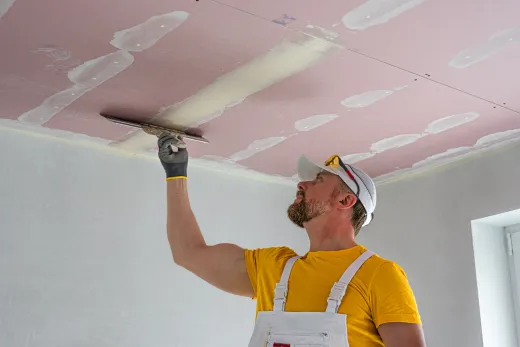
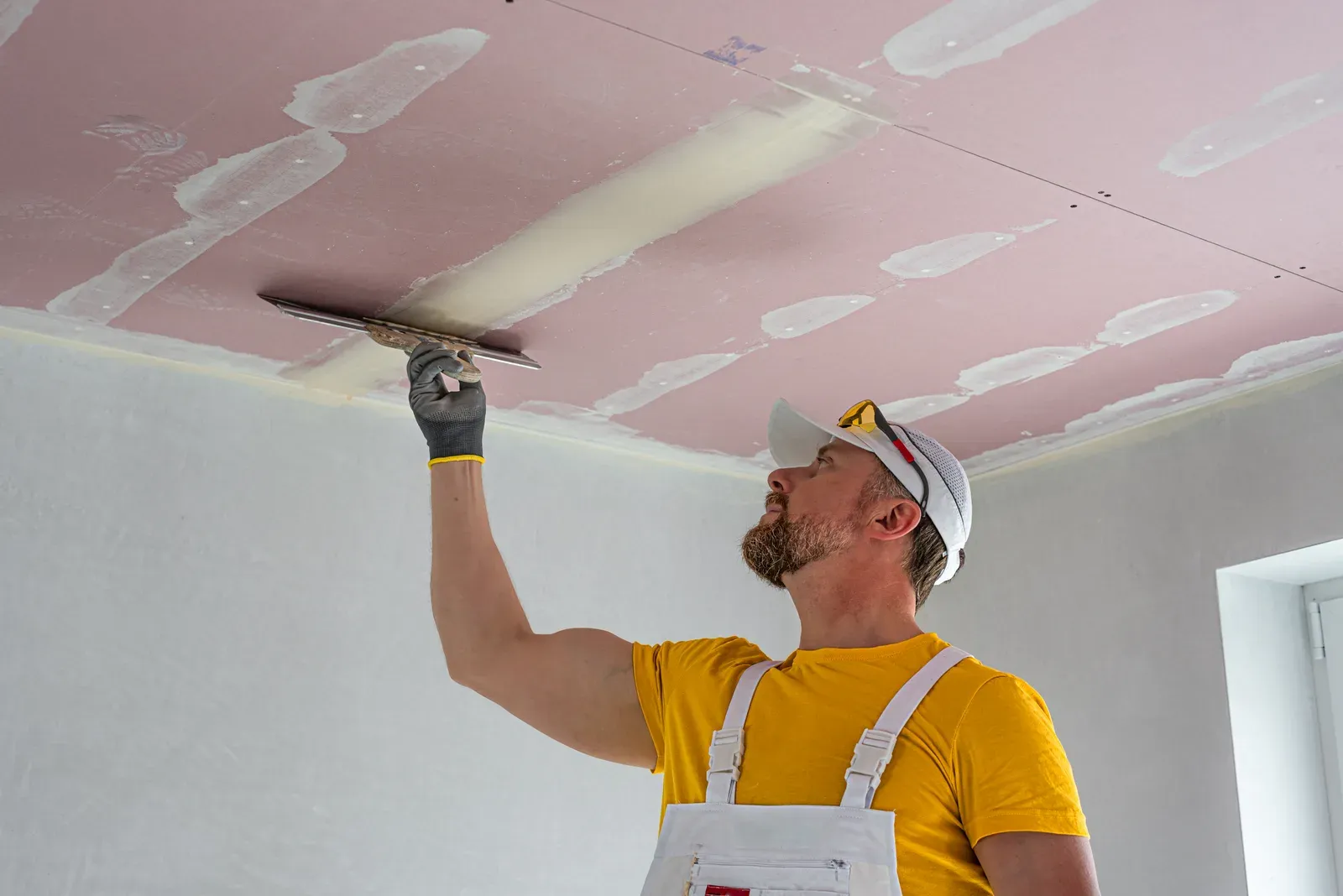
Drywall work is not uniformly dusty. Hanging board makes debris but little airborne dust. Taping and mudding are wet trades — messy, not dusty. Sanding is the concentrated event, and on a room-scale project it is typically two or three days. Plan around those days, not the whole job.
Season changes the calculus in a GTA house. Summer work lets the furnace stay off and windows carry negative-air exhaust easily — though a humid July slows compound drying between coats, which stretches the schedule. Winter's dry air speeds drying, but the furnace wants to run, so vent sealing and system-fan discipline matter far more. Either way, sensitive rooms — a nursery, a home office full of electronics — should be flagged to the crew before work starts, and anyone with asthma may simply want to be elsewhere on sanding days. For a ceiling-wide skim sand, we usually suggest it outright.
If you are weighing whether to stay at all, our honest take on living in your house during a renovation goes deeper. And if you are collecting quotes for renovation work in Toronto or anywhere in the GTA, ask every bidder the same question — "walk me through your dust control" — and compare the answers. Ours comes with specifics, and a free quote.
Ready to start your renovation?
Our team is here to help you bring your vision to life. Get a free, no-obligation quote today.
Get Free QuoteFrequently Asked Questions
Clear answers to the questions Ontario homeowners ask most.