That textured ceiling in your 1970s Scarborough side-split may contain asbestos — and scraping it before testing is the one renovation mistake you cannot take back.
Why Pre-1990 Textured Ceilings Raise a Flag
Here is the short version. If your textured ceiling went up before about 1990, it may contain asbestos, and a lab test costing $300 to $800 is the only way to know. A positive result means licensed abatement — typically $3,000 to $12,000 for a residential job in the GTA. A negative result means removal becomes an ordinary renovation line item at $2 to $6 per square foot.
The reason the cutoff is fuzzy is that asbestos was never banned on a single date. Textured and acoustic ceiling products were being phased out by 1985, Ontario restricted asbestos in residential construction in 1986, and some materials stayed on shelves until around 1990. The complete Canadian product ban only arrived in 2018. So a ceiling sprayed in 1988 from old stock can still test positive.
We see these ceilings constantly. They are close to universal in the 1960s-to-80s back-splits and side-splits of Bendale, Wexford, and Agincourt in Scarborough, all through North York, and in the bungalow belts of central Etobicoke. If your home is from that era and the ceilings have never been touched, assume nothing — test.
How Asbestos Testing Works and What It Costs
Testing is simple and cheap relative to everything it protects. A technician (or a careful homeowner following lab instructions) takes small samples of the texture, seals them in bags, and sends them to an accredited lab for analysis. Lab testing runs $300 to $800 depending on how many samples you submit, and results usually come back within days.
One sample is not enough for a whole house. Texture was often applied room by room, sometimes years apart, sometimes from different batches. A negative result in the living room tells you nothing about the bedroom that was re-sprayed after a 1979 leak. We sample every distinct ceiling area that will be disturbed.
Two practical rules. First, wet the small sample spot before taking it so you are not releasing dust. Second, do this before you book trades or order materials. Discovering asbestos mid-demolition is the single most common budget-buster we see in pre-1990 GTA homes, because everything stops while abatement is arranged. Testing first turns a crisis into a line item you can plan around with a proper renovation contingency.
Reading Results: When Abatement Is Required
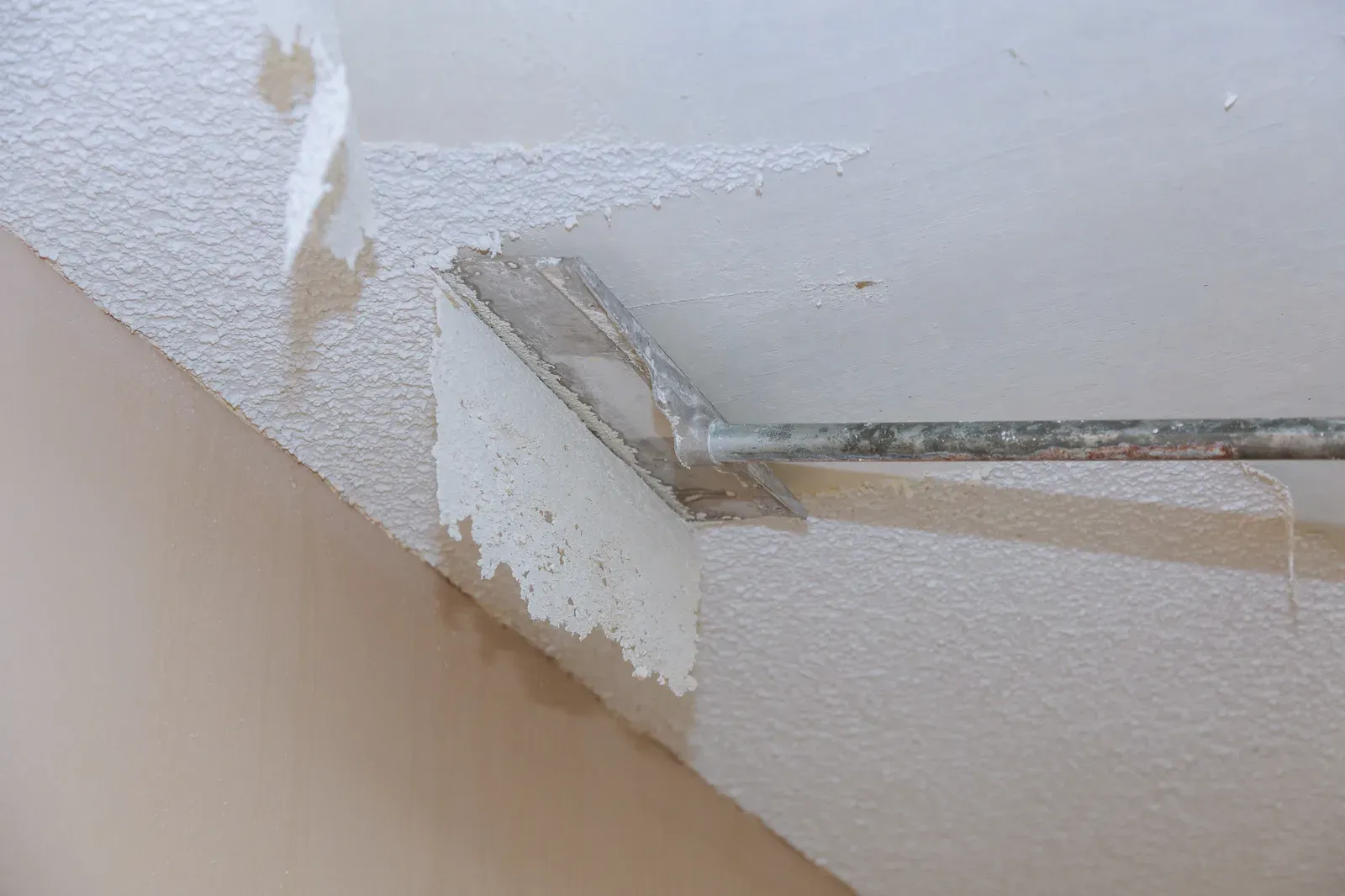
A lab report will tell you whether asbestos fibres are present in the sample and at what concentration. The thing to understand is that intact asbestos texture sitting quietly on your ceiling is not an emergency. The hazard is disturbance — scraping, sanding, cutting pot light holes, or demolishing the ceiling releases fibres into the air.
In Ontario, asbestos work is governed by Ontario Regulation 278/05, which sets out the procedures, containment, and precautions contractors must follow based on the type of work being done. Any contractor touching a positive ceiling has to work under those rules. That is why quotes jump after a positive test: the price reflects containment, protective equipment, negative air machines, and proper disposal, not just labour.
If the test is positive and you were not planning to renovate anyway, doing nothing is a legitimate option. Leave it intact, do not drill or scrape it, and disclose it when you sell. The decision point comes when a renovation — new lighting, an open-concept conversion, or a full remodel — would disturb the ceiling.
Abatement, Encapsulation, or Covering Over
A positive test leaves you three honest paths.
- Licensed removal. A certified abatement crew seals the area, removes the texture under controlled conditions, and clears the space. Most expensive, but the asbestos is gone for good — no disclosure asterisk when you sell, no constraints on future pot lights or ceiling work.
- Encapsulation. A skim coat locks the texture in place under new compound. Cheaper than removal and it delivers the flat modern ceiling most people are after. The asbestos stays, so any future ceiling work still has to treat it as present.
- Covering over. A new layer of drywall installed over the existing ceiling buries the texture entirely. It costs ceiling height and complicates fixtures, but in rooms with tall ceilings it can be the most economical route.
We walk homeowners through this choice based on what else the renovation involves. If walls are opening up anyway and the house is getting rewired, removal usually wins. If the ceilings are the whole project, encapsulation often makes more sense.
What Licensed Abatement Costs in the GTA
Certified asbestos removal in the GTA runs roughly $8 to $20+ per square foot, and typical residential projects land between $3,000 and $12,000 as of 2026. A single 200 square foot living room ceiling sits at the low end; a full main floor of a Scarborough side-split pushes toward the top.
Compare that with the same work on a ceiling that tested negative: a basic scrape runs $1.75 to $3.75 per square foot, and a full-service job — scrape, skim coat, prime, and paint — runs $6 to $10 per square foot. The gap between those numbers is exactly why a few hundred dollars of lab testing is the best-leveraged money in the whole project.
Abatement pricing moves with access, ceiling height, how much of the home needs containment, and whether the crew can isolate the work area from living space. It is one of the hidden soft costs that older-home budgets need room for. Get the test done early and the number stops being hidden.
Sequencing the Renovation After a Positive Test
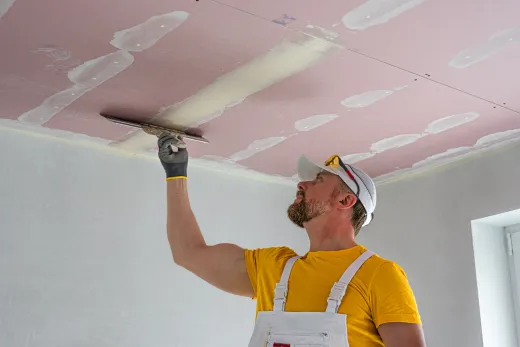
Once abatement is on the schedule, order matters. Abatement happens first — before electricians, before framers, before anyone else opens the ceiling. The rooms get cleared, the crew contains and removes, the space passes clearance, and only then do the regular trades come in.
From there the ceiling gets rebuilt like any drywall project: repairs to the substrate, taping, a skim or full Level 5 finish if the room has strong window light, then primer and paint. This is also the cheapest moment you will ever have to add pot lights, relocate fixtures, or improve attic insulation, because the ceiling is already open territory.
If you are weighing a bigger project around it, our guide to what a whole-home renovation costs in Toronto shows where ceiling work fits in a larger budget. And if you have a pre-1990 home with textured ceilings and a renovation in mind, send us the details — we quote for free, and we will tell you plainly whether testing should be your first step. It usually should.
Ready to start your renovation?
Our team is here to help you bring your vision to life. Get a free, no-obligation quote today.
Get Free QuoteFrequently Asked Questions
Clear answers to the questions Ontario homeowners ask most.